

Most men today have been sold a cheap imitation of manhood—especially when it comes to how they speak.
We’re told that “talking like a man” means cursing loudly, bragging boldly, mocking others, keeping our emotions locked down, or using sharp, aggressive words to prove our strength. Our culture imagines masculinity as a kind of verbal swagger: tough, raw, unfiltered.
But none of that is strength.
It’s insecurity.
It’s bravado.
It’s spiritual immaturity dressed up as toughness.
The Bible gives us something far better—and far more demanding. It paints a picture of men whose words strike with truth, clarity, restraint, and purpose. Their strength isn’t in volume or vulgarity but in conviction and character.
Let’s look at how true men of God spoke—and how we can follow their example today
When Real Men Speak, They Speak with Purpose and Clarity
The Prophets: Direct, Honest, and Fearlessly Moral
The prophets never hid behind polite half-truths. They spoke plainly, boldly, and personally.

- Nathan to David (2 Samuel 12:1–14): Nathan tells a parable that evokes David’s sense of justice, then looked David—the king who could have killed him—straight in the eyes and declared, “You are the man!”—a sudden, piercing accusation. He holds David accountable directly and boldly.
- Elijah to Ahab (1 Kings 21:17–24): Elijah doesn’t flatter kings. He says plainly, “You have sold yourself to do evil.”
- Samuel to Saul (1 Samuel 13:13–14): “You have done foolishly. You have not kept the command of the LORD.”
- Jeremiah to Pashhur (Jer. 20:1–6): Calls him “Terror on Every Side” and foretells his doom.
They weren’t rude; they were righteous. Their voices carried the weight of conviction, not ego.
Sometimes they used symbolic actions—tearing garments, breaking yokes, acting out messages—not for theatrics, but to drive truth into the heart in a way no one could forget. They called people back to covenant faithfulness, even when it meant confrontation.
Style: Forthright, unyielding, personalized rebuke
Tone: Accusatory, courageous
Function: Moral and spiritual exposure
Jesus: Strong Words That Fit the Heart

Jesus was never careless with His speech. His words were incredibly strategic—sometimes piercing, sometimes gentle, sometimes almost silent.
He asked probing questions that cut through shallow thinking. Jesus often answers a question with a question—or redirects the conversation to the heart of the issue.
- Nicodemus (John 3): Moves from “We know you are from God” to “You must be born again.”
- The Rich Young Ruler (Mark 10): Starts affirming the Law, then confronts the idol of wealth with, “Sell all you have…”
Style: Disarming but piercing
Tone: Challenging, not dismissive
Function: Reveal hidden motives or needs
He never used a one-size-fits-all confrontation. His tone and method matched the heart of the person.
- Peter (Matthew 16:23): “Get behind me, Satan.”—stern and immediate for a dangerous misdirection.
- Woman at the well (John 4): Gentle but unflinching, “You have had five husbands.”
- Judas (Matthew 26:50): “Friend, do what you came to do.”—loaded with irony and grief.
Style: Laser-focused truth
Tone: Ranges from tender to severe
Function: Clarity, exposure, call to repentance
Sometimes, Jesus said little or nothing.
- Before Herod (Luke 23:9): “He answered him nothing.”
- To Pilate (John 19:11): “You would have no authority… unless given from above.”
Style: Restraint
Tone: Deliberate silence
Function: Judgment or proof of authority
Jesus mastered the balance—His words were always true, always purposeful, always aimed at redemption.
The Apostles: Truth With Courage, Truth With Grace

The Apostles inherited this pattern. They didn’t mince words when the purity of the gospel was on the line.
The Apostles often confronted people with clarity and confidence in the Spirit.
- Peter to Ananias and Sapphira (Acts 5): “Why has Satan filled your heart to lie to the Holy Spirit?”
- Paul to Elymas the sorcerer (Acts 13:9–11): “You son of the devil, enemy of all righteousness…”
Paul especially modeled persuasive, dialogical confrontation.
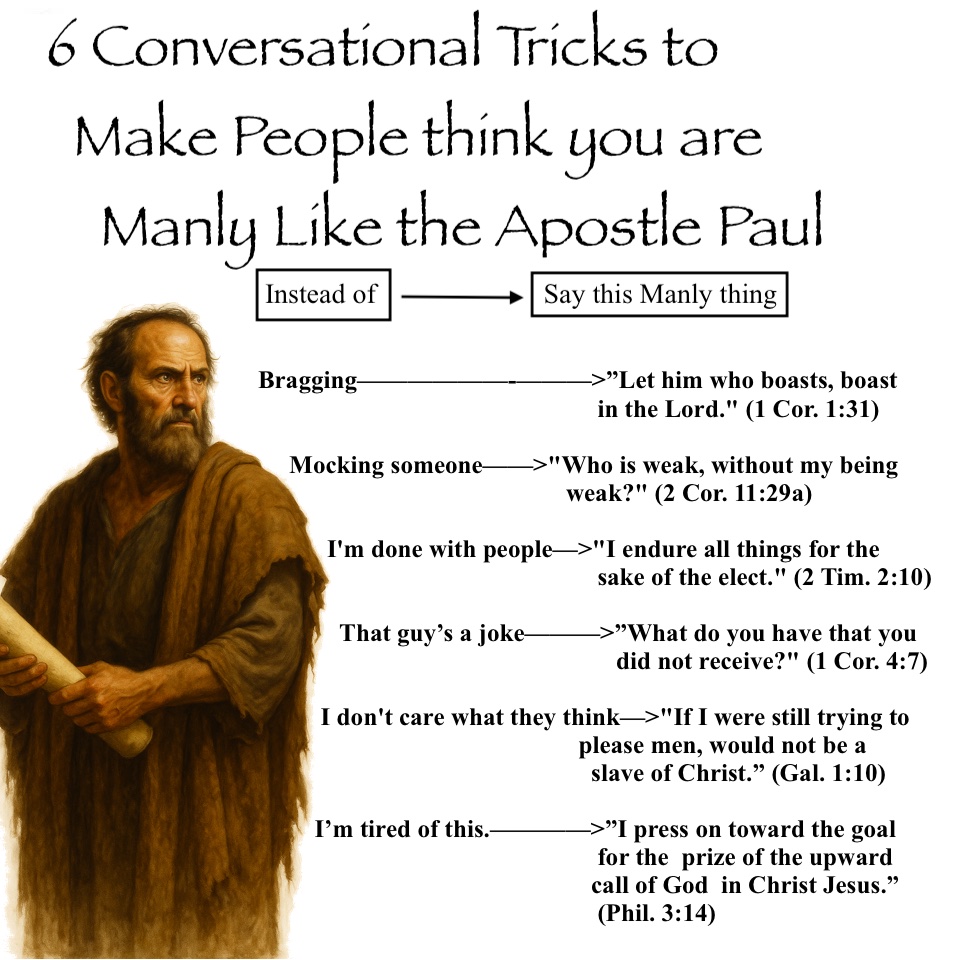
- With Agrippa and Festus (Acts 26): Uses shared history and rational argument to press the truth home.
- With Peter (Galatians 2:11–14): Confronts hypocrisy “to his face” but explains his reasoning in the letter.
Sometimes confrontation is paired with restoration as when Paul helped Philemon accept back Onesimus. Paul’s gentle appeal to Philemon shows a man who knows how to confront without crushing, correct without humiliating, and lead without dominating.
Style: Scriptural appeal, rational, and encouraging
Tone: Passionate, unapologetic, and hopeful.
Function: Persuade, correct, defend truth
The Apostles taught patiently, reasoned persuasively, and wrote some of the most encouraging words in Scripture. Their speech was both bold, restorative, courageous and compassionate.
So How Do We Harmonize All This?
Scripture doesn’t give us a single tone—it gives us a toolkit. And it gives principles that govern the use of that toolkit.
Speak the Truth in Love (Ephesians 4:15)
Love doesn’t dilute truth; it directs it. Jesus looked at the rich young ruler and loved him—and then spoke the hardest words the man would ever hear. Love aims the truth at the soul, not at the ego.
Let No Corrupting Talk Come Out of Your Mouth (Ephesians 4:29)
Vulgarity, crude humor, and corrosive sarcasm are not strength; they are spiritual rot. Biblical confrontation is allowed—commanded, even—but only if it builds up, warns, or rescues.
No Filthiness or Foolish Talk (Ephesians 5:3–4)
The prophets sometimes used shocking metaphors, but they never used vulgarity to amuse or impress. Their intensity came from moral gravity, not immorality.
Expose the Works of Darkness (Ephesians 5:11–13)
Sometimes a man must speak with bold, clear, uncompromising truth—not to embarrass but to save. Avoiding confrontation is not kindness; it’s cowardice.
Let Your Speech Be Gracious, Seasoned With Salt (Colossians 4:6)
Gracious doesn’t mean bland. Salt preserves. Salt enhances. Salt stings when necessary. A man’s words should be like that—wise, intentional, effective.
What Real Manly Speech Looks Like
Biblical manhood in speech isn’t about being loud, crude, or intimidating. It’s about verbal strength used with wisdom.
Real men speak in ways that are:
- Controlled — “Whoever controls his spirit is better than one who takes a city” (Prov. 16:32)
- Truthful — even when truth is uncomfortable (Eph. 4:15)
- Respectful — refusing to slander or belittle (Titus 3:2)
- Encouraging — using words to build, not break (Eph. 4:29)
- Direct when needed — correcting without hesitation (2 Tim. 4:2)
- Uplifting even in correction — gracious, seasoned with salt (Col. 4:6)
When Scripture shows us men speaking with strength, it’s never about verbal dominance. It’s about moral authority. The prophets confronted sin because they feared God more than man. Jesus spoke truth tailored to the heart. The apostles defended the gospel with courage and reason.
Their words were weapons—but weapons forged for righteousness, not ego.
So What Does It Mean to Talk Like a Man?
It means speaking:
- Truth without compromise — like the prophets
- Truth aimed at the heart — like Jesus
- Truth with reason and courage — like the apostles
- Truth framed by wisdom — like Proverbs
- Truth spoken in love — like Paul calls men to live
A real man speaks with conviction, compassion, and clarity—not to dominate, but to defend, disciple, and restore. That is what it truly means to talk like a man.

 Knights of The Father