
“Let the one who boasts, boast in the Lord.” — 1 Corinthians 1:31
It’s the start of Pride Month. For many, it’s a season of celebration—of identity, of survival, of belonging. It’s a declaration: “This is who I am, and I won’t hide it anymore.”
Before I get into the main point of this article, I must be clear. As followers of Christ, we must speak truth in love (Ephesians 4:15). And part of that truth is this:
Much of what the LGBTQ+ movement celebrates as pride, Scripture identifies as sin.
That doesn’t mean we lack compassion. On the contrary, the gospel begins with the truth that all have sinned and fallen short of God’s glory (Romans 3:23)—and that includes everyone. But the answer to sin is never to take pride in it. The answer is repentance, redemption, and a new identity in Christ.
However, this isn’t the point of this article. A deeper, more universal question still needs to be answered:
What is your worth built on?
Not all of what we find our confidence and value in is equal. Pride is built on sand—on feelings, desires, achievements, or identity markers that shift and change.
Some identity is paper-thin—propped up by culture, applause, or inner affirmation alone.
And when life hits hard enough—and it will—what’s underneath is revealed.
So what if there were something more solid?
A foundation that didn’t shift with emotion, fade with age, or depend on the approval of others?
This isn’t just a cultural issue. It’s a spiritual one. It’s not about winning debates, but about knowing what can’t be taken—and building your life on that Rock.
Pride Built on Sand
We’re told to “take pride in yourself,” to “own your truth,” to “walk tall.” That can sound empowering—but the foundation is weak.
The English word “pride” hasn’t always meant what it means today. In earlier centuries, it was nearly always negative, associated with arrogance, haughtiness, and self-exaltation. In fact, pride Is one of the so-called “Seven Deadly Sins“—seen as the root from which all other sins grow.
But over time, especially in the last century, the word began to shift.
By the 1800s and 1900s, pride started to take on more neutral—even positive—tones. It became a way to express dignity, self-respect, and justified satisfaction. Phrases like “pride in one’s work” or “national pride” became common. In recent decades, the pendulum has swung even further, with “pride” now often seen as a virtue—especially in movements seeking to affirm identity and resist shame.
But here’s the danger: this kind of pride is only healthy when it’s rooted in something that can hold it.
Too often, modern pride is built on things that don’t last:
- Beauty that fades with time.
- Strength that weakens with age.
- Intelligence that always meets someone smarter.
- Success that can evaporate in a single failure.
- Character that even the best of us struggle to uphold.
- Populatrity that is fickle and ultimately meaningless
If your pride rests on any of these, then your identity is always in danger.
Lose the thing, and you lose yourself. There is a constant risk of losing what you feel gives you value.
That kind of pride can’t endure life’s storms.
It’s not wrong to value beauty, skill, or achievement—but when they become the foundation of who you are, you’re building on sand.

Redemption Built on the Rock
The Bible doesn’t call you worthless—it calls you loved.
Before you ever accomplished anything, before you ever failed, before you even responded to God—you were already precious in His sight. That is the foundation of human worth: not beauty, not success, not strength, but the unchanging love of the Creator for His creation.
“What is man that You are mindful of him?” — Psalm 8:4
Every human being bears the image of God (Genesis 1:27). That’s where worth begins. Not in being redeemed—but in being created and loved by the One who would redeem all.
But love invites a response.
God doesn’t force redemption on anyone—but He calls all to it (1 Timothy 2:4). He invites every person to receive new identity, not just as His creation, but as His child. That call comes through the gospel—the message of Christ’s death, burial, and resurrection (1 Corinthians 15:1–4).
To move from being loved by the Creator to also being saved by the Redeemer, we must answer that call. We must:
- Believe in Christ (John 8:24)
- Turn from sin (Acts 17:30)
- Be baptized into His name (Acts 2:38)
- Walk in His ways (Ephesians 2:10)
This is not earning worth—it’s stepping into the identity God has longed for you to wear. The identity that can’t be shaken. That won’t age. That won’t be lost in failure or obscured by shame.
“There is now no condemnation for those who are in Christ Jesus.” — Romans 8:1
That’s what it means to build on the Rock.
Redeemed Confidence, Not Fragile Pride
So can we still walk with confidence?
Absolutely. But it’s not the kind of pride that struts. It’s not based on comparisons, applause, or self-importance. It’s confidence, not arrogance—grounded not in ego, but in grace.
The world often equates pride with strength: project more, hide your flaws, prove your worth. But the gospel offers something radically different. It says: You are already known. You are already loved. You don’t have to earn it—just receive it, walk in it, and let it change you.
That’s what Paul meant when he wrote:
“Let the one who boasts, boast in the Lord.” — 2 Corinthians 10:17
This isn’t self-glorification—it’s God-glorification.
It’s the redeemed kind of pride that doesn’t elevate me, but magnifies Him. A pride not in self-made success, but in God’s faithfulness.
This kind of redeemed confidence:
- Celebrates what God is doing in you
“He who began a good work in you will carry it on to completion…” — Philippians 1:6
You’re not a finished product, but you’re not a failure either. You’re a work in progress—and that progress is powered by God’s grace. - Rejoices in the spiritual transformation of those on God’s path
“I have great pride in you; I am filled with comfort.” — 2 Corinthians 7:4
When your pride is redeemed, it stops being competitive. You can rejoice when others grow, succeed, and shine—because your worth isn’t threatened by theirs. - Boasts in the cross—not in self
“Far be it from me to boast except in the cross of our Lord Jesus Christ…” — Galatians 6:14
The cross humbles us and exalts us at the same time. It tells us we were so broken that Christ had to die for us, and yet so loved that He was willing to.
This is a confidence that doesn’t crack under failure, because it never claimed perfection.
It doesn’t swell with pride when praised, because it knows where the credit goes.
It isn’t shaken by change, aging, or challenge—because it’s not held up by those things.
It’s the quiet strength of someone who knows who they are because they know whose they are.
What Can’t Be Taken
In a world obsessed with image, let this truth settle your heart:
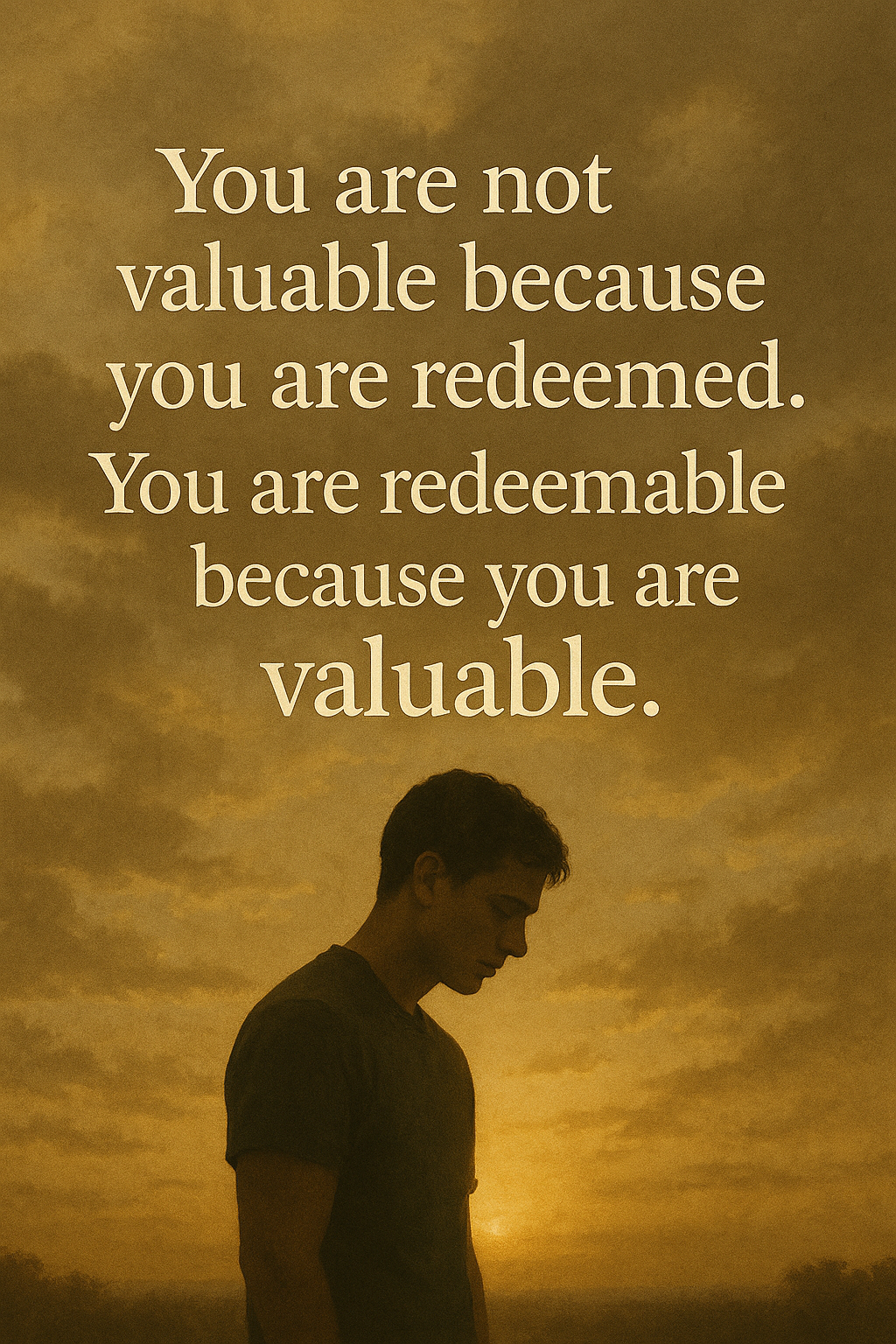
You are not valuable because you are redeemed. You are redeemable because you are valuable.
Every person bears the image of God. That is the foundation of human dignity.
It is not our beauty, our brains, or our bravery that makes us matter—it is the fact that we are seen, known, and loved by the Creator.
But love calls.
God desires all to be saved and come to the knowledge of the truth (1 Timothy 2:4). He calls us not just to exist, but to walk with Him.
To respond to the gospel.
To move from creation to new creation—to find not just worth, but restoration.
Everything else—appearance, strength, status—can be taken.
But God’s love? His call? His desire to redeem you?
That can’t be taken.
And when you build your identity on that—on grace, not ego—then no storm can shake it.
So let the one who boasts, boast in the Lord.
By Jeremy Sprouse
Jeremy has been married to Erynn since August 1999. They are blessed with six children: Jaden, Isaiah, Isaac, Ean, Joseph, and Evelyn. Jeremy preaches for the Patrick St. church of Christ in Dublin, TX and is the author of To Train Up a Knight.

 Knights of The Father