
Some mornings seem to start in chaos—alarms fail, tempers flare, and the weight of yesterday’s troubles hangs like a cloud. But David reminds us that the direction we face at dawn matters more than the side of the bed we rise from. As the day begins, will we look down in discouragement, or up in devotion?
Psalm 5 is the cry of a righteous heart determined to begin the day with God. The man after God’s own heart does not place his hope in circumstances, but in communion. This is a morning psalm, steeped in prayer and petition. It is also a model of how the faithful process the burdens of life—through groaning honesty, trust in God’s holiness, and confidence in His protection.
Each section of Psalm 5 unfolds a different layer of that trust:
- A call for help (vv. 1–3)
- A call for holiness (vv. 4–6)
- A call for hope (vv. 7–9)
- A call for honor (vv. 10–12)
Let us join David in turning upward at the break of day, asking not only for relief from the wicked, but for renewal in the Lord.
I. A Call for Help (5:1–3)
David opens this psalm not with confidence, but with need. His words are raw, honest, and urgent:
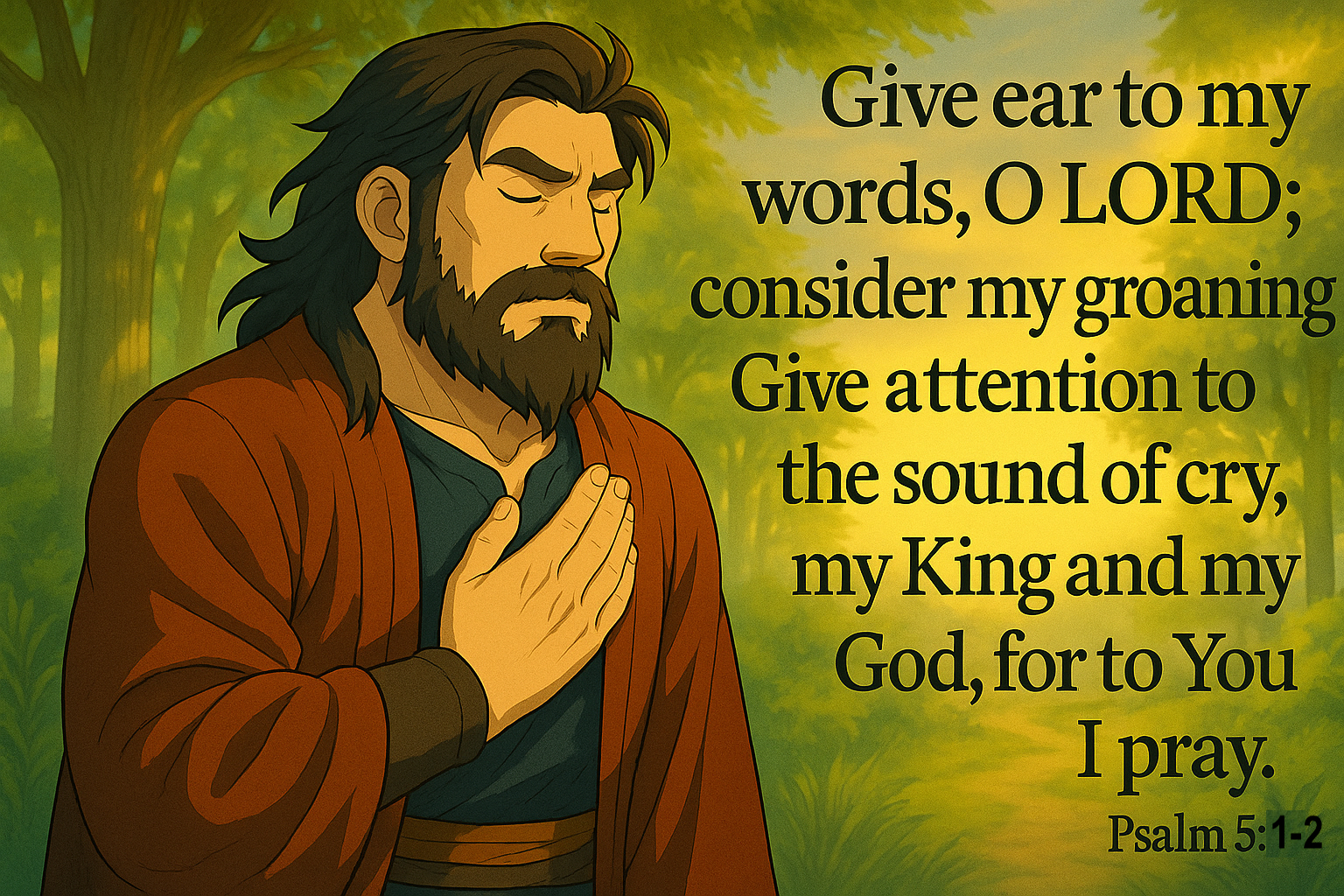
“Give ear to my words, O Lord,
Consider my groaning.
Heed the sound of my cry for help, my King and my God,
For to You I pray.” (Psalm 5:1–2, NASB95)
This is no polished prayer offered in public ritual—it’s a gut-level appeal from a man who knows he cannot face the day without divine help.
David stacks action verbs with increasing intensity:
- “Give ear”—he wants God’s attention.
- “Consider”—he longs for God to reflect on his inner pain.
- “Hear”—he pleads that his cry won’t be ignored.
These aren’t ornamental repetitions. They show a man deeply aware of his limitations and God’s sovereignty. David isn’t just praying—he’s leaning hard on the Lord.
Groaning, not Grandstanding. The word groaning suggests more than speech. It’s the kind of aching exhale that escapes when words fail—a spiritual sigh loaded with grief, pressure, or anxiety. Sometimes prayer doesn’t sound eloquent—it just hurts. And David trusts that even those unspoken aches are heard by God.
A Pattern of Morning Dependence
“In the morning, O Lord, You will hear my voice;
In the morning I will order my prayer to You and eagerly watch.” (v. 3)
David made it a priority to pray at daybreak—not out of legalism, but out of need. The morning represents the fresh unknown of a new day. Rather than rush into decisions or burdens, David sets his focus on the only One who can bring order from chaos.
He doesn’t pray and then forget—he eagerly watches. The word implies an expectant vigilance, like a soldier at a lookout or a watchman scanning the horizon. This is faith in action: not just asking, but looking for how God will respond.
Many wake up burdened—by responsibility, anxiety, fear, or the pressure to perform. Psalm 5 shows that strength doesn’t begin with self-reliance; it begins with humble dependence. Before the armor goes on, before any battle is fought, David models the first step of a spiritual warrior:
Bow your heart. Seek God early. Trust Him to act.
If we learn to order our prayers in the morning like David did, we’ll find ourselves prepared—not just for the tasks ahead, but for the posture of faith that sees God’s hand in the midst of them.
II. A Call for Holiness (5:4–6)
David doesn’t just cry out for rescue—he roots his hope in the unchanging character of God. His appeal is theological before it is practical:

“For You are not a God who takes pleasure in wickedness;
No evil dwells with You.” (v. 4)
This is a bold confession of who God is. David’s understanding of holiness isn’t abstract—it shapes how he sees the world. His distress isn’t simply about the danger he faces; it’s about the deep offense of sin against a righteous God.
The Holy God Cannot Accommodate Evil. The Hebrew poetry here is forceful. It names the enemies of God’s holiness:
- Wickedness (v. 4): that which twists what is right.
- Evil: that which opposes God’s goodness.
- Boastful (v. 5): those puffed up with pride, pretending self-sufficiency.
- Evildoers: not just sinners, but those bent on rebellion.
- Liars and bloodthirsty men (v. 6): those who distort truth and destroy life.
David knows: God doesn’t just disapprove of such things—He will not dwell with them. The language is personal. Evil cannot reside where God reigns. This sets the standard for all who would claim to follow Him.
God’s Rejection is Just
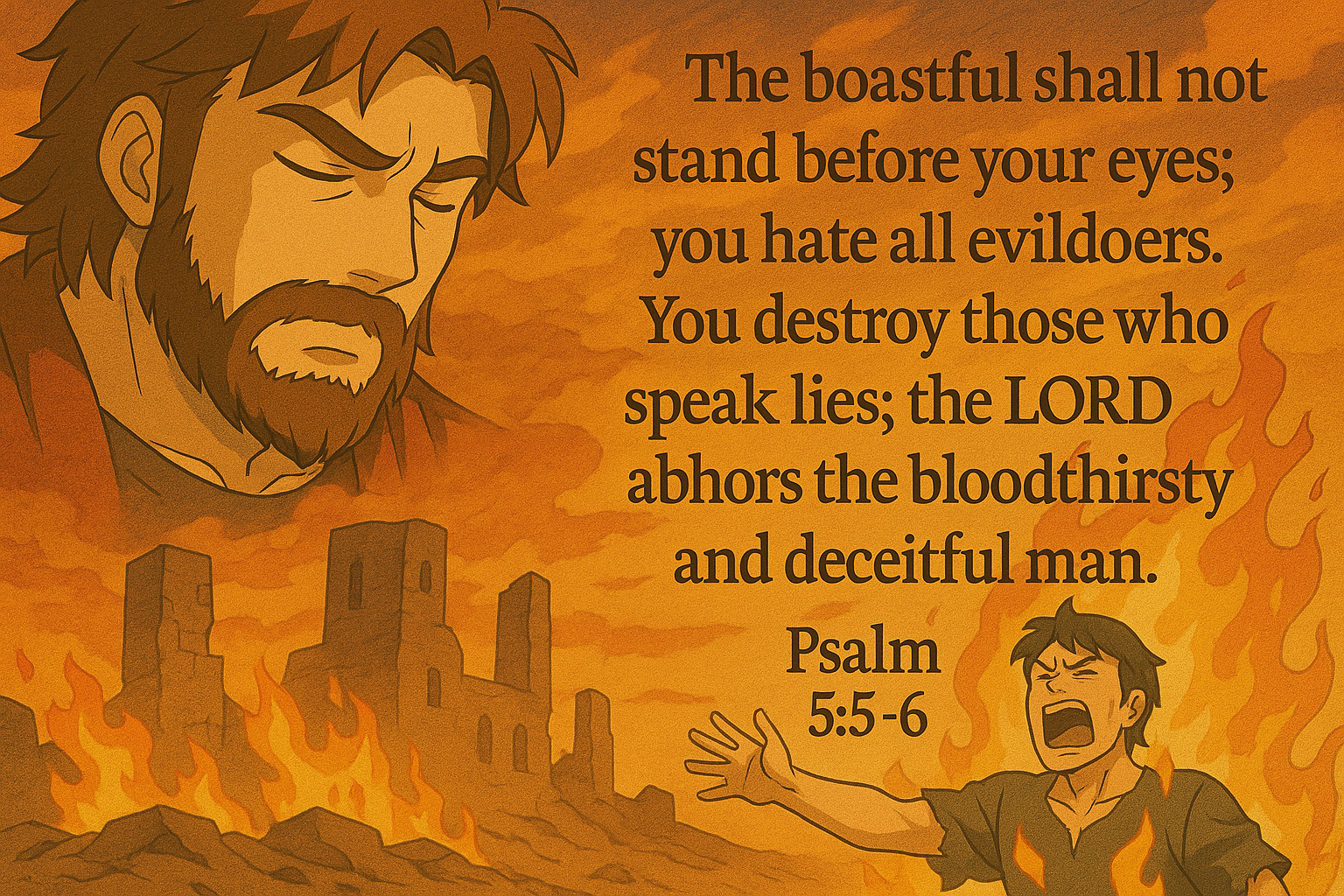
“You destroy those who speak falsehood;
The Lord abhors the man of bloodshed and deceit.” (v. 6)
These are not exaggerations. They are realities. The word abhor is strong—it speaks of deep moral revulsion. God’s justice is not cold or mechanical; it is righteous indignation against what corrupts His creation. David isn’t merely comforted that God will act—he’s aligning his heart with what God hates.
And that is key: David doesn’t just want safety from wicked people—he doesn’t want to become like them. His theology shapes his morality.
As we strive for righteousness, we cannot separate devotion from discipline. If we call on the Lord for protection and blessing, we must also reflect on His holiness—and ask whether our own hearts are aligned with His standards.
Starting the day by reflecting on God’s holiness does two things:
- It sobers us. It reminds us that God is not to be trifled with. He is not indifferent to sin—He is fiercely opposed to it.
- It sanctifies us. It calls us to a higher standard, one shaped not by the world but by the will of the God who dwells in unapproachable light.
We live in a culture that celebrates self-expression—even when it defies God’s truth. But men of God must learn to say, with David:
“You are not a God who delights in wickedness.”
And then act accordingly.
III. A Call for Hope (5:7–9)
David shifts from judgment to worship, and from the wicked to the worshiper. The contrast is striking and intentional:
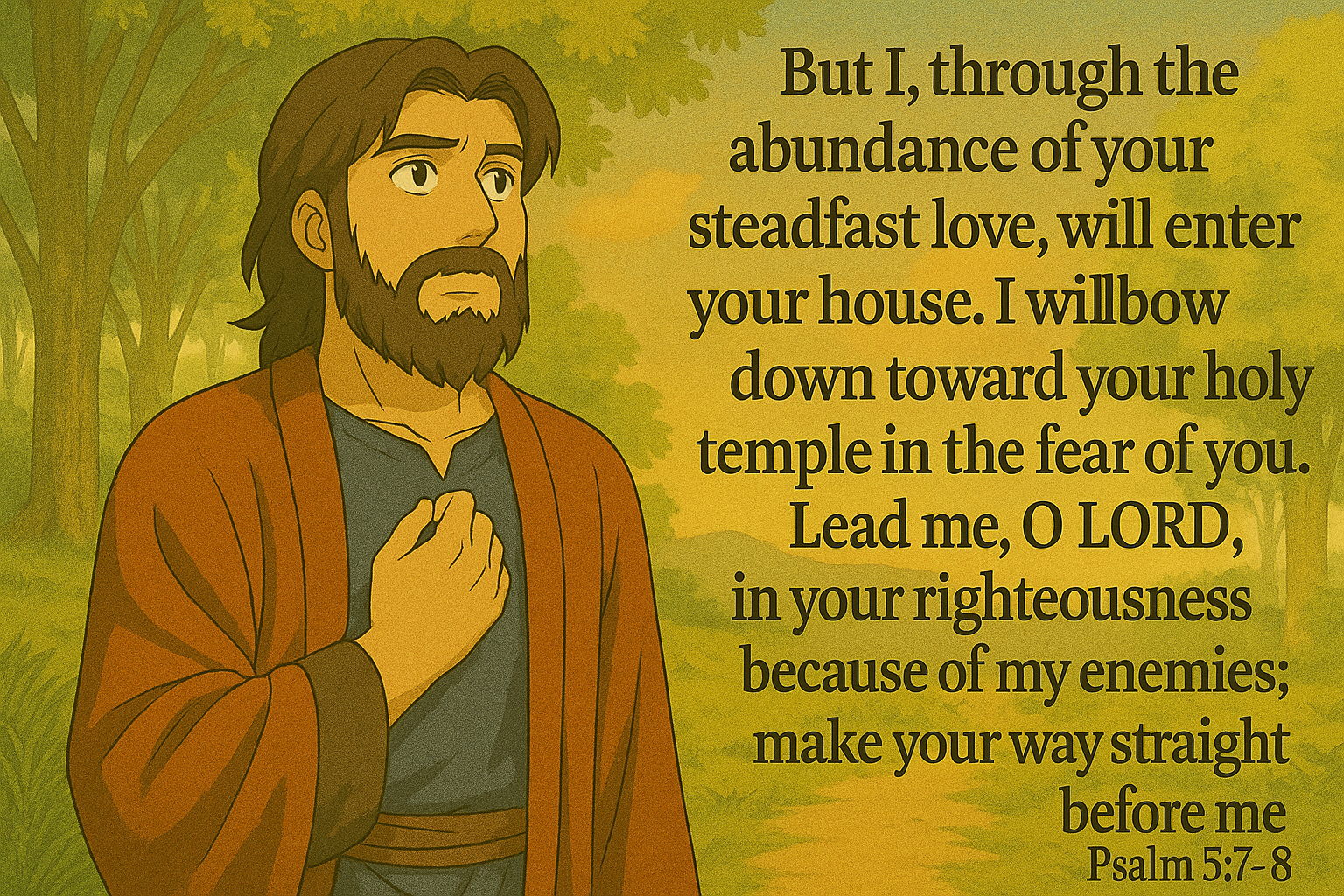
“But as for me, by Your abundant lovingkindness I will enter Your house,
At Your holy temple I will bow in reverence for You.” (v. 7)
The phrase “But as for me” sets the tone. David distances himself from the evil described in verses 4–6 and declares where his true allegiance lies: not in pride, deceit, or violence—but in the presence of God.
Hope Begins with Humility
David does not claim entrance to God’s presence because of his own righteousness or achievements. His access is rooted in one thing:
“Your abundant lovingkindness.”
The Hebrew word here, hesed, refers to God’s covenant loyalty, steadfast love, and unfailing mercy. David bows—not as a king, but as a man who knows he needs grace.
This is hope: not wishful thinking, but anchored confidence in the mercy of God.
Guidance for the God-Fearing
“O Lord, lead me in Your righteousness because of my foes;
Make Your way straight before me.” (v. 8)
David’s prayer is both realistic and trusting. He doesn’t deny the presence of enemies—he asks God to lead him because of them. The path is treacherous, and the world is full of traps and temptations. What David seeks is clarity—a straight path, one marked by God’s truth, not man’s schemes.
Men who trust God don’t pretend the road is easy—they pray for guidance and stay on the righteous course, even when the world mocks them for it.
The False Way of the World
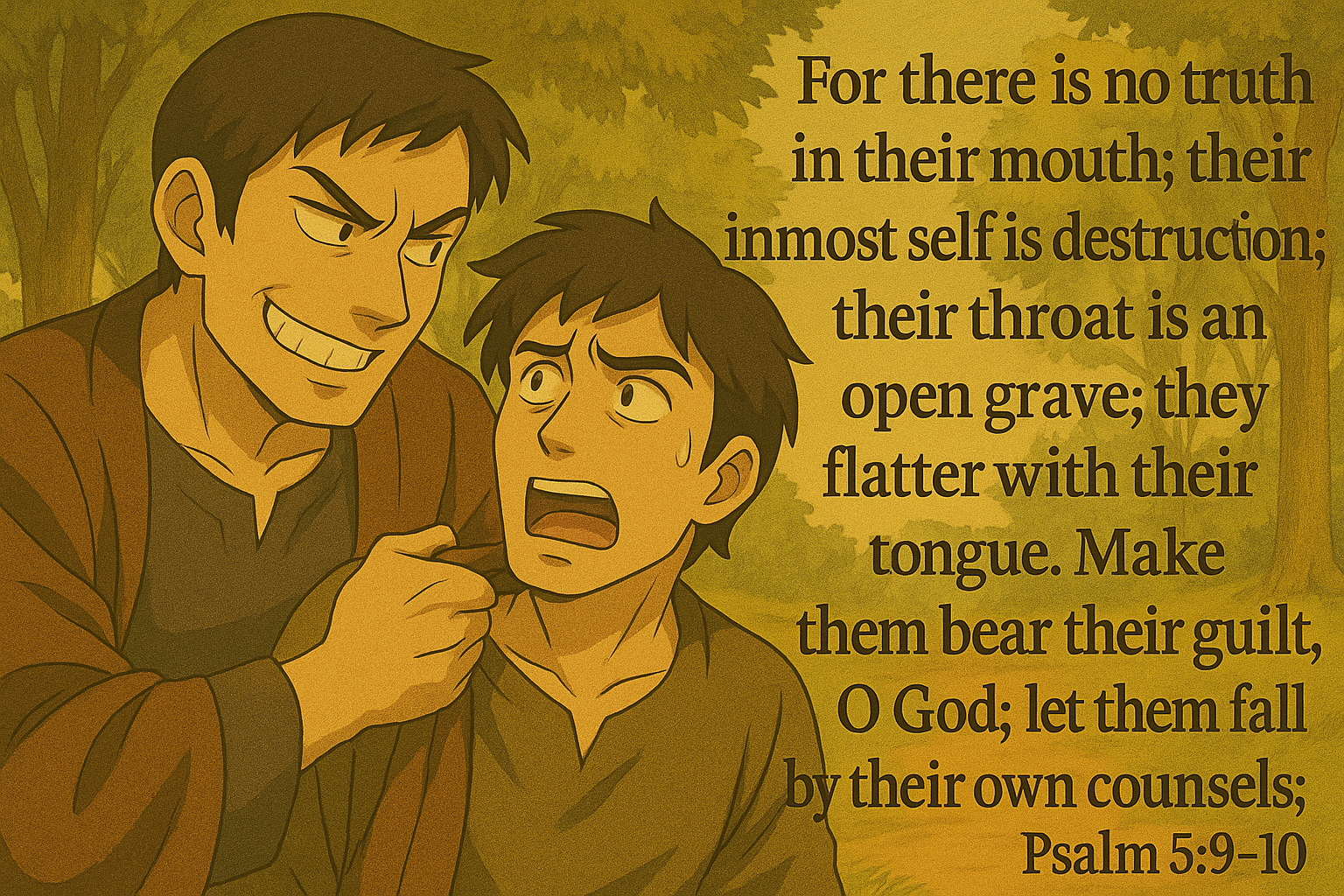
“There is nothing reliable in what they say;
Their inward part is destruction itself,
Their throat is an open grave;
They flatter with their tongue.” (v. 9)
This verse reads like an autopsy of a corrupted soul. David pulls back the mask of worldly promises and reveals the decay underneath:
- “Nothing reliable”: Their words are not to be trusted.
- “Inward destruction”: Their hearts are hollowed out by evil.
- “Open grave”: Their speech is death-dealing, not life-giving.
- “Flattery”: They use soft words to manipulate and deceive.
This is not merely poetic—it’s prophetic. Paul later quotes this verse in Romans 3 to describe the universal corruption of mankind. David knows that to trust in the world’s words is to walk into a grave with your eyes closed.
Every morning presents a choice. The world flatters, manipulates, and whispers its lies. It tells us to rely on our own wisdom, to follow our hearts, to chase success at any cost.
But David says:
“I will enter Your house.”
“I will bow in reverence.”
“I will ask You to lead me.”
This is what hope looks like in a fallen world—not the absence of conflict, but the presence of God’s mercy and direction. The righteous man begins his day not with a mirror to himself, but with eyes lifted to the Lord.
Let us not forget:
- We are led by grace.
- We are preserved by truth.
- We are given hope not because we deserve it, but because God delights in giving it.
IV. A Call for Honor (5:10–12)
David’s final movement in this psalm is a powerful blend of justice and joy—justice for the wicked, joy for the righteous. He doesn’t lash out in personal vengeance but calls on God to act according to His character.
“Hold them guilty, O God;
By their own devices let them fall!
In the multitude of their transgressions thrust them out,
For they are rebellious against You.” (v. 10)
When Evil Demands a Verdict
This is a prayer of judgment—a form of imprecatory prayer. It may feel harsh to modern ears, but it is not an unrestrained cry for personal revenge. David isn’t asking God to attack those who irritate him—he’s asking God to act righteously against those who persist in rebellion, deceit, and violence.
The wicked are described as:
- Guilty by their own actions
- Falling by their own traps
- Multiplied in transgressions
- Rebellious against God
This is not a petty grievance—it’s a recognition that evil must not be ignored, and the righteous cannot simply remain silent while injustice flourishes. David honors God by entrusting Him with the verdict. He knows God sees clearly and judges rightly.
A Prayer for the Righteous to Rejoice
David turns his gaze from the fate of the wicked to the future of the faithful:
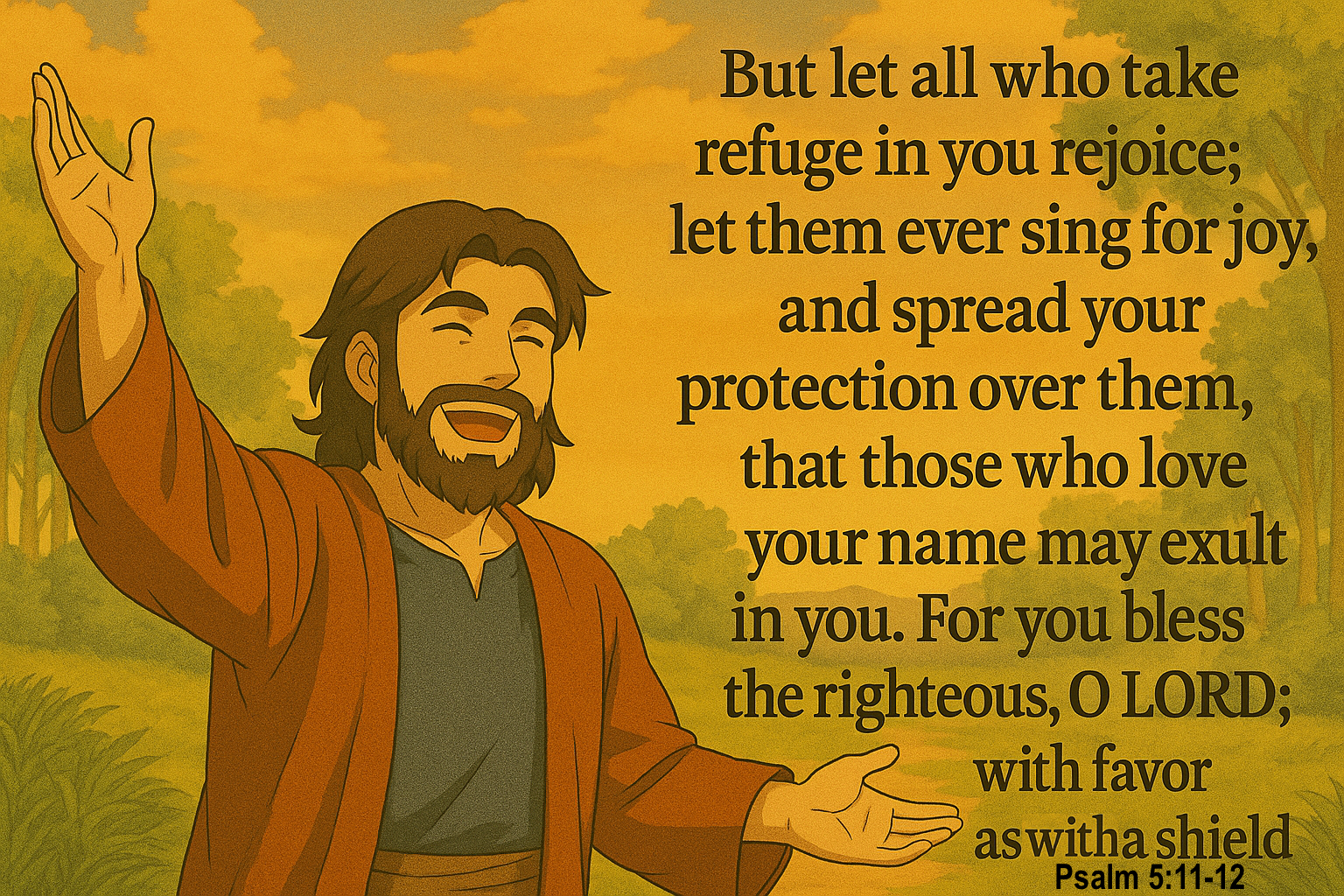
“But let all who take refuge in You be glad,
Let them ever sing for joy;
And may You shelter them,
That those who love Your name may exult in You.” (v. 11)
Here is a complete reversal. Where the wicked are cast out, the righteous are brought in—sheltered, gladdened, and filled with songs. This joy is not circumstantial; it is spiritual. It comes from knowing that we are:
- Under God’s protection
- Covered by His grace
- Secure in His covenant love
The imagery is rich: singing, sheltering, rejoicing, and exalting. These are not stoic emotions—they are overflowing responses to divine care.
Surrounded with Favor Like a Shield
“For it is You who blesses the righteous man, O Lord,
You surround him with favor as with a shield.” (v. 12)
David circles back to a theme we’ve heard before: God as a shield (cf. Psalm 3:3). But now the image is more complete—it’s not merely protection from danger, but favor that encircles the faithful. This is both a defense and an honor.
The word “favor” (ratzon in Hebrew) means delight, goodwill, and blessing. The righteous aren’t merely tolerated—they are treasured.
God surrounds the upright man not with iron or stone—but with His own goodwill. What greater safety, what greater honor, than to be favored by the King of heaven?
Living for the Lord’s Honor
To live righteously is to live for God’s honor. The psalmist doesn’t want safety for selfish reasons—he wants God’s name to be exalted through the lives of those who trust in Him. That’s the heart behind the request in verse 11:
“That those who love Your name may exult in You.”
When we start our day not just with a request for help, but with a plea for God’s honor to be seen in us, we align our hearts with heaven.
David’s final call is not only a prayer for justice or a promise of protection—it’s an invitation:
- To trust God when the wicked seem to prosper.
- To rejoice because we are not alone.
- To walk boldly, shielded not by pride, but by favor.
Let us rise each morning with this prayer:
“Lord, let Your justice stand.
Let the wicked be overthrown.
Let the righteous rejoice.
And let Your name be honored in it all.”
Reflection and Application
For Personal Study:
- What does your first conversation of the day sound like?
- How can you create space for morning prayer?
- What burdens need to be laid before God today?
For Couples:
- Share one concern you each want to bring to the Lord.
- Pray together in the morning this week before you separate.
- Encourage one another to rejoice in God’s favor, not just in daily wins.
For Families:
- Start the day by reading Psalm 5 together.
- Talk about what it means to “watch” for the Lord in prayer.
- Discuss how to reflect God’s holiness at home and school.
Final Thought
In a world filled with noise, deceit, and pressure, Psalm 5 is a call to clarity. It reminds us that direction matters. Let us begin each day with a holy cry—not of despair, but of dependence. As David did, may we rise in prayer, walk in hope, and rest in the knowledge that the Lord surrounds the righteous with His favor as with a shield.
By Jeremy Sprouse
Jeremy has been married to Erynn since August 1999. They are blessed with six children: Jaden, Isaiah, Isaac, Ean, Joseph, and Evelyn. Jeremy preaches for the Patrick St. church of Christ in Dublin, TX and is the author of To Train Up a Knight.

 Knights of The Father