
At the end of far too many days, we find ourselves weary—mentally, emotionally, and spiritually. The to-do list still has unchecked boxes, tomorrow’s tasks already loom large, and our souls long for peace. Psalm 4, written by David, offers that peace—not by changing our circumstances, but by reorienting our hearts.
Psalm 4 is an evening psalm, a prayer offered at day’s end. As the companion to Psalm 3 (a morning prayer), it completes the rhythm of trust that should bracket every believer’s day. It invites us to end our evenings in reflection, trust, and praise.
The structure of the psalm follows a chiastic pattern:
A (v.1) – Prayer for relief
B (v.2) – Confrontation with the faithless
C (vv.3–5) – Instruction to trust and serve God
B’ (v.6) – The doubt of others
A’ (vv.7–8) – Prayer of joy and rest
The center of the psalm urges faithfulness—because God is the source of lasting peace.
I. An Expression of Anxiety (4:1–2)
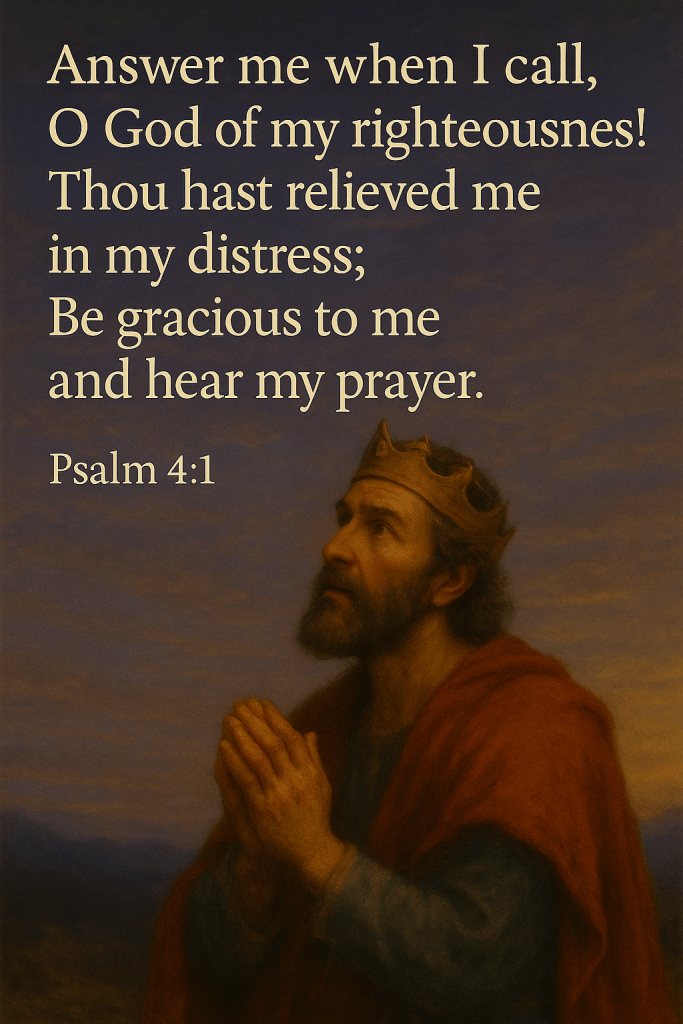
“Answer me when I call, O God of my righteousness! You have relieved me in my distress; be gracious to me and hear my prayer.”
David begins with a cry for help, appealing to God’s justice and faithfulness. He knows God upholds what is right—and that He has done so in the past. The phrase “You have relieved me” literally means “You gave me space”—as if David had been trapped in a tight corner and God opened a way out. Once again, David finds himself in distress and asks for that same deliverance.
In verse 2, David addresses the cause of his anxiety:
“O sons of men, how long will my honor become a reproach? How long will you love what is worthless and aim at deception?”
What should have been an honor—his kingship, his calling by God—has become a reproach in the eyes of others. They mock what God has established. Their problem, David says, lies in their misplaced affections: they love what is worthless and aim at lies. They distort truth and dishonor righteousness.
II. An Expression of Confidence (4:3)
“But know that the Lord has set apart the godly man for Himself; the Lord hears when I call to Him.”
This verse is the turning point. David shifts from his frustration with others to his confidence in God. He knows that the faithful are not forgotten. God sets them apart, cherishes them, and hears their prayers.
Even if God doesn’t answer in the way David hopes, the assurance that God hears is enough. The presence of God, even in silence, brings more peace than the approval of people.
III. The Results of That Confidence (4:4–5)
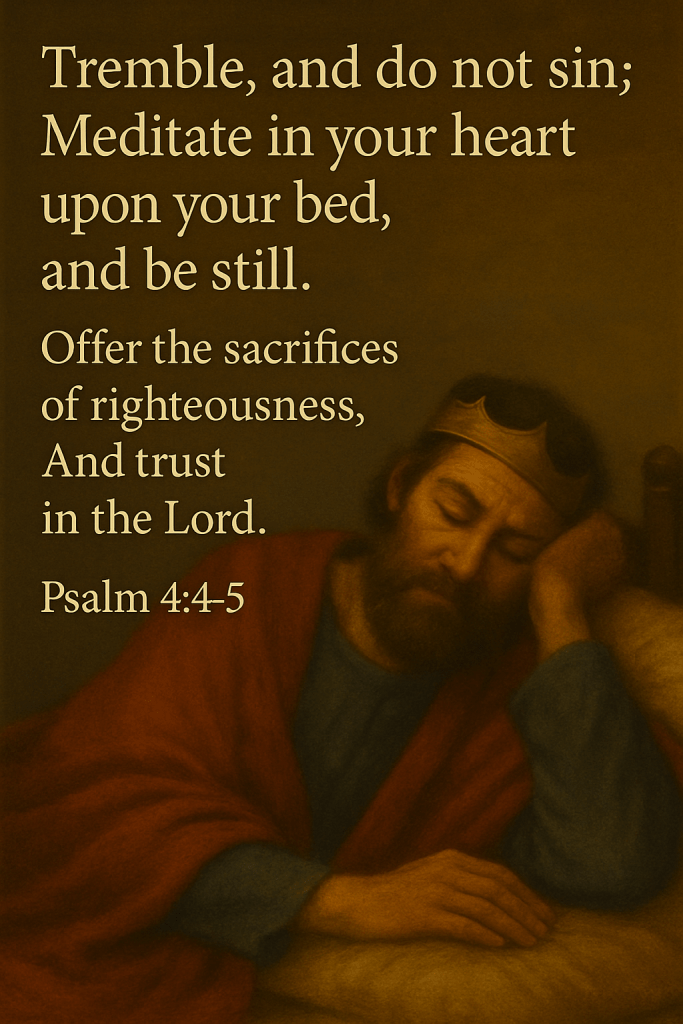
“Tremble, and do not sin; meditate in your heart upon your bed, and be still. Offer the sacrifices of righteousness, and trust in the Lord.”
David’s trust shapes his actions. He will not let anger or fear lead him into sin. Instead, he urges self-control, quiet reflection, and renewed obedience. Verse 4 alludes to Exodus 20:20—“The fear of God is to keep you from sinning.”
Rather than lashing out at his enemies, David chooses stillness. He lies awake meditating, not plotting. He reaffirms his commitment to offer righteous sacrifices and place his trust in the Lord.
This is a spiritual reset—a call to take anxiety and let it drive deeper obedience.
IV. A Reflection on God’s Deliverance (4:6–8)
“Many are saying, ‘Who will show us any good?’ Lift up the light of Your countenance upon us, O Lord!”
Others around David wonder if better days will ever return. They question God’s goodness. But David knows the answer: any true goodness comes only when God’s face shines on His people. David prays for that light.
“You have put gladness in my heart, more than when their grain and new wine abound.”
Despite hardship, David’s joy surpasses that of those who prosper. His joy is not circumstantial; it’s rooted in God’s presence. This gladness is internal, secure, and sustaining.
“In peace I will both lie down and sleep, for You alone, O Lord, make me to dwell in safety.”
This is the fruit of trust: rest. Not the kind provided by guards, walls, or wealth—but peace from knowing that the Almighty is watching. David sleeps because God does not. He lies down in safety, because his life is in God’s hands.
Personal Study Guide
Reflection Questions:
What worthless things am I tempted to pursue instead of God? When have I seen God “give me space” during a time of distress? What rhythms of prayer or reflection help me end my day in peace?
Personal Action Steps:
End each night this week with a reading of Psalm 4. Reflect on God’s past faithfulness and write a brief prayer of thanks. Identify one evening worry to surrender to God daily.
Prayer Points:
Ask God to guard your heart from deceptive desires. Thank Him for His presence, even when you feel alone. Pray for quietness of soul and restful sleep.
Study Guide for Couples
Reflect Together:
What anxieties do we carry at day’s end? How can we create a spiritual evening routine to bring peace into our home?
Pray Together:
Ask for God’s light to shine on your family. Thank Him for the blessings of the day and the hope of tomorrow.
Action Step:
Before bed, read Psalm 4 aloud and pray together over any shared concerns.
Study Guide for Family Devotion
Read Psalm 4 Together
Discussion Questions:
What are some ways God has helped our family in the past? What does it mean that God helps us sleep in peace?
Activity:
Each child draws or writes a short note about something God did for them today. Place it in a jar labeled “God’s Goodness.” Review the jar at week’s end.
Prayer:
Thank God for peace and safety. Ask Him to help each family member sleep with joy and trust.
Final Thoughts
Psalm 4 invites us to do more than survive the day—it invites us to end it with peace. Not because our problems are gone, but because our God is near. The man after God’s own heart found peace in his solitude because he trusted in the One who was always watching.
No security system, pillow, or routine can bring such rest. But faith in God can. Lay your worries at His feet. Trust Him. And sleep well.
By Jeremy Sprouse
Jeremy has been married to Erynn since August 1999. They are blessed with six children: Jaden, Isaiah, Isaac, Ean, Joseph, and Evelyn. Jeremy preaches for the Patrick St. church of Christ in Dublin, TX and is the author of To Train Up a Knight.

 Knights of The Father