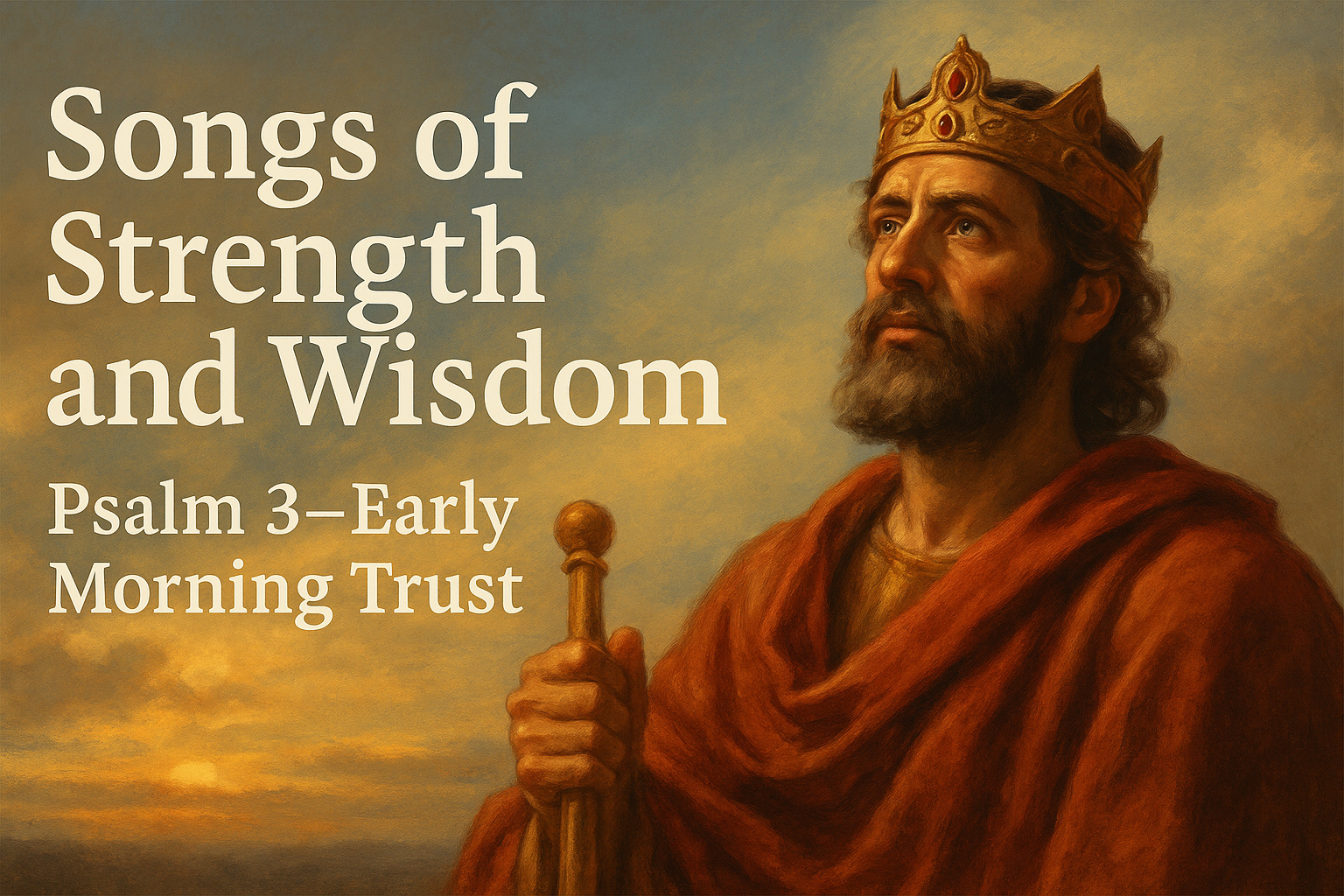
Psalm 3 is the first of thirteen psalms to include a historical superscription, giving us direct insight into the life events behind the text. This psalm was written during one of David’s darkest hours—his flight from Jerusalem during Absalom’s rebellion (2 Samuel 15). It is a vivid testimony of personal faith in the midst of betrayal.
Absalom had killed his half-brother and fled, later returning to Jerusalem. With subtle manipulation, he began turning the hearts of the people away from David (2 Samuel 15:1–6). After four years, Absalom requested to go to Hebron under the guise of fulfilling a vow. David unknowingly granted permission, and Absalom launched his coup, declaring himself king and gathering more support—including Ahithophel, one of David’s trusted counselors (vv. 7–12).
When David heard of the growing rebellion, he chose to flee rather than endanger the city (vv. 13–18). He left Jerusalem with a few loyal men and his household. His kingdom and God’s promise (2 Samuel 7) appeared to hang by a thread.
In Psalm 3, we get an intimate glimpse of what a spiritual man like David thinks during such crisis. It is a deeply devotional and personal prayer, reflecting anxiety, trust, and peace in God’s sovereignty.
The break of day is an ideal time for prayer. As the world awakens, so does our opportunity to renew our trust in God. Psalm 3, written by David during one of the darkest moments of his life—his flight from Absalom—reminds us that even in chaos and betrayal, peace and confidence are possible. It’s the first psalm with a historical title, giving us a rare look not just at David’s circumstances, but his thoughts and feelings amid the storm.
Psalm 3 is a trust psalm, following a classic pattern:
- An expression of anxiety (vv. 1–2)
- An expression of confidence (vv. 3–4)
- A response of contentment (vv. 5–6)
- A reflection on God’s past help (vv. 7–8)
Each verse pulses with raw emotion and unwavering faith.
I. An Expression of Anxiety (3:1–2)
David begins with a cry: “O Lord, how many are my foes!” Surrounded and betrayed—even by his own son—David feels the crushing weight of abandonment and real danger. The threat isn’t imagined; 2 Samuel 15 describes Absalom’s growing popularity, organized plot, and swelling ranks. David is deeply outnumbered. The text says, “The hearts of the men of Israel went after Absalom,” and soon David finds himself fleeing the very city he once ruled.
David’s adversaries are not just military—they are also spiritual. They mock his relationship with God:
“There is no salvation for him in God.”
This insult cuts deeper than a sword. It’s not just an attack on David’s kingship—it’s an accusation against God’s faithfulness. His enemies suggest that God has abandoned him. They imply that his faith is useless, and his downfall is proof.
In effect, David is pleading, “Are You hearing this, God? Are You going to let them believe You won’t rescue Your servant?” His concern isn’t only personal—it’s also theological. He’s asking whether God will let His own reputation suffer by appearing unfaithful.
This is the heart of anxiety: not just fear of what others might do, but fear that God might be silent. Yet even in this fear, David is still talking to God. He refuses to let doubt drown out prayer.
II. An Expression of Confidence (3:3–4)
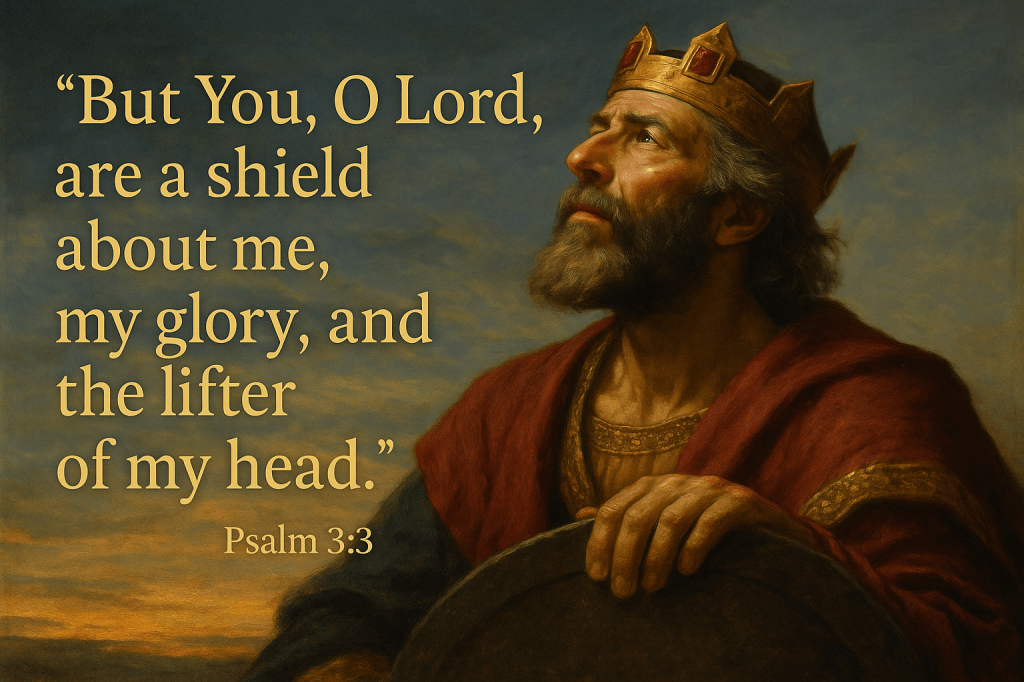
“But You, O Lord, are a shield about me, my glory, and the lifter of my head.”
David turns from fear to faith. As a seasoned warrior, he knows the value of a shield—but this shield is not forged of bronze. It is divine. In countless battles, David had trusted in the physical protection of his shield to deflect swords and arrows. Now, with only a few loyal men and his heart full of prayer, he places his trust entirely in God’s protection.
In the Psalms, God as a shield is a repeated theme: a defense not just for the body, but for the soul (cf. Psalms 18:35; 28:7; 33:20; 84:11; 119:114). The Lord surrounds David with unseen strength.
David also calls God “my glory, and the lifter of my head.” Once crowned and seated on a throne, David is now barefoot and weeping on the Mount of Olives. Yet he believes his honor and identity are secure—not because of his status, but because of God. His head is bowed in sorrow, but he knows the Lord will lift it again. That lifting is a sign of restoration, dignity, and hope.
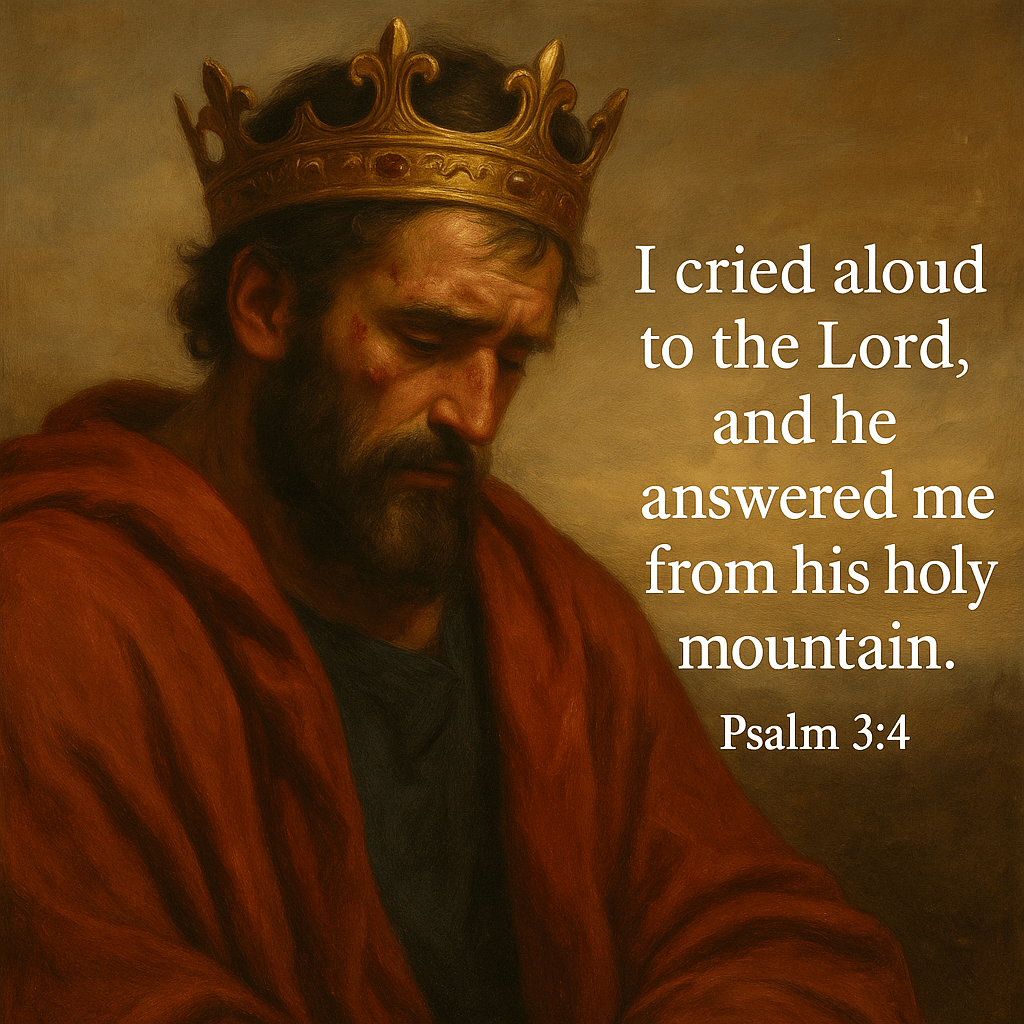
“I cried aloud to the Lord, and He answered me from His holy hill.”
David’s cry is raw and real. He is in pain—but not without hope. Though far from Zion, where the Ark of the Covenant rests, David knows God’s presence is not bound by geography. His answer comes from His holy hill, the dwelling place of His glory.
Today, we find that same confidence in God’s Word. As James 1:5 reminds us, when we cry out in need, God gives wisdom and assurance generously. Like David, we cry out—and God answers.
III. An Expression of Contentment (3:5–6)
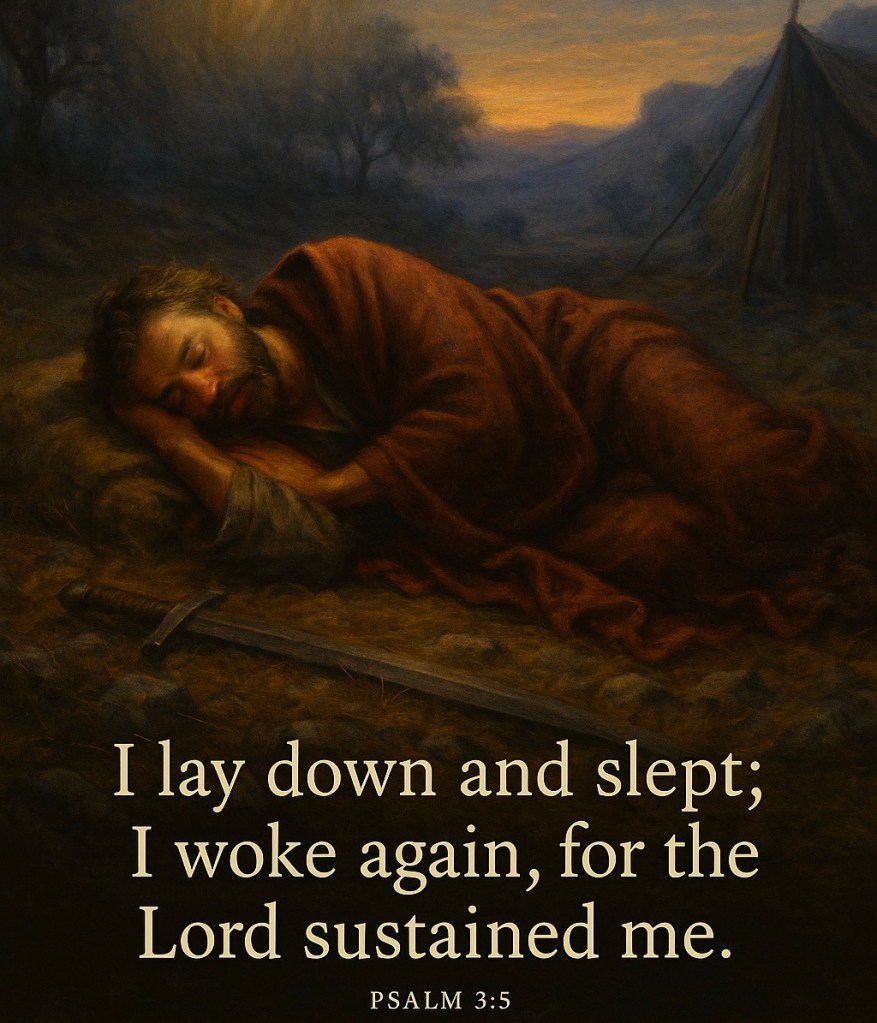
“I lay down and slept; I woke again, for the Lord sustained me.”
This is the turning point. David, surrounded by enemies, slept. How does one lie down and rest in the midst of such danger? Only through deep trust. David’s peace came not from physical safety—but from spiritual certainty. The Lord who watches over Israel never sleeps, and David knew that.
He had once crept through the night and stolen Saul’s spear while he slept—he understood how vulnerable sleep can be. And yet, even with enemies encircling him, David did not lose sleep. His confidence in God was vindicated. He lay down, not in fear, but in faith—and God sustained him through the night.
David’s words echo with the reassurance that when we are weak, God is strong. When we are uncertain, God is stable. When we are confused, God’s truth remains. As Philippians 4:6 and John 14:27 remind us, God’s love and care bring peace that surpasses understanding.
“Now I rise up from my sleep.
The Good Shepherd watched o’er His sheep.
If this be the last day I wake,
Then may I live it for His sake.
If I should live until tonight,
I trust God will let me sleep tight.” —Adapted from Henry Johnstone’s prayer
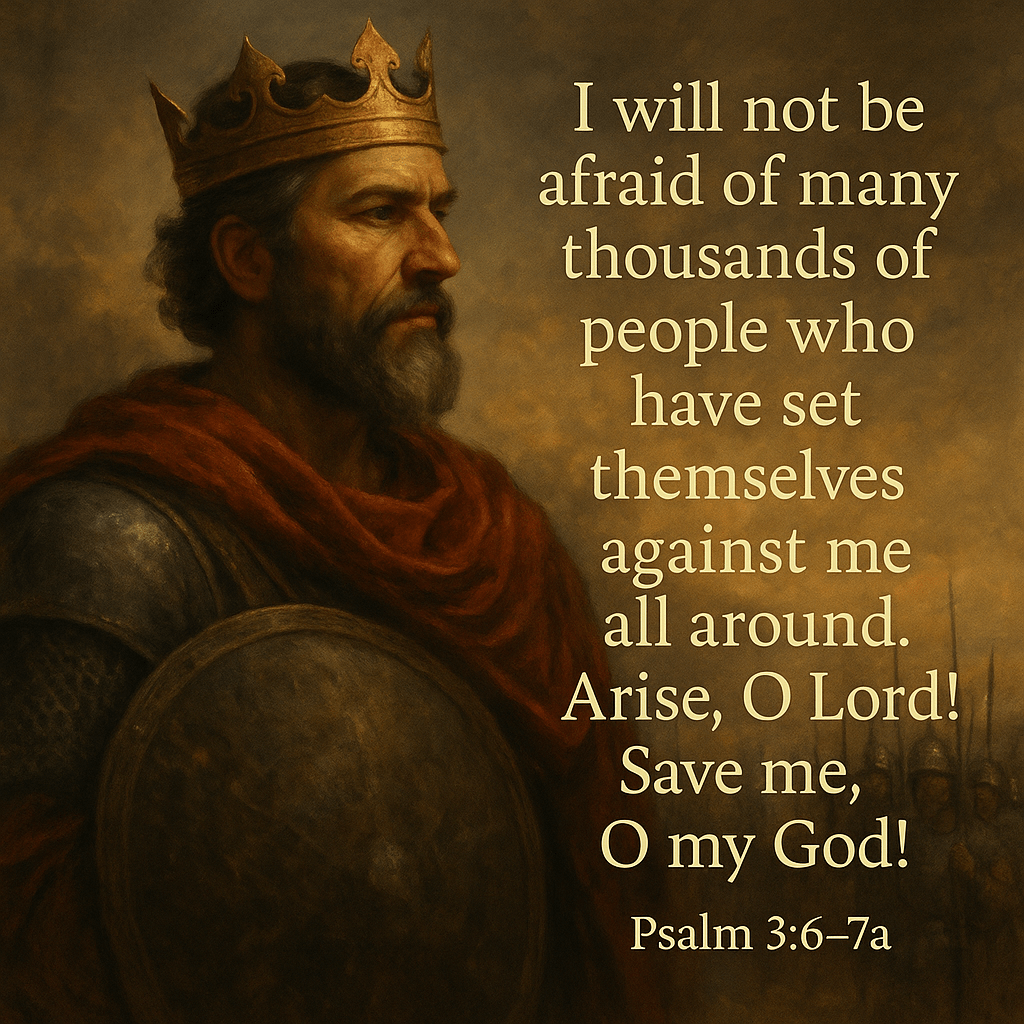
“I will not be afraid of many thousands of people who have set themselves against me all around.”
David declares that he will not be afraid—even though he is encircled by enemies. The image is powerful: his enemies have made a circle around him, but so has God—like a shield. The righteous always have many enemies (cf. John 7:7; 15:18–20; 1 John 3:13), but they serve a God who surrounds them with strength. Fear may come, but faith prevents it from taking control.
IV. A Reflection on Past Deliverance (3:7–8)
David closes with a prayer that sounds like a memory:
“Arise, O Lord! Save me, O my God! For You strike all my enemies on the cheek; You break the teeth of the wicked.”
David may be recalling the many times God delivered him in the past. Or, his faith may be so resolute that he speaks of deliverance as if it has already occurred. Either way, his confidence in the Lord’s saving power is absolute. The imagery is vivid: enemies being struck on the cheek, teeth shattered like brittle pottery—this is battlefield language from a warrior who has seen what God’s hand can do.
David isn’t calling for vengeance out of pride, but justice from the Righteous Judge. Those who oppose God’s anointed oppose God Himself, and David trusts that God will act powerfully on behalf of the faithful.
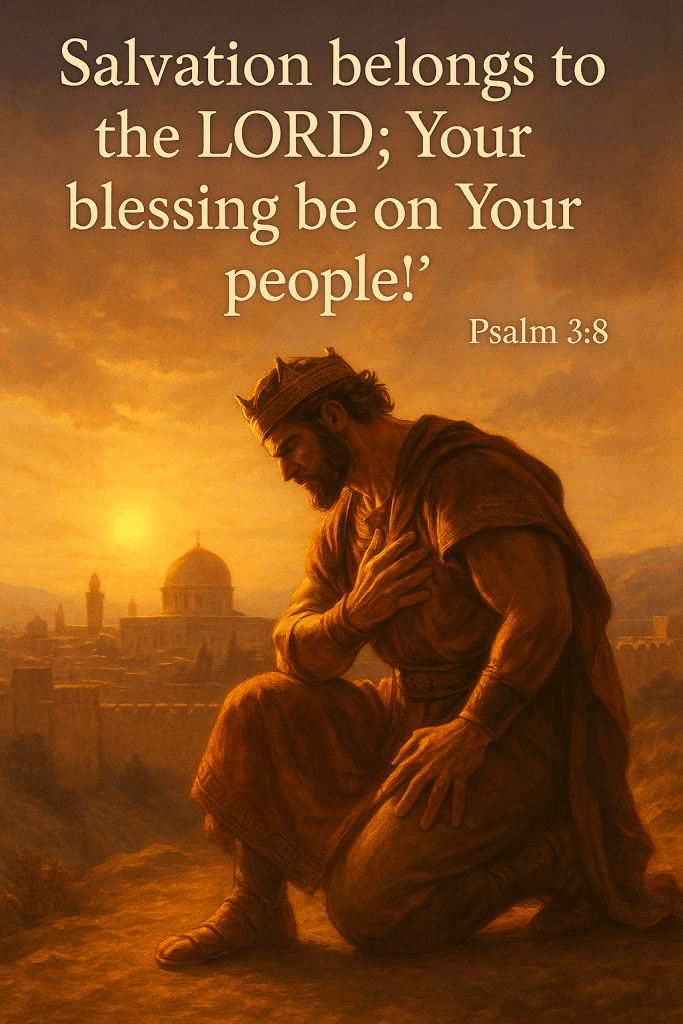
“Salvation belongs to the Lord; Your blessing be on Your people!”
This final verse summarizes the psalm with both personal assurance and public declaration. The word “save” is a key term in the Psalms, appearing 46 times. While it can refer to spiritual salvation, it often speaks of deliverance from immediate crisis—as it does here.
David’s cry ends not in fear, but in praise. He knows his throne doesn’t secure him. Armies don’t save him. God alone delivers—and not just him, but all who belong to Him. This is more than personal victory; it’s a song of hope for all God’s people.
Personal Study Guide
Reflection Questions:
- Where are you feeling outnumbered or overwhelmed?
- How do you respond to voices—internal or external—that say, “God will not help you”?
- In what ways can you experience deeper peace by trusting in God?
Personal Action Steps:
- Begin each morning this week with Psalm 3 and a short prayer of trust.
- Identify one fear you can turn over to God, then journal how that shift affects your day.
Prayer Points:
- Thank God for watching over you while you sleep.
- Ask for the courage to trust Him amid real threats.
- Praise Him for being your shield and your glory.
Study Guide for Couples
Reflect Together:
- Are there anxieties we’ve been carrying that we haven’t surrendered to God?
- How can we help each other “sleep in peace” by trusting God more?
Pray Together:
- Thank God for sustaining your relationship through past struggles.
- Pray for protection, peace, and the ability to face challenges together.
Action Step:
- Begin or end each day this week by reading Psalm 3 aloud as a couple.
Study Guide for Family Devotion
Read Psalm 3 Together
Discussion Questions:
- Have you ever been scared to go to sleep? What helped you feel safe?
- What do you think it means when David says God is like a shield?
- How do we know God watches over us while we sleep?
Activity:
- Before bedtime, each person draws or writes a picture of a “shield” with things God protects us from. Hang them by your beds as reminders.
Prayer:
- Thank God for always being awake and watching over your family.
- Ask Him to help you all sleep in peace and wake with courage.
Final Thoughts
Psalm 3 is the quiet voice of courage that rises in the stillness of dawn. It reminds us that faith does not deny fear—but it trusts God more than it trusts the danger. As fathers, husbands, and leaders, may we lie down in peace, rise with purpose, and proclaim with David: “You, O Lord, are a shield about me.”
By Jeremy Sprouse
Jeremy has been married to Erynn since August 1999. They are blessed with six children: Jaden, Isaiah, Isaac, Ean, Joseph, and Evelyn. Jeremy preaches for the Patrick St. church of Christ in Dublin, TX and is the author of To Train Up a Knight.

 Knights of The Father