The boy steps forward—no armor, no sword, just a stick in his hand. I laugh. Is this a joke? I shout, taunting him, insulted by the insult. He keeps walking. No fear. No hesitation.
Then his hand moves.
Not for a blade.
For a what seems to be a bit of rope
I hear the whistle before I see the blur.
A flash.
A crack.
And the world tilts sideways.
What… was that?
Darkness. . .
A giant is felled by a simple stone because of a boy who trusted in God.
You might think an article titled Slinging Like David would be about courage, faith, or slaying metaphorical giants. It’s not.
This one’s just about fun.
The kind of fun that involves backyard target practice, ancient tools, and a few flying tennis balls.
Slinging is a near-perfect dad adventure. It’s:
- Fun – There’s something deeply satisfying about launching a stone with just a pouch and some string.
- Cheap – Most slings can be made with stuff you already have at home.
- Simple – Once you get the hang of it, even young kids can join in.
- Just Unpredictable Enough – That one wild shot into the neighbor’s bush will be family legend for years.
- Mildly Questionable – The kind of activity that makes your wife poke her head out the door with that look.
This isn’t one of those VBS craft projects that barely flings a pom-pom across the room. This is a guide to making and using real, working slings—the kind that can launch tennis balls across your backyard and make you feel like a shepherd warrior (or at least a really cool dad).
This guide will walk you through how to make and use two classic types of slings using materials like yarn, leather, and twine. You’ll learn how to sling safely, what ammo to use, and how to turn it into a backyard bonding experience your kids will never forget.
So grab your scissors, some string, and a sense of adventure—it’s time to sling like David (minus the giant).
What Is a Sling (And Why It’s Awesome)?
First things first: a sling is not a slingshot.
David did not—and could not—have used a slingshot. Those came along in the 1800s after rubber was invented.
This article is about the real deal—the ancient sling, one of humanity’s oldest and coolest projectile weapons.
At its core, a sling is just:
- Two cords – One to hold, one to release
- A pouch – Flexible and cradles your ammo
You place a projectile in the pouch, swing the cords to build momentum, and release one cord at just the right time to let it fly. That’s it. No springs. No gears. No batteries. Just physics and a bit of practice.
And it works surprisingly well.
- Shepherds used them to guard flocks.
- Soldiers used them in battle.
- Kids used them to knock fruit out of trees (and definitely cause some trouble).
Some ancient armies were so good with slings that they used entire sling units, and even built sling towers to hurl stones the size of bowling balls.
Israelites were exceptional slingers, especially from the tribe of Benjamin:
“Among all this people there were 700 chosen men left-handed; every one could sling stones at a hair and not miss.” —Judges 20:16
David’s sling wasn’t a child’s toy—it was a military-grade weapon with deadly force. Slingers were used like light infantry skirmishers, harassing enemies from a distance and disrupting formations before close combat.
A sling is:
- Quiet
- Portable
- Weirdly powerful
- And just primitive enough to spark a child’s (and a dad’s) sense of wonder
The sling also functioned like an ancient concealed weapon. David probably kept his sling wrapped diagonally across the chest like a bandolier, looped and tied at the waist like a belt, or possibly knotted around his wrist when actively herding.
Why wrap it around the body?
- Accessibility:
Wrapping the sling around the chest or torso would keep it immediately accessible, crucial for defending flocks from predators like lions, wolves, or bears. - Storage Without Tangling:
A sling is made of two long cords—easy to tangle if just stuffed into a bag. Wrapping it around the chest or waist prevents this while keeping the pouch secured. - Historical Precedent:
- Ancient Balearic slingers (renowned mercenaries) were known to carry multiple slings wrapped around their heads, waists, or shoulders, each for different ranges.
- Some modern-day shepherd cultures (e.g., in the Andes or Middle East) still carry their slings looped or tied around the body.
- No Need for a Sheath:
Unlike a sword or staff, a sling has no rigid shape and doesn’t require a sheath. Wrapping it keeps it compact and secure without extra gear.
It’s quite possible that Goliath didn’t notice David’s sling at first because it was likely coiled around his body as was common for ancient slingers. When Goliath mocks David he mentions his staff (or “stick” as Goliath calls it), but doesn’t talk about the sling suggesting it may not have been immediately visible, especially from a distance (1 Samuel 17:43).
Goliath, focused on size and weapons, dismissed David as an unarmored, unequipped, and unexperience youth—making David’s sudden use of the sling a surprising and devastating turn in the fight.
A skilled slinger could ready and fire in just seconds, so the weapon didn’t need to be “drawn” visibly ahead of time like a sword or spear.
Sling Styles to Try
You can make a sling with as little as a shoelace and a sock (and if you have toddlers, you’ve probably already tried). But if you want to upgrade your backyard arsenal, here are two classic sling types that look awesome and actually work.
Each design has its own vibe—pick one based on the materials you have and how crafty you’re feeling.
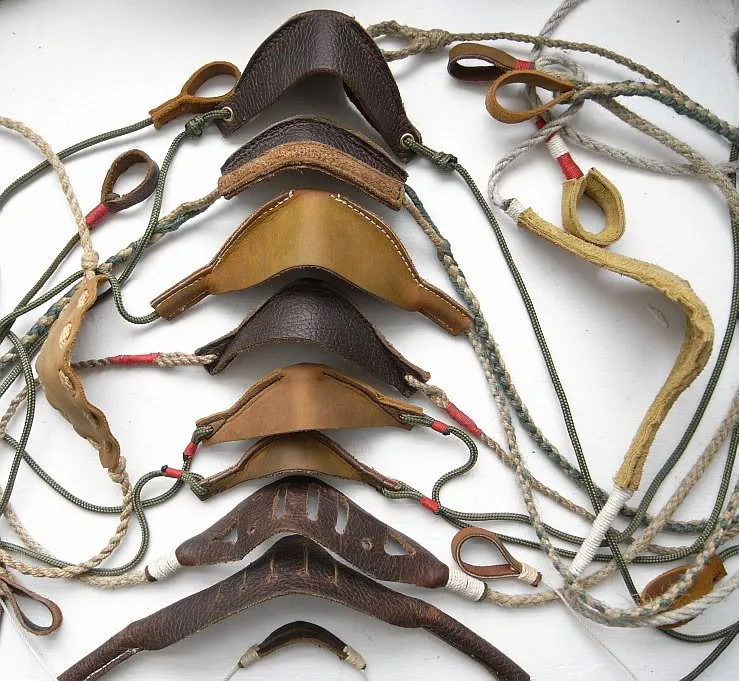
Simple Rope-and-Pouch Sling
Fast, fun, and easy for beginners—no braiding required!
If you want to jump right in without a long crafting session, this simple rope-and-pouch sling is the perfect starting point. It’s quick to make, uses basic materials, and works surprisingly well. You can build one in under 15 minutes and start slinging before your kids lose interest or start sword-fighting with the cords.
For more variations and tips, check out the original guide here:
🔗 Slinging.org Forum – Simple Rope-and-Pouch Sling (The picture of the slings also comes from this link.). This is also a good guide: http://www.seekyee.com/Slings/howtos/leather2.htm
Materials You’ll Need:
- Two cords, each about 3 feet long (paracord, nylon twine, or strong string)
- A rectangle of leather, canvas, denim, or thick fabric, about 6–7 inches long and 2 inches wide
- Scissors
- Hole punch (or nail/knife to poke holes)
- Lighter (to seal synthetic cord ends)
Step-by-Step Instructions
Cut the Pouch
- Cut a rectangle of material about 6 inches long and 2 inches wide.
- Fold it in half lengthwise (like a hot dog bun).
- Punch or poke a hole in each end, about ½ inch from the edge.
Prepare the Cords
- Cut two lengths of cord, about 3 feet each (longer if you want more power).
- Melt the ends with a lighter if using synthetic cord to prevent fraying.
Attach the Cords
- Thread one cord through each hole in the pouch.
- Tie a stopper knot (like an overhand or figure-eight) to keep the cord from slipping back through the hole.
- Pull the knot snug so the pouch cinches slightly around it.
Make the Finger Loop and Release Knot
- On one cord (the retention cord), tie a loop large enough to fit comfortably over your ring finger.
- On the other cord (the release cord), tie a small knot at the end for gripping between your fingers.
You’re Done!
This design might look simple, but don’t underestimate it—it throws ammo beautifully and is perfect for learning the drop-and-swing technique (explained below). Kids can decorate the pouch with paint or markers, and you can even make a whole batch for a family sling tournament.
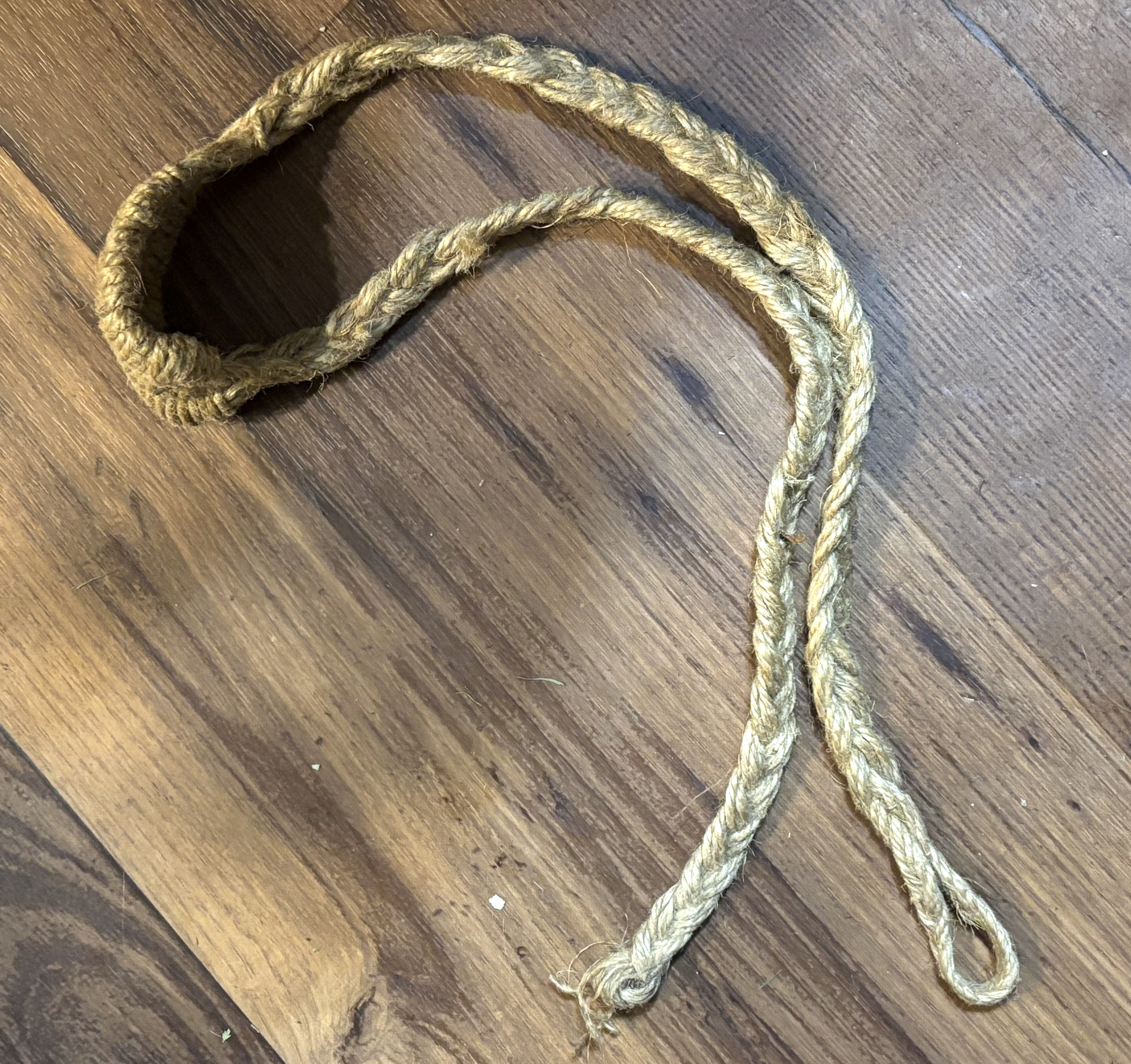
Woven Shepherd’s Sling
Good for all ages (with help weaving)
This one is likely the closest to what David used. It starts with a coiled yarn warp and is woven like a tiny rug. You don’t need leather or power tools—just yarn and some patience. David probably spent some of his time shepherding weaving projects like these slings.
- Soft and safe for lighter ammo
- Surprisingly strong when tightly woven
- Feels like a real hands-on heritage project
- Excellent for learning weaving and pattern skills
- Bonus: If your kids enjoy friendship bracelets, they’ll love this. Also, you’ll be able to use these techniques to braid your daughter’s hair.
Link: Woven Sling Tutorial by T.J. Potter
If neither of these sounds appealing, there are hundreds of different styles of slings you can learn to make.
🔗 Slinging.org is a great resource for tutorials and sling inspiration.
Choose Your Ammo
What you put in the sling matters just as much as how you throw it. When starting out, always err on the side of soft and safe.
Best Beginner Ammo:
- Tennis Balls or Racket Balls – Great size and weight, and they bounce instead of break.
- Beanbags – Easy to make, easy to clean up.
- Hacky Sacks – Cheap, durable, and already the right size.
- Socks Filled with Rice – Surprisingly effective and totally safe.
- Water Balloons – A summer favorite; safe, fun, and surprisingly dramatic.
For Advanced Slingers (With Caution):
- Clay Balls – You can shape and bake your own.
- Smooth River Stones – Great for distance slinging in wide-open spaces.
- Rubber Bouncy Balls – Fun and chaotic. Be ready to dodge.
Pro Tip: Paint your ammo in bright colors so you can actually find it again after a wild throw.
Recommended Sling Method: Overhand Throw
Forget Hollywood-style helicopter spins. For beginners, this method is safer, simpler, and way easier to learn. It gives you just enough control to feel awesome—without putting holes in the garage.
Bonus Tip: Try slinging into a big laundry basket or tarp to start. It’s a fun way to work on accuracy and makes cleanup a breeze.
Wrapping It Up: Sling, Laugh, Repeat
If you made it this far, congratulations—you’re officially a sling-maker and stone-slinger! Whether your ammo went 50 feet or flopped at your feet, the point isn’t perfection—it’s the joy of making something together and laughing while you learn.
Slinging is one of those rare activities that hits the sweet spot:
- It’s ancient but feels new.
- It’s simple but takes skill.
- And it’s ridiculous fun.
Keep your first sling as a memory. Make a second one for friendly competitions. Let your kids decorate theirs with names, colors, or even “battle marks.” And when they inevitably ask to make another, let them lead the project.
Sling Games and Challenges
Here are a few backyard games to try once your slings are ready:
Accuracy Arena
Set up buckets, hula hoops, or cardboard cutouts at different distances. Award points based on difficulty. Winner gets to pick what’s for lunch.
Sling Speed Round
Time how fast each player can load and sling 3 shots. Bonus points for hitting the target, but style counts too.
Sling Art
Let kids paint their pouches or wrap colored thread into their cords. A camo sling? A glitter pouch? Go wild.
Wild Ammo Throw
Try fun, safe objects like marshmallows, sponge balls, or rolled-up socks. See what flies farthest (and what just flops hilariously).
Don’t Forget to Capture It
Take a few pictures or videos while you sling—it’ll be fun to look back on later. Even better, take a photo of your finished sling next to your child’s and label it “First Armory.”
Onward Adventures
Now that you’ve mastered the sling, maybe next time you’ll build a catapult. Or a fort. Or a giant cardboard Goliath.
Whatever’s next, remember: the best memories are built by hand, flung into the sky, and shared with someone you love.
Now grab your gear, step outside, and sling like David—just for the fun of it.
By Jeremy Sprouse
Jeremy has been married to Erynn since August 1999. They are blessed with six children: Jaden, Isaiah, Isaac, Ean, Joseph, and Evelyn. Jeremy preaches for the Patrick St. church of Christ in Dublin, TX and is the author of To Train Up a Knight.

 Knights of The Father