

Many men long to be remembered. We dream of leaving a mark—of building something that will outlive us. The ancient Greeks called it kleos (κλέος)—the glory earned by great deeds, sung in stories long after a man’s bones had turned to dust. To be remembered was to have lived well.
But the Bible reveals a deeper, more enduring kind of glory: doxa (δόξα). Rather than fame earned by valor, doxa speaks of a divine, radiant glory—something revealed, not earned; something eternal, not fleeting. Doxa speaks of God’s eternal majesty—a glory that is both gift and destiny for those who follow Christ.
The Bible speaks of a glory:
Not built on our strength, but revealed through God’s.
Not fleeting like morning mist, but weighty, eternal, unshakable.
Not sung by men, but celebrated by heaven.
As Christian fathers, the choice stands before us every day:
Will we chase a glory that fades—or live for a glory that lasts forever?
Will we build monuments to ourselves—or lead our families into the splendor of God’s kingdom?
The world may sing the songs of men—but heaven sings the songs of the faithful.
Which song will your life inspire?
Kleos: The Pursuit of Earthly Fame
Kleos is often translated as “glory” or “renown.” According to BDAG, kleos refers to “that which is heard about someone”—fame based on deeds others would recount (BDAG, p. 548). It was public and precarious, dependent on the approval and memory of others.
In heroic Greek society, especially in the Homeric epics, kleos is one of the most important goals of a warrior. It was the measure of a man’s worth after death. Kleos was achieved through action. You could not gain kleos through mere birth or status—you had to earn it through brave and noble deeds, especially on the battlefield, and ensured immortality through memory. It was often in tension with nostos (νόστος), the desire to return home. Bards and rhapsodes preserved kleos by recounting heroic deeds, making it a communal and narrative immortality.
For example, in the Iliad, Achilles says:
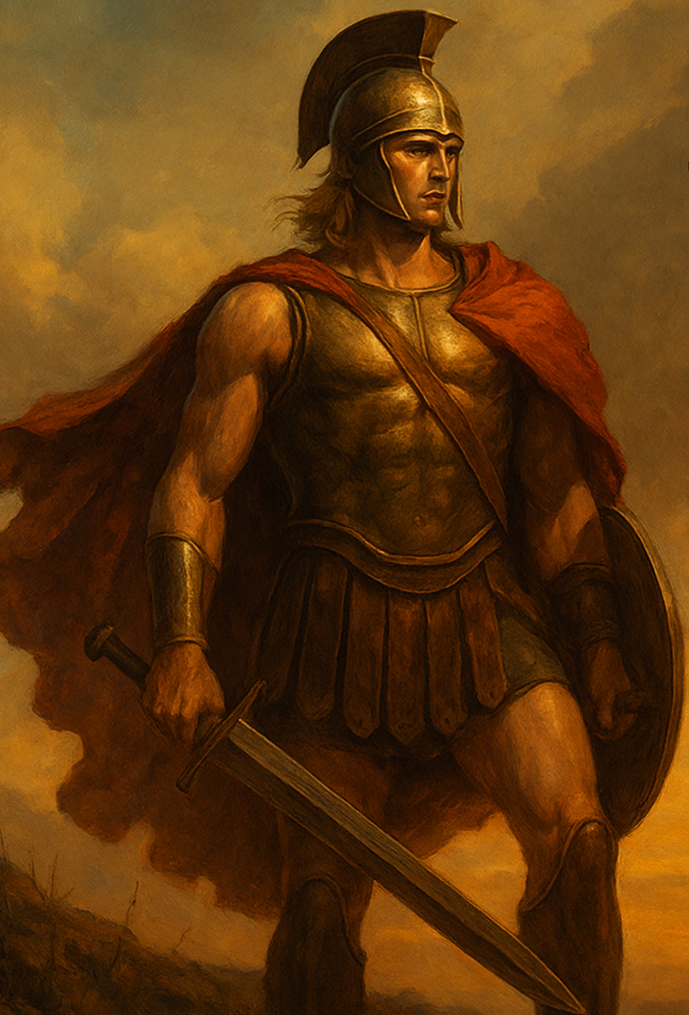
“If I stay here and fight, I’ll never return home, but my kleos will never die.” This shows how the pursuit of eternal renown through valor was more important than life itself to many Greek heroes.
Achilles chooses kleos—a short life crowned by undying fame. This type of glory was about being talked about, remembered for your daring deeds and personal victories. It was rooted in self, in performance, in reputation.
So, kleos wasn’t just personal fame—it was a form of immortality tied to honor, memory, and the power of words. It was earned, told, and remembered.
In many ways, today’s world still echoes this mindset. Career success, personal branding, social media recognition—it’s all a modern form of kleos. Even in fatherhood, men may feel tempted to measure their worth by how admired or “successful” they appear.
The concept of chasing kleos is almost completely absent from the New Testament. There is one passage that contains the word: 1 Peter 2:20 where means “credit” or “commendation”—though many manuscripts use “χάρις” (charis; grace) instead. It is clear from the passage it isn’t being used in the Greek sense of the word, but by finding commendation for suffering in a Christ-like manner.
Doxa: The Pursuit of Eternal Honor
In contrast, doxa is the dominant Greek word for “glory” throughout Scripture used around 166 times in the New Testament. It’s not something achieved but something revealed—a reflection of God’s own majesty and holiness. According to the Theological Dictionary of the New Testament (TDNT), doxa originally meant “opinion” or “reputation” in classical Greek, but in the Bible it becomes associated with the manifested splendor and majesty of God (Vol. II, p. 233–234). In BDAG, doxa is defined as “the condition of being bright or shining; honor as enhancement or recognition of status” (p. 257).
In the Old Testament (via the Septuagint), doxa translates the Hebrew kavod, which literally means “weight” or “heaviness.” Glory isn’t fleeting or superficial—it’s solid, substantial, real. In the New Testament, doxa becomes the language of Christ’s glory, and through Him, the glory God intends to reveal in us.
And nowhere is this idea more beautifully developed than in the Gospel of John. John’s Gospel gives us a radical redefinition of glory. Rather than fame through conquest, Jesus speaks of glory through sacrifice, honor through humility, and victory through surrender.
Doxa in the Gospel of John
1. Glory Revealed Through Presence
“We have seen His glory, glory as of the only Son from the Father, full of grace and truth.” —John 1:14
True glory isn’t self-proclaimed—it’s embodied. Jesus shows us that glory lives among us, full of grace and truth. As fathers, our calling isn’t to proclaim our greatness but to walk among our families with grace and truth.
2. Glory Manifested Through Quiet Faithfulness
“This, the first of his signs, Jesus did at Cana in Galilee, and manifested his glory.” —John 2:11
Turning water into wine wasn’t a show of power—it was a quiet act of care for a wedding celebration. Fathers glorify God not just in public victories, but in private faithfulness—loving our wives, guiding our children, showing up again and again.
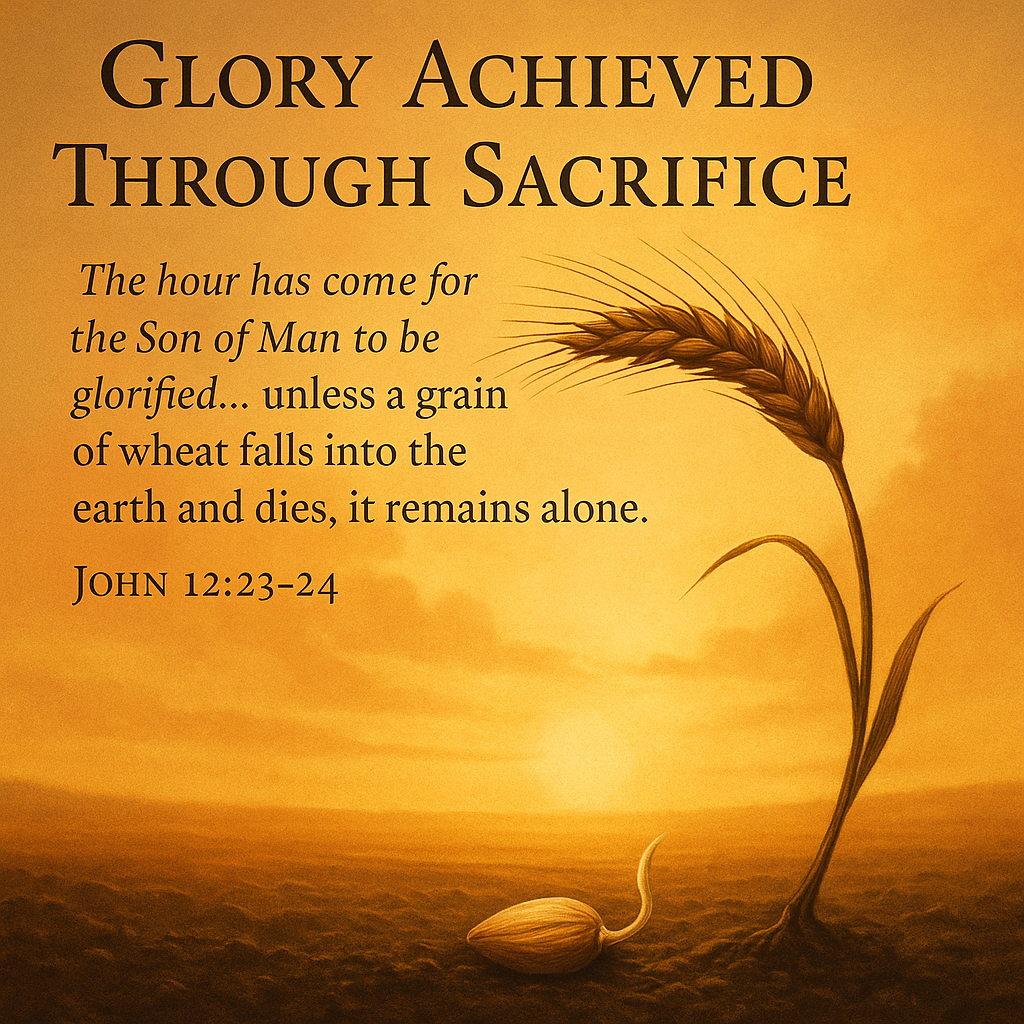
3. Glory Achieved Through Sacrifice
“The hour has come for the Son of Man to be glorified… unless a grain of wheat falls into the earth and dies, it remains alone.” —John 12:23–24.
Jesus teaches that death leads to life, and sacrifice leads to glory. The father who sacrifices his pride, his comforts, or his ambitions for the spiritual good of his family finds not worldly kleos, but divine doxa.
4. Glory Shared Through Obedience
“I glorified you on earth, having accomplished the work that you gave me to do.” —John 17:4
Christ’s glory culminates in fulfilling the Father’s mission. Fathers likewise find true glory not by chasing status, but by completing the work God has entrusted to us—to love, to lead, and to make disciples of our children.
Several other key lessons about doxa in the New Testament deepen this vision:
- We were made to reflect God’s glory, but we’ve fallen far (Romans 3:23)
- Humans exchanged the glory of the immortal God for images; our fundamental sin is a failure to honor His glory (Romans 1:23).
- Believers seek glory, honor, and immortality. (Romans 2:5-7, 9-10)
- Future glory outweighs present suffering; it is out ultimate inheritance (Romans 8:18, 21, 30)
- Earthly hardships refine us for a heavier, eternal glory (2 Corinthians 4:17)
- Faithful perseverance brings eternal honor (1 Peter 1:7)
- Salvation and glory are inseparable for the faithful (2 Timothy 2:10)
- Suffering for Christ is a sign of His Spirit resting upon us (1 Peter 4:14)
Applications for Christian Fathers
Give Glory to God
Our homes should be places where God’s glory is praised and magnified—where faith, forgiveness, and love are everyday realities.
Redefine Success
Are you building a legacy based on achievements? Or are you planting seeds of eternal significance? True success is measured not by what we build, but by whom we lead to Christ.
Embrace Servant Leadership
Just as Jesus washed feet in John 13, we glorify God when we serve humbly. Being the head of a household means carrying the cross, not wielding a crown.
Our mission is not to reflect our own greatness but to reclaim the lost image of God’s glory through Christ, shaping our children’s hearts toward Him.
Live for Eternal Impact
A name remembered is nice. A soul redeemed is better. Our children may not write songs about us, but they can see God’s glory reflected in us—and pass that light on to the next generation. A father’s greatest legacy is preparing his family for eternal glory, not just earthly achievements.
The Value of a Good Name
Proverbs 22:1 says: “A good name is to be chosen rather than great riches, and favor is better than silver or gold.”
At first glance, this might seem to echo the ancient longing for kleos—the desire to be remembered.
But the wisdom of Proverbs calls us to something richer and deeper. A good name in Scripture is not about achieving fame. It is about living a life of faithfulness, righteousness, and love—a life so deeply shaped by God’s glory that it leaves a testimony, not to ourselves, but to Him.
Unlike the fleeting songs of men, a good name built on righteousness reflects God’s eternal majesty. It is weighty—like the glory (doxa) the Bible calls us to seek.
As fathers, our goal is not to carve our names in the monuments of this world.
It is to carve God’s truth into the hearts of our families. It is to walk so humbly, love so deeply, and serve so faithfully that even if our names are forgotten, the light we carried will endure.
Better to be forgotten by men and honored by heaven, than praised by men and unknown to God.
Conclusion
The world calls us to chase kleos—to be remembered, admired, applauded. Personal renown which is as fleeting as morning mist. But Jesus calls us to pursue doxa—to reflect God’s glory in our words, our work, and our love. Doxa calls us to reflect God’s eternal majesty, weighty and unshakable.
The father who pursues kleos may gain applause for a time.
The father who seeks doxa leaves a legacy woven into eternity.
Don’t build your fame, but a legacy of light. Not for your glory—but for His.
“To God be the glory forever. Amen.” (Romans 11:36).
By Jeremy Sprouse
Jeremy has been married to Erynn since August 1999. They are blessed with six children: Jaden, Isaiah, Isaac, Ean, Joseph, and Evelyn. Jeremy preaches for the Patrick St. church of Christ in Dublin, TX and is the author of To Train Up a Knight.

 Knights of The Father