
“These are the names of David’s mighty warriors…” — 2 Samuel 23:8
Not all heroes wear crowns or have great epics written about them. Some wield spears, grip swords until their hands freeze, or stand alone in a field of beans.
Among the many who followed David, three rose above the rest—not because they commanded legions, but because they refused to retreat when it mattered most. These were David’s three mightiest men, legendary warriors whose courage wasn’t measured in applause but in loyalty, conviction, and divine dependence.
Their stories—recorded in 2 Samuel 23:8-12 and 1 Chronicles 11:10-14—offer more than history. They are examples for fathers, leaders, and disciples of the true King, Jesus Christ.
- Adino, who stood when outnumbered 800 to 1.
- Eleazar, whose grip on his sword was a grip on victory.
- Shammah, who stood alone so his people wouldn’t starve.
These were men who stood their ground when others ran. Men who knew that defending what seems small can change everything. Men who were mighty because they were faithful.
As fathers, our battlefield is different. We fight for hearts, for homes, for truth. And like these men of old, we do not fight alone—we stand with our King.
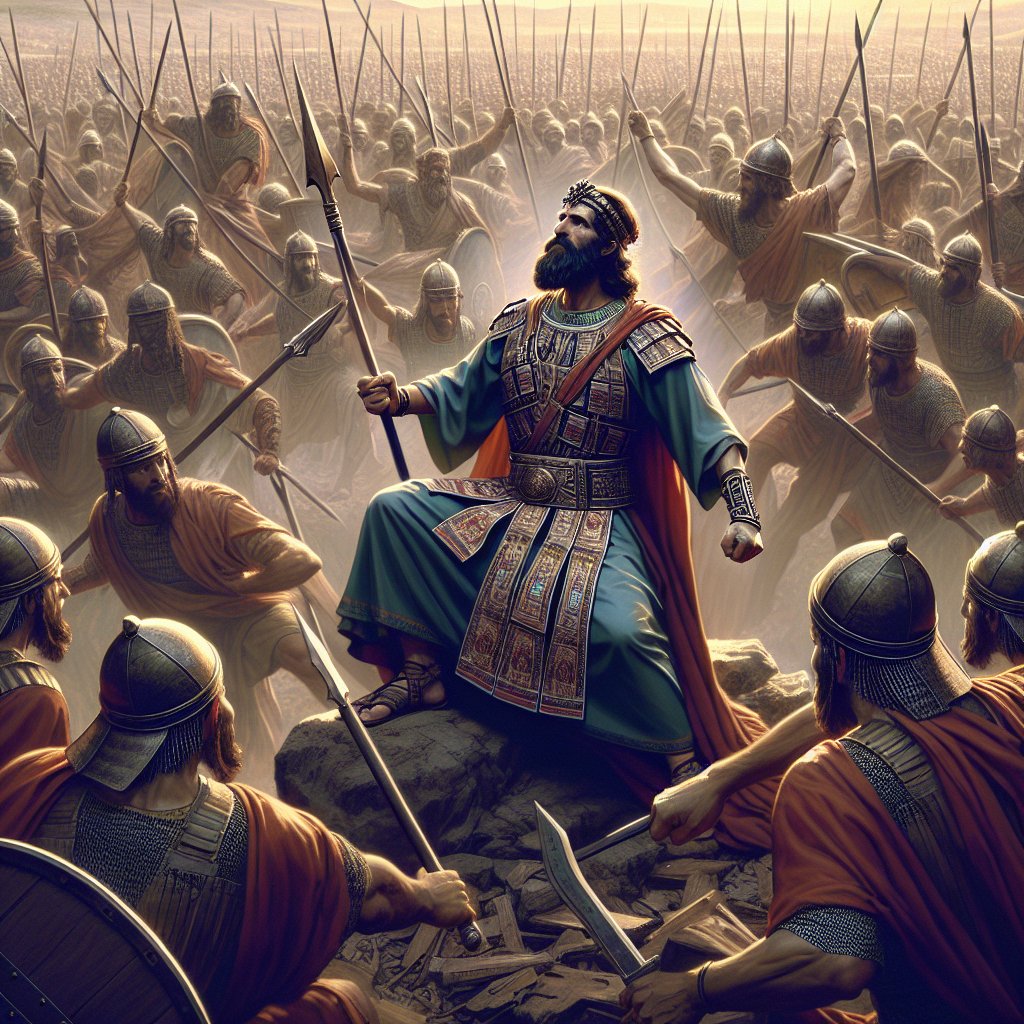
Adino the Eznite: Courage in the Face of Impossible Odds (2 Samuel 23:8, 1 Chronicles 11:10)
Adino wasn’t actually his name, but an epithet given to him because of his courageous deeds. Its meaning is uncertain but it possibly describes him or the spear attack he used. He stood alone against 800 enemies—and won. He wasn’t superhuman; he was simply unwilling to quit. (Note: Chronicles says 300 enemies probably due to a copyist error, but either way it is an impressive feat.)
What made him mighty:
- He Faced Overwhelming Odds. Outnumbered 800 to 1, Adino didn’t retreat, didn’t negotiate, and didn’t flinch. This mirrors spiritual truth for Christian men: we face a world of sin, pressure, temptation, and discouragement, and we must learn to fight—often outnumbered.
- He Fought with the King’s Purpose. Even though the King (David) isn’t directly named in his battle, Adino’s valor earned him a spot at the head of David’s elite warriors. He was a man whose allegiance to the king drove his courage, not his ego.
- He Trusted in Divine Strength. There is no earthly way a man wins against 800 foes without something supernatural at work. His strength, like ours, must have come from God’s Spirit empowering his courage and endurance—just like Samson or Gideon (Judges 15:15–16; Judges 7).
Stand When You’re Outnumbered. The world may mock your convictions, your leadership in the home, or your insistence on raising your children in the Lord. Stand anyway. The odds may seem stacked against you—but one spiritual man, empowered by God, is more than a match for 800.
Today, as fathers and men of faith, we’re often outnumbered by cultural pressures, spiritual enemies, and life’s burdens. But like Adino, we have the weapons to fight with. Today, we fight not with physical weapons, but with the strength God provides (Ephesians 6:10–13). Courage is not the absence of fear—it’s the resolve to stand when others would run.
Be a Spearman, not a Spectator. Adino didn’t watch others fight. He entered the field and made a difference. Fathers, your home is your battlefield. Your spear is the truth, the Word, and your faithful action.
Let your loyalty be legendary. Adino’s name—whether literal or figurative—was etched in history because he stood for his King. Will your children speak of your faithfulness with that kind of awe?
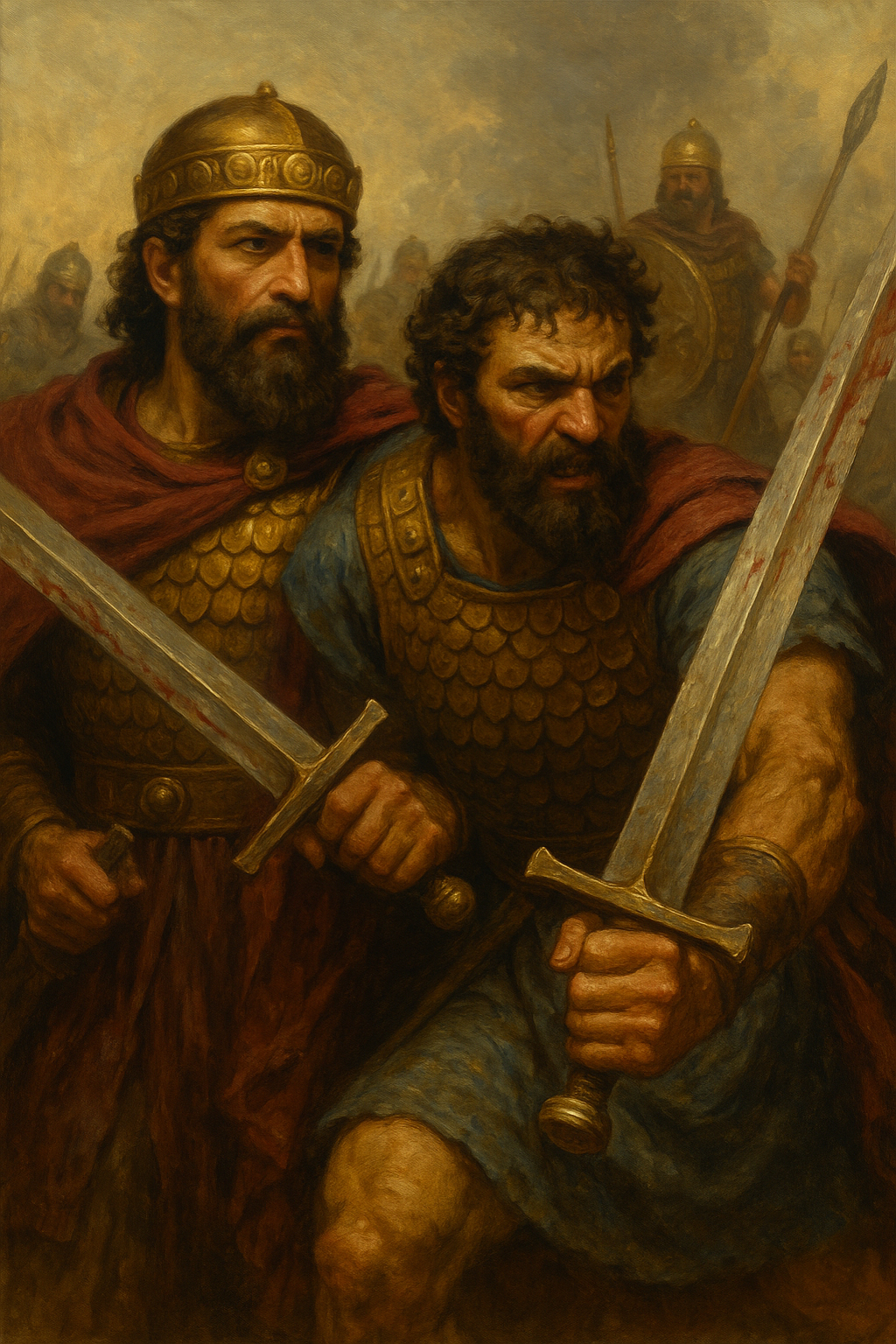
Eleazar: One With the Sword (2 Samuel 23:9-10, 1 Chronicles 11:12-14)
When others fled, Eleazar gripped his sword so tightly that his hand froze around it. He became one with his weapon.
Eleazar didn’t fight alone—he fought beside his king. When everyone else abandoned the field, he and David stood their ground in the middle of a barley field—a plot of land not just full of grain, but full of meaning.
Why mention barley? Because that field represented provision for God’s people. To flee would mean to surrender what sustained the community. It wasn’t about real estate—it was about responsibility.
Eleazar fought to defend what others were too afraid to protect. He clung to his sword until his hand froze around it, fused by strain and determination. And when the dust settled, the other Israelites finally came back—not to fight, but only to strip the slain.
They returned for the spoils, but Eleazar had already won the war.
What made him mighty:
- He stood with his king. When others retreat—when your culture, coworkers, or even fellow Christians step back—you stand with Jesus. The battlefield may be lonely, but it is where loyalty is proven.
- He protected the field. Your home is your field. Your marriage is your field. Your children’s hearts, your prayer life, your testimony—these are worth fighting for. Don’t let the enemy claim what feeds your family spiritually.
- He held to his sword. Eleazar’s grip is legendary. Can the same be said of your grip on the Word of God? When stress, fatigue, or temptation hit, do you drop your weapon—or do you cling to it tighter? Do we wield the Sword of the Spirit (Eph. 6:17) with such familiarity and commitment that it is an extension of who we are? Men of God must not only read the Word—we must live it, fight with it, and hold fast to it.
- God brought him victory. Eleazar didn’t win because of sheer muscle. Scripture is clear: “The Lord saved them by a great deliverance.” As fathers, our job is to fight faithfully—the victory belongs to the Lord.
Your children are watching. Let them see a dad who clings to Scripture as if it were life itself—because it is. Make the Bible part of your routine, your decisions, your conversations. Let it be your weapon and your anchor.
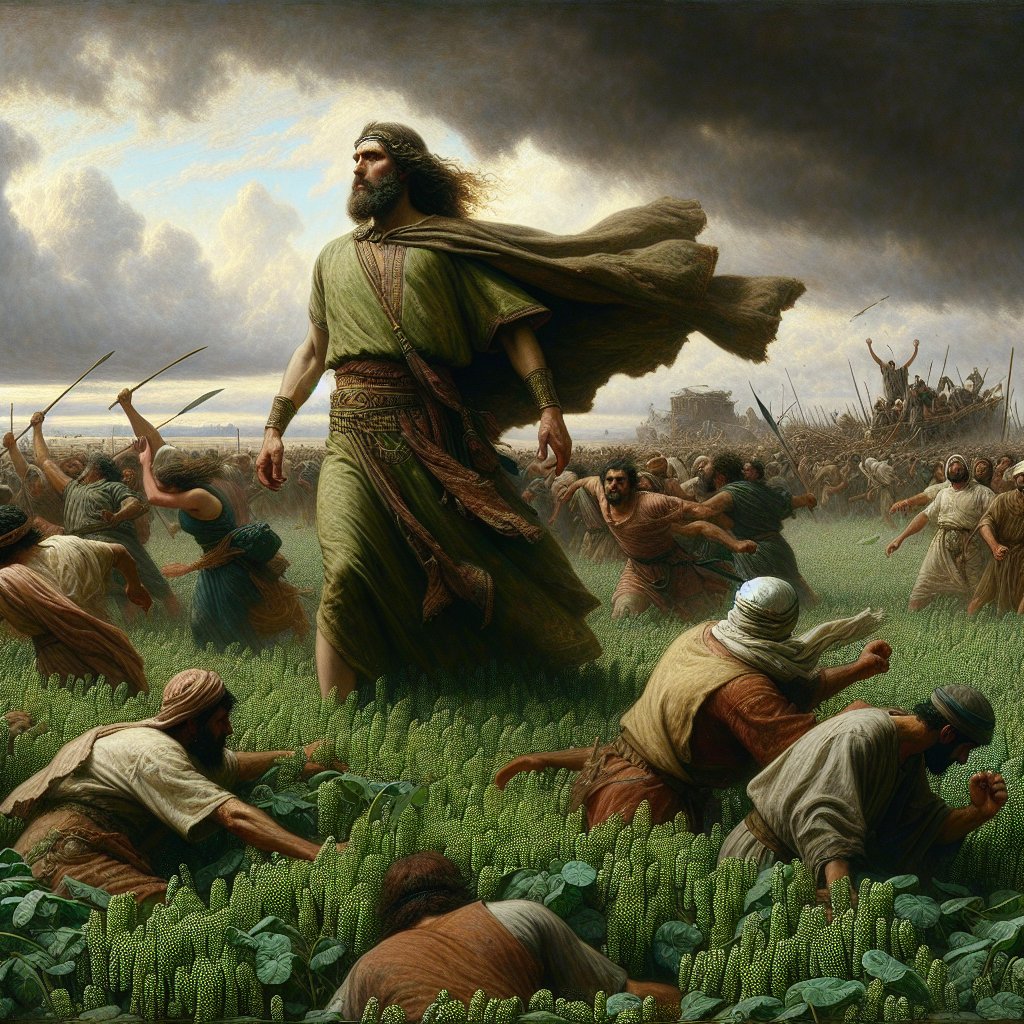
Shammah: The Last Man Standing (2 Samuel 23:11-12)
When the Philistines came to raid, everyone else ran. Shammah didn’t. While the rest of Israel’s soldiers fled in fear, Shammah held his ground alone, in the middle of a field full of lentils—a “pea patch,” as it’s often called.
Why defend a patch of beans? Because it belonged to the King. Because God’s people needed it. Because the honor of the King was at stake. And when no one else cared enough to fight, Shammah stood anyway.
This wasn’t about defending prized treasure or a throne room. It was an ordinary patch of land—but it had sacred value. The Philistines were coming to rob, plunder, and shame the people of God. But Shammah would not let them.
With courage forged in conviction, he struck down the enemy alone. And like with Eleazar, God brought the victory.
“…but he took his stand in the midst of the plot and defended it and struck down the Philistines, and the Lord worked a great victory.” — 2 Samuel 23:12
What made him mighty:
- He stood when others fled. Courage is often lonely. While others ran, Shammah stood his ground. He didn’t take a vote. He didn’t wait to see who else would back him. He did what was right, whether anyone followed him or not. As a father, you will often face situations where others give up, compromise, or hide. Stand anyway. The strength of a man is proven not by who surrounds him, but by who he is when no one else will stand.
- He fought for what others thought was small. It wasn’t a fortress or a city—just a field of lentils. But that field mattered. It fed God’s people. It represented the King’s provision. Shammah teaches us that no battle for what belongs to God is too small to fight. Protect your “pea patch.” That may mean your family’s devotional time, your wife’s dignity, your child’s heart, your own integrity. Don’t let the enemy steal what feeds your family.
- He didn’t follow the crowd—he followed conviction. How easy it would’ve been to follow the rest and justify it. “It’s just a field.” “I’m only one man.” “Everyone else ran.” But Shammah wasn’t watching others—he was watching the King.
And so should we. - God brought the victory. Like Eleazar, Shammah didn’t win by brute strength. His courage activated God’s deliverance. When you take your stand as a father, the results don’t depend on your strength—but on your obedience. Fight faithfully, and let God bring the victory.
Shammah isn’t mentioned in Chronicles which was written later. His name may have been left off later lists, but heaven remembered his courage. Not every faithful deed will be recorded, celebrated, or retold—but God sees it all. Like Shammah, stand your ground even if history forgets—your King never will.
The world may scoff at family dinners, bedtime prayers, or your commitment to purity and peace at home. But those seemingly small things are your pea patch. Fight for them. Guard them. They belong to your King—and your family depends on them.
What if your children remember you—not for grand achievements—but as the man who stood his ground when it counted? Not the loudest. Not the flashiest. But the one who stayed when others walked away. That’s the kind of man God makes mighty. In a world where men often chase visibility and applause, Shammah teaches us that faithfulness in small things still matters. Protect your “pea patch”—your home, your integrity, your daily choices.
What Will Make You Mighty?
In the eyes of the world, you may never be called a hero. You may not make headlines or hold titles. But the greatest battles are often unseen, and the greatest victories are won in quiet resolve.
- When you lead your family in prayer, you are standing your ground.
- When you choose integrity over compromise, you are holding your sword.
- When you stay faithful in small things, you are guarding your field.
These three mighty men teach us that greatness in God’s kingdom is not about being known—it’s about being loyal. They weren’t mighty because they were perfect. They were mighty because they were present. Faithful. Courageous. Devoted.
The world needs fewer men chasing applause and more men chasing the King’s approval.
You may feel outnumbered. You may feel alone. But if you are with the King, you are never outmatched.
Take up your spear. Grip your sword. Guard your patch. And let the Lord bring the victory.
By Jeremy Sprouse
Jeremy has been married to Erynn since August 1999. They are blessed with six children: Jaden, Isaiah, Isaac, Ean, Joseph, and Evelyn. Jeremy preaches for the Patrick St. church of Christ in Dublin, TX and is the author of To Train Up a Knight.

 Knights of The Father