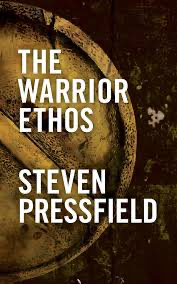
Steven Pressfield’s The Warrior Ethos is a compact, evocative book exploring the values of ancient warrior cultures, especially Sparta. It aims to recover a code of courage, discipline, and self-sacrifice in a time of moral softness. While it succeeds in highlighting the intensity and resolve of historical warriors, the book ultimately falls short when examined through the lens of Biblical masculinity and fatherhood. Much of its ethos is not just incomplete—it’s fundamentally misaligned with a Christ-centered vision of manhood.
What the Book Gets Right
To be fair, The Warrior Ethos offers some meaningful takeaways:
- Endurance through hardship
- Self-discipline and self-denial
- Courage in the face of suffering
- Placing the mission above the individual
Pressfield’s writing is punchy and accessible, and the book can serve as a basic primer on the mindset of Spartans and other warrior societies. For readers unfamiliar with ancient military culture, it provides a quick entry point into how warriors of different ages have understood honor and sacrifice.
For fathers trying to lead, protect, and endure—these virtues are worth reflection. But inspiration alone isn’t enough. A code must also be judged by its foundation, purpose, and fruit.
Where the Book Falls Short
1. A Flawed Role Model: Spartan Society
Pressfield heavily praises Spartan culture as the gold standard of warrior virtue. But this admiration glosses over deep moral failings:
- Infanticide was routine—weak or disabled children were left to die.
- Theft was encouraged, as long as the child was not caught.
- Boys were removed from their families at age 7 to be raised by the state.
- Marriage and fatherhood were de-emphasized, subordinated to the needs of the military.
In elevating Sparta’s military success, the book risks reinforcing a “might makes right” morality. Just because a society produces good fighters doesn’t mean it’s worthy of imitation. Scripture values strength, but it never separates it from justice, mercy, or love (Micah 6:8). A man who conquers the world but fails his family has not succeeded (1 Timothy 5:8).
2. Moral Confusion: Evolution as Ethics
Pressfield’s understanding of morality is deeply shaped by evolutionary theory. In his view, morality is not fixed but adaptive—whatever helps a group survive becomes its moral code. This is a dangerous framework. If survival defines morality, then any atrocity can be justified in the name of the tribe.
Biblical morality is not determined by evolution or social utility. It is rooted in the character of God, revealed in His Word, and unchanging across generations. Pressfield’s warrior code lacks this grounding—and therefore lacks clarity on what is truly good.
3. The Hollow Praise of Shame-Based Courage
The book praises shame-based cultures for producing warriors who are too afraid of disgrace to flee from battle. But this raises a serious concern:
- Is it courage if it’s driven by fear of social rejection?
- Is it bravery to stay and fight just because one is afraid to look weak?
Shame-based cultures create external compliance, not inward strength. In contrast, the Bible teaches courage that flows from faith, conviction, and love—not fear of man (Joshua 1:9; 1 John 4:18). A man of God stands firm not because of shame, but because he knows what is right.
4. Misuse and Misunderstanding of Scripture
Though Pressfield references the Bible, he does so without depth or understanding. He draws parallels between ancient warriors and Jesus’ self-sacrifice, but misses the deeper reality: Christ’s death wasn’t a tribal offering or a last stand. It was the redemptive act of a sinless Savior offering grace to His enemies. It was not about honor—it was about love.
When strength is divorced from grace, it ceases to reflect the gospel.
5. A Code That Doesn’t Translate to the Individual
One of the book’s most subtle problems is that it’s impractical for modern individuals. The warrior ethos Pressfield describes only worked because the entire society—like Sparta—shared and enforced it. For an isolated man in today’s world, trying to live this code alone can lead to burnout, emotional detachment, or legalism without community.
Christian men are not called to solo heroism. We are called to be part of a body (1 Cor. 12:12–27), supported in our courage by faith, brotherhood, and the Spirit of God.
6. A Notable Omission: The Knightly Ideal
Perhaps most surprising is Pressfield’s complete omission of medieval knights and their code of chivalry. Knights were warriors too—but unlike Spartans, they were expected to embody not only courage, but mercy, faithfulness, and nobility. A knight protected the weak, honored women, and served a higher cause—ideals much closer to biblical manhood than the cold militarism of Sparta.
By ignoring the knightly tradition, Pressfield bypasses a model of warrior virtue that better balances strength with compassion, duty with honor, and power with grace.
Final Verdict
The Warrior Ethos may stir the heart with talk of endurance and sacrifice, but it falls short of offering a truly righteous path for men—especially fathers. Its admiration of Sparta and evolutionary ethics disconnects courage from truth, discipline from love, and sacrifice from grace.
Fathers need a better code—one written not by tribal survivalists, but by the God who made man in His image. We are not Spartans. We are servants, shepherds, and spiritual warriors. We don’t fight because of shame—we stand because of faith. And we don’t train our sons to be feared—we train them to be faithful.
So read The Warrior Ethos if you want a glimpse into the mindset of ancient fighters. But let the Word of God shape your ethos. Let your strength be guided by love, and your courage by truth. And when you must stand—stand not for glory, but for what is good.
By Jeremy Sprouse
Jeremy has been married to Erynn since August 1999. They are blessed with six children: Jaden, Isaiah, Isaac, Ean, Joseph, and Evelyn. Jeremy preaches for the Patrick St. church of Christ in Dublin, TX and is the author of To Train Up a Knight.

 Knights of The Father