(Note: This is a lesson I first gave to my twins on their 15th birthday and just recently altered for my son Ean’s 15th birthday. )
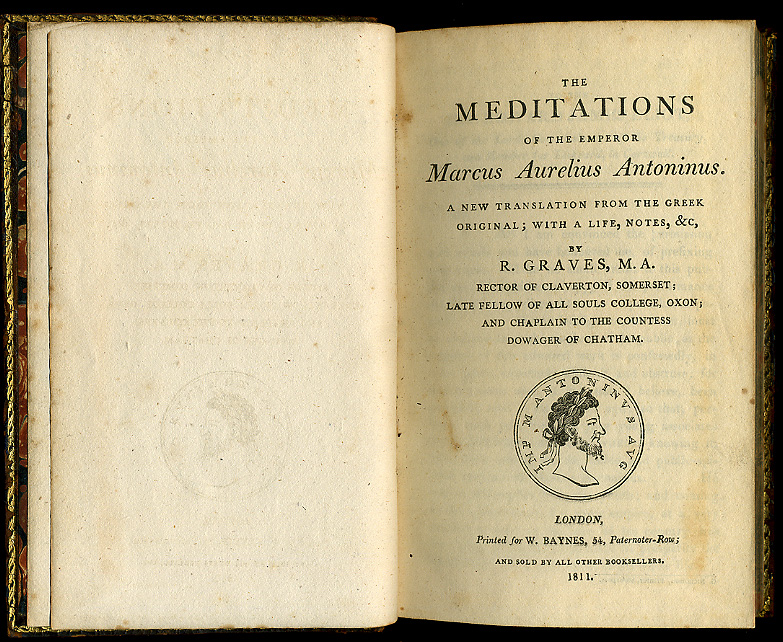
“Our actions may be impeded…but there can be no impeding our intentions or dispositions. Because we can accommodate and adapt. The mind adapts and converts to its own purposes the obstacle to our acting. The impediment to action advances action. What stands in the way becomes the way.” — Marcus Aurelius
These were not polished words for publication. Marcus Aurelius, Emperor of Rome, likely scrawled them into a weather-worn journal, perhaps beside a campfire with his legions in the frozen north or deep within the shadows of imperial politics. They are not a boast. They are a reminder. A reminder not to give up. A reminder that obstacles are not walls—they’re doors.
The Christian Response to Obstacles
What this Stoic wisdom prescribes is something Christians are uniquely equipped to practice: in any and every situation—no matter how painful or unjust—we have the opportunity to live out virtue and glorify God.
“We know that in everything God works for good with those who love Him, who are called according to His purpose.” — Romans 8:28
The point of this passage is not to say that we will never face problems in our lives. Earlier in this chapter Paul talked about the present sufferings they were enduring (Romans 8:18). In 8:36, he talks about how they were being put death all day long for the name of God. Clearly, Paul does not mean they will never face tribulation, peril, or sword in Christ. We are never promised an easy carefree life.
This verse is not saying everything is going to be pleasant and work out all right; it is saying that God will use your life for the good of His purpose—even your sufferings. In other words, if we trust God He will even use our sufferings for good.
Romans 8:28 has nothing to do with God making good things happen; it has nothing to do with God preventing bad things from happening; it has everything to do with God being by your side in the midst of the tragedy, to comfort you and strengthen you. If we trust God, all things in our life whether good or bad can be used to contribute to His purpose—the greatest good of all.
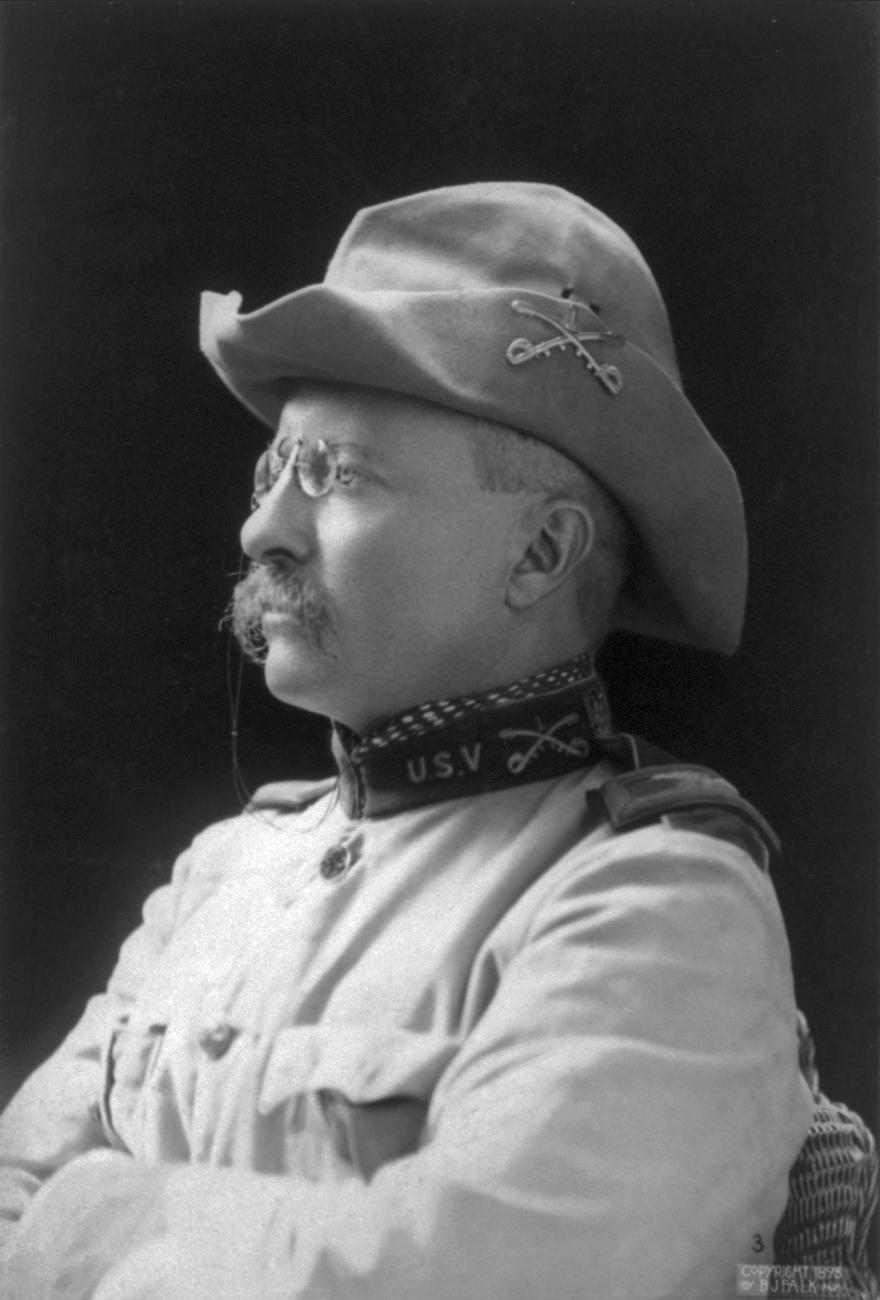
Theodore Roosevelt: Struggle into Strength
“Do what you can, with what you have, where you are.”
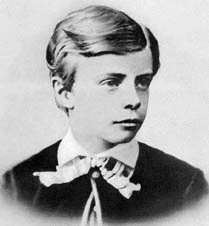
Theodore Roosevelt was born into wealth—but not into strength. As a child, he was pale, asthmatic, and so weak he often had to sleep propped upright just to breathe. He was so frail, in fact, that he was carried around by his parents and could barely play with other children. At times, he coughed until he bled.
Young Theodore once tried to climb a small mountain with his family and had to be carried back down. He was humiliated. But that feeling didn’t crush him. It planted a seed.
“Theodore, you have the mind,” his father told him, “but you haven’t the body. You must make your body.”
Instead of resenting that challenge, young Theodore accepted it like a mission. He didn’t curse his weakness—he turned it into his training ground.
He began what he called “the strenuous life.” He lifted weights. He boxed. He ran. Every cough became a cue to push harder. When his asthma worsened, he didn’t give up—he rode horses into the wind to open his lungs. When other kids picked on him, he didn’t sulk—he trained to defend himself.
By the time he was in college, he was a champion boxer and an accomplished naturalist. He later fought corruption in New York as police commissioner, chased outlaws in the Badlands as a cowboy sheriff, charged up San Juan Hill in the Spanish-American War, and became the youngest U.S. President in history at just 42 years old.
Yet his personal trials continued.
He lost his mother and his wife on the same day—Valentine’s Day, 1884. In his journal, he simply drew a large black “X” on the page and wrote, “The light has gone out of my life.”
But it wasn’t the end. He grieved, then packed up and went to the Dakotas, where he worked cattle, hunted, read, and let the open skies reset his soul. He came back stronger.
Later in life, as president, he would still box and even sparred with a military aide until he was hit so hard in the eye he went blind in that eye. He never told the public. He simply moved on.
“It is hard to fail, but it is worse never to have tried to succeed.”
Roosevelt didn’t let hardship define him. He let it refine him. Every obstacle was fuel. Every insult, injury, or loss became motivation to keep going. He saw life’s tests not as roadblocks but as roads.
Roosevelt didn’t demand that life be easy or fair. He just demanded that he meet life with courage. He famously wrote:
“It is hard to fail, but it is worse never to have tried to succeed.”
Roosevelt lived the principle: What stands in the way becomes the way.
Spiritual Training Through Struggle
Sometimes, we think strength means never struggling. But real strength is built through struggle.
“Not only that, but we rejoice in our sufferings, knowing that suffering produces endurance, and endurance produces character, and character produces hope.” — Romans 5:3–4
Real strength isn’t the absence of struggle—it’s forged in the fire of it. Roosevelt built endurance through physical suffering, and his character shaped a nation. As Christians, our suffering can build something even more lasting—hope that does not disappoint.
“Consider it all joy, my brethren, when you encounter various trials, knowing that the testing of your faith produces endurance. And let endurance have its perfect result, so that you may be perfect and complete, lacking in nothing.” — James 1:2–4
The joy is seen in the testing of faith which produces endurance. Knowing the effect trials have on our faith is why we should consider it all joy. We are to consider it joy, it is a pleasure a good thing, when we come into a circumstance of a trial, because when we are tested we should grow stronger spiritually.
Every hardship is an opportunity for growth. Even defeat, whether in competition, ministry, or daily life, is training if we let it be. We don’t get better by winning—we get better by learning from loss and trying again.
Growth happens in the loss! We do not get better by winning all the time, we get better by losing and then coming back around to fix things. Pushing through to the end develops perseverance and the respect of others. Learning to take a loss and learn from it is the key to being successful in life. We must learn to take instruction and work to get better.
In the Arena: The Courage to Engage
“It is not the critic who counts; not the man who points out how the strong man stumbles, or where the doer of deeds could have done them better. The credit belongs to the man who is actually in the arena, whose face is marred by dust and sweat and blood; who strives valiantly; who errs, who comes short again and again, because there is no effort without error and shortcoming; but who does actually strive to do the deeds; who knows great enthusiasms, the great devotions; who spends himself in a worthy cause; who at the best knows in the end the triumph of high achievement, and who at the worst, if he fails, at least fails while daring greatly, so that his place shall never be with those cold and timid souls who neither know victory nor defeat.” — Theodore Roosevelt, The Man in the Arena
Roosevelt is saying: It’s not about having the perfect plan from the sidelines. It’s about having the courage to step in and try. In faith: Think of Peter stepping out of the boat. He sank, yes—but he also walked on water. He got in the arena. (Matthew 14:28–31).
Lile Paul, we want to be able to say at the end of our lives:
“I have fought the good fight, I have finished the race, I have kept the faith.” — 2 Timothy 4:7
We are not called to be spectators. We are called to be faithful—even unto death (Revelation 2:10). Don’t be afraid to get in the arena. You will get bruised. You will fail. But failure is just part of training. That’s where the fruit is. That’s where the growth is. That’s where Jesus is.
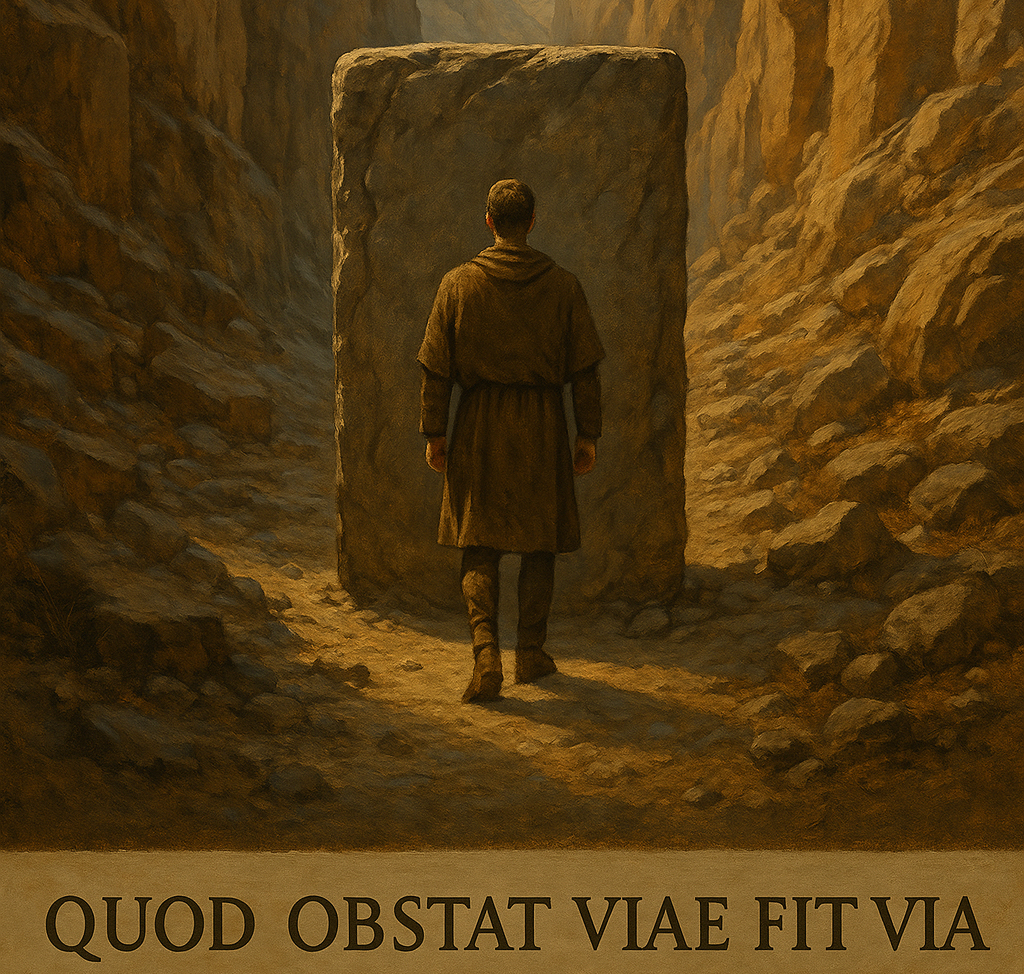
Quod Obstat Viae Fit Via—What stands in the way becomes the way
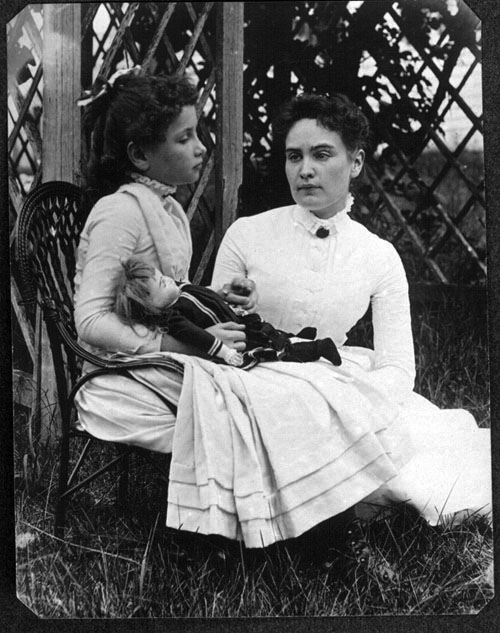
Helen Keller: Strength in Weakness
“Although the world is full of suffering, it is also full of the overcoming of it.” — Helen Keller
Helen Keller was born in 1880, a healthy, curious child. But at just 19 months old, she was struck by a sudden illness—possibly scarlet fever or meningitis—that left her completely blind and deaf. In an instant, her world went dark and silent.
Her condition isolated her from almost everyone and everything. Even her family, though loving, had no idea how to help her. The world had no clear solution. Many considered her a lost cause.
But her mother refused to give up. She read about a man named Samuel Gridley Howe, who had taught deaf-blind children to communicate, and she contacted the Perkins Institute for the Blind. That’s when Anne Sullivan, a 20-year-old teacher who was herself visually impaired, came into Helen’s life.
Anne Sullivan entered not just as a caretaker but as a force of change. She demanded structure, patience, and consistency. She began spelling words into Helen’s hand, even when Helen had no idea what they meant. “W-A-T-E-R” was just a pattern—until that breakthrough moment.
On a spring day in 1887, Anne placed one of Helen’s hands under a water pump while spelling W-A-T-E-R in the other. Suddenly, something clicked. Helen later wrote:
“That living word awakened my soul, gave it light, hope, joy, set it free.”
From that moment, Helen was never the same. She realized that everything had a name, and she wanted to know them all. She learned over 600 words in just a few weeks, and soon—Braille, typing, speaking, and even Greek and Latin.
Helen became the first deaf-blind person to earn a college degree, graduating cum laude from Radcliffe College. She went on to write books, travel the world, advocate for the disabled, and meet every U.S. President from Grover Cleveland to Lyndon B. Johnson.
Helen Keller’s obstacle—total sensory loss—became the exact thing that made her a symbol of courage and faith around the world. She was asked to speak (through interpreters and writing) to kings and presidents. She helped raise millions of dollars for those with disabilities. And she always gave glory to God:
“I thank God for my handicaps, for through them I have found myself, my work, and my God.”
God’s Grace in Our Weakness
Helen Keller’s life mirrors the truth Paul expressed in 2 Corinthians 12:9–10:
“My grace is sufficient for you, for My power is made perfect in weakness… For when I am weak, then I am strong.” — 2 Corinthians 12:9–10
She had every reason to give up. But instead, she found grace in weakness. She found meaning in the darkness. Her obstacle—her complete inability to interact with the world—became the very path through which she shaped it.
She is a real-life example of Quod Obstat Viae Fit Via—what stands in the way becomes the way. God does not promise to remove every obstacle—but He will transform them into your training ground.
Fixing Our Eyes on Jesus
“For consider Him who has endured such hostility by sinners against Himself, so that you will not grow weary and lose heart. You have not yet resisted to the point of shedding blood in your striving against sin; and you have forgotten the exhortation which is addressed to you as sons, “MY SON, DO NOT REGARD LIGHTLY THE DISCIPLINE OF THE LORD, NOR FAINT WHEN YOU ARE REPROVED BY HIM;” — Hebrews 12:3-5
Jesus Himself endured the ultimate trial—not for His own sake, but for the salvation of others. The joy set before Him wasn’t comfort—it was our redemption.
We need to consider what Jesus went through, think about Jesus’ suffering. Don’t faint, don’t get weak and give up. This passage reminds us to recognize what Jesus has done for us. If He endured, so can we.
The writer quotes Proverbs 3:11-12 to exhort us based on the fact that trials are intended for good. We do not know what events are the Lord’s discipline and which are not. We do know that we can use any circumstance in our lives to grow. They will help us to realize that our lives are not going to last forever.
“All discipline for the moment seems not to be joyful, but sorrowful; yet to those who have been trained by it, afterwards it yields the peaceful fruit of righteousness. Therefore, strengthen the hands that are weak and the knees that are feeble, and make straight paths for your feet, so that the limb which is lame may not be put out of joint, but rather be healed.” — Hebrews 12:11-13
The Takeaway: See the Way in the Obstacle
In our everyday lives, it’s easy to see obstacles as stop signs—frustrating interruptions to our plans. But more often than not, the things we perceive as roadblocks are actually guiding us. They’re not just in the way—they’re showing us the way.
We all face hard things. Some we expect, others we never see coming. Our instinct is often to react negatively, to blame outside forces or give up on the goal. But the truth is, the one thing we always control is our attitude—how we choose to respond.
The obstacle in front of you might not be an interruption at all. It might be your training ground. A chance to develop patience. Or courage. Or compassion. Or trust. You never know what good might come from what looks like a setback. Your trials won’t look like anyone else’s.
God does not remove every obstacle, but He can transform obstacles into training grounds. He invites you to see the way through what’s in the way.
Every struggle should urge us to ask:
What can I learn from this?
What virtue can I practice right now?
What door is hidden in this wall?
Be the one to say:
“This is not disaster. This is opportunity.”
“This isn’t the end. This is training.”
“This will shape me.”
Quod Obstat Viae Fit Via — What Stands in the Way Becomes the Way
By Jeremy Sprouse
Jeremy has been married to Erynn since August 1999. They are blessed with six children: Jaden, Isaiah, Isaac, Ean, Joseph, and Evelyn. Jeremy preaches for the Patrick St. church of Christ in Dublin, TX and is the author of To Train Up a Knight.
Bibliography
Aurelius, Marcus.Meditations. Translated by Gregory Hays, Modern Library, 2003. (Notably Book 5.20: “The impediment to action advances action. What stands in the way becomes the way.”)
Roosevelt, Theodore.
The Man in the Arena. Excerpt from the speech “Citizenship in a Republic,” delivered at the Sorbonne, Paris, April 23, 1910.
Theodore Roosevelt: Letters and Speeches. Edited by Louis Auchincloss, Library of America, 2004.
Morris, Edmund. The Rise of Theodore Roosevelt. Random House, 1979.
Corry, John A. The Contender: The Story of Theodore Roosevelt. Clarion Books, 1980.
Keller, Helen.
The Story of My Life. Doubleday, Page & Co., 1903.
Helen Keller: A Life. By Dorothy Herrmann, University of Chicago Press, 1998.
Keller, Helen. Optimism: An Essay. T.Y. Crowell & Co., 1903.
Sullivan, Anne.
Helen Keller: The Story of My Life, with Her Letters (1887–1901) and a Supplementary Account of Her Education, Including Passages from the Reports and Letters of Her Teacher, Anne Mansfield Sullivan.
Stoic Philosophy Resources:
Holiday, Ryan. The Obstacle Is the Way: The Timeless Art of Turning Trials into Triumph. Portfolio, 2014. (Inspired by Marcus Aurelius’ quote and its modern application.)
Jeremy has been married to Erynn since August 1999, and together they are blessed with six children: Jaden, Isaiah, Isaac, Ean, Joseph, and Evelyn. He preaches for the Patrick St. church of Christ in Dublin, TX, and is an adjunct professor at the Brown Trail School of Preaching in Fort Worth, where he teaches: A General Introduction to the Bible, and Critical Thinking. Jeremy earned a B.A. in English, Mass Communications from Adams State University (Alamosa), a B.Th. from the Bear Valley Bible Institute of Denver, and an M.B.S. (Master of Biblical Studies) from Bear Valley. He writes to equip men for courageous, Christ-centered leadership.
View all posts by Jeremy Sprouse

 Knights of The Father