
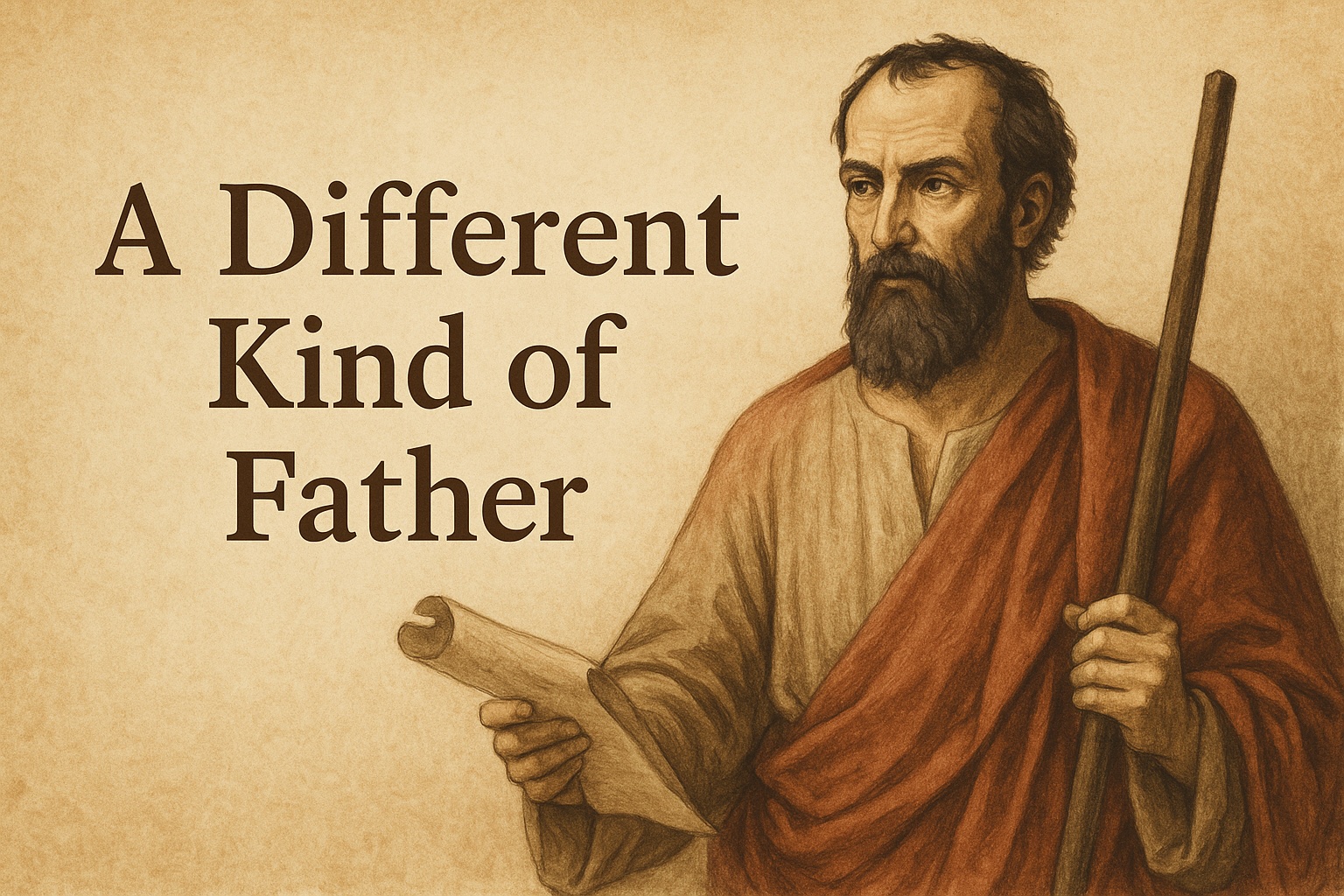
When we think of fathers, images of family dinners, bedtime stories, and life lessons may come to mind. But fatherhood isn’t always limited to those who share our DNA or raise us in the traditional sense. There’s another kind of fatherhood that can be just as profound—spiritual fatherhood. One of the most remarkable examples of this is the Apostle Paul. Though he was never married and had no children of his own, Paul became a father figure to many, guiding them not through earthly wisdom but by pointing them to a deeper relationship with God. Let’s explore how Paul embodied the role of a spiritual father, nurturing the early church and raising up individuals like Timothy and Titus.
Paul as a Father to Congregations
Paul saw himself as a father to the congregations and converts he established. In 1 Corinthians 4:14-17, he writes, “I do not write these things to shame you, but as my beloved children I warn you.” Paul viewed the churches he planted and nurtured as his spiritual children. He had led them to Christ, just as a father leads his children, and he took responsibility for their growth.
In 1 Thessalonians 2:9-12, Paul described the way he treated the Thessalonian believers as a father. He reminds them that, like a good father, he behaved devoutly and blamelessly among them, setting a worthy example for them to follow. Paul’s fatherly concern wasn’t just in the role of authority; it was rooted in love, care, and a desire for them to walk “in a manner worthy of God.”
Paul also knew that though others might teach the church after him, they could never replace his foundational role. “For though you have countless tutors in Christ, you do not have many fathers,” he says in 1 Corinthians 4:15. Paul was their spiritual father, the one who established them in the faith, and that bond was unique.
In our own lives, we have opportunities to step into the role of a spiritual parent, just as Paul did with the churches he planted. Whether it’s mentoring someone in their faith, teaching a Sunday school class, or leading a small group, we can become spiritual guides for others. Like Paul, this doesn’t mean lording over them with authority, but rather leading with love, care, and a desire for their spiritual growth.
Paul’s example challenges us to consider how we nurture those we influence. Do we set a godly example through our actions and words? Are we committed to seeing others grow in their faith, or do we merely offer advice without follow-through? Being a spiritual parent means taking responsibility for someone else’s walk with Christ—not just offering guidance when it’s convenient, but consistently walking alongside them through their spiritual journey. It’s a commitment to their growth, just as a father is committed to the growth and well-being of his children.
Paul as a Father to Timothy and Titus
Paul’s fatherly relationship wasn’t limited to congregations; it extended to individuals like Timothy and Titus. Both men were mentored by Paul, and he referred to each as his “true son” in the faith.
Timothy came from a religious family, raised by his mother and grandmother (Acts 16:1, 2 Timothy 1:5). His father, however, was Greek and likely indifferent to religion. Paul, therefore, took on a spiritual father role for Timothy, guiding him through his journey as a leader in the early church. In 1 Timothy 1:1-2 and 2 Timothy 1:1-2, Paul opens his letters by addressing Timothy as his “beloved son,” showing the depth of their bond.
Titus was another spiritual son to Paul. In Titus 1:4, Paul calls him “my true son in our common faith.” Titus, like Timothy, became a trusted companion and leader under Paul’s guidance. Paul sent Titus to difficult assignments, like overseeing the church in Crete, where he needed to “appoint elders in every town” (Titus 1:5). Titus’s close relationship with Paul shows how Paul’s fatherly role extended beyond general teaching; he also invested personally in the spiritual development of those closest to him.
Paul’s relationship with Timothy and Titus offers a powerful example for us when it comes to mentoring individuals on a personal level. Just as Paul invested deeply in these two men, we too are called to invest in others. Mentoring someone in their faith isn’t just about teaching lessons; it’s about building relationships rooted in love and trust. Paul didn’t just see Timothy and Titus as disciples—he saw them as “sons.” He guided them, challenged them, and encouraged them to take on leadership roles, even in difficult situations.
For us, the personal application is to ask ourselves: Who are we investing in spiritually? Do we have “Timothys” and “Tituses” in our lives—people we are pouring into with the intent of helping them grow in their faith? This can be a family member, a friend, or someone in your church who looks to you for spiritual guidance. Just as Paul saw potential in Timothy and Titus, we can recognize the gifts in others and help them develop.
Additionally, Paul’s example reminds us that mentoring requires personal sacrifice and care. He sent Timothy and Titus to challenging places, but he didn’t abandon them—he continually encouraged and prayed for them. We should be willing to walk through difficulties with those we mentor, offering guidance, prayer, and support. In doing so, we create deep, meaningful bonds that reflect the love and investment Paul had in his spiritual children.
Paul’s Manner as a Spiritual Father
Paul took seriously the responsibilities of a father. Ephesians 6:4 tells fathers not to provoke their children but to bring them up in the “training and admonition of the Lord.” As a spiritual father, Paul modeled this same approach.
In 1 Corinthians 4:14-17, Paul made it clear that he wasn’t trying to shame or embarrass the Corinthian believers but to warn them. Shame can often cause people to resist change, while gentle guidance can lead them back to the truth. Paul understood the importance of admonishing in love, not provoking resentment.
Similarly, in 1 Thessalonians 2:11-12, Paul describes how he treated the Thessalonians “like a father with his children,” exhorting, encouraging, and urging them to live in a manner worthy of God. His approach was both fatherly and pastoral, demonstrating his deep care for their spiritual well-being.
Whether as parents, mentors, or friends, we need to adopt this same mindset. Too often, criticism or harsh correction can push others away, creating resentment and resistance rather than growth. Paul’s example challenges us to think about how we speak to and correct those around us. Are we doing so in love, with the aim of building them up? Or are we risking shaming them, which may cause more harm than good?
We must be intentional in our approach to guiding others. Whether we’re addressing a mistake or encouraging someone to pursue a deeper walk with God, our words should be filled with grace and love. Like Paul, we should aim to exhort, encourage, and urge others in a way that draws them closer to God, not push them away. This fatherly care demonstrates a true love for those we mentor and reflects the heart of God in how we guide others.
Paul’s Guidance as a Spiritual Father
Paul also took on the role of a father in the way he guided Timothy and Titus. Just as Ephesians 6:4 commands fathers to bring up their children “in the training and admonition of the Lord,” Paul gave these young leaders practical instructions to ensure their growth.
He charged them to:
- Teach sound doctrine (1 Timothy 4:6-7, 13; 2 Timothy 1:8, 13; Titus 2:1)
- Be examples to others (1 Timothy 4:12; Titus 2:7-8, 15)
- Remind people of God’s ways with humility (1 Timothy 4:16; 2 Timothy 2:23-26; Titus 3:1-3)
- Avoid unnecessary disputes (1 Timothy 1:3-4; 2 Timothy 2:23; Titus 3:9-11)
- Pursue righteousness (1 Timothy 6:11-14; 2 Timothy 2:3-7; Titus 2:11-14)
Paul gave them instructions as a father would give to his children, and his advice was always aimed at helping them grow in maturity and godliness. His instructions weren’t just random pieces of advice—they were carefully crafted to help these young leaders mature in their faith and carry out their ministries effectively. In the same way, we should take seriously the responsibility of guiding others in their spiritual walk, offering them both encouragement and practical wisdom for growth.
Paul’s charge to teach sound doctrine challenges us to think about what kind of truth we are passing on to others. Whether we’re leading a Bible study, mentoring someone one-on-one, or simply having spiritual conversations, it’s important to stay rooted in Scripture and sound teaching. We are called to be guardians of the truth, just as Paul expected Timothy and Titus to be.
His instruction to be an example to others is a reminder that people are watching how we live. Our actions often speak louder than our words, and those we lead will take cues from our behavior. If we want to help others grow in their faith, we need to model what it looks like to live out the gospel in our daily lives.
Conclusion
Paul fulfilled the role of a spiritual father to many. He nurtured congregations, mentored individuals, and provided guidance to the leaders he trained as a father should to his children. In his example, we see the heart of a father—a man devoted to helping others grow in faith and live in a manner worthy of God.
Paul’s life gives us an example of the profound impact of spiritual fatherhood. Though he had no biological children, he left a lasting legacy by nurturing, teaching, and mentoring individuals and entire congregations. His deep care for the spiritual well-being of those he led—whether it was the churches he planted or his “sons” in the faith, Timothy and Titus—demonstrates that true fatherhood is not confined to biological ties. It is rooted in love, sacrifice, and a commitment to seeing others grow in their relationship with God.
Paul’s example challenges us to take on this spiritual fatherhood (or parenthood) in our own lives. Whether we mentor someone in the faith, guide a group of believers, or help someone navigate a difficult season, we are called to invest in the spiritual growth of others. Like Paul, we must lead with humility, patience, and an unwavering commitment to biblical truth. In doing so, we not only help others mature in their walk with God but also fulfill our own calling to live out the gospel in every relationship we have.
As you reflect on Paul’s example, consider the ways you can be a spiritual parent to someone else. Who is looking to you for guidance, and how can you invest more deeply in their spiritual journey? Whether through mentoring, teaching, or simply being a godly example, your role as a spiritual guide can have a lasting impact—just as Paul’s legacy continues to shape the church today.
By Jeremy Sprouse
Jeremy has been married to Erynn since August 1999. They are blessed with six children: Jaden, Isaiah, Isaac, Ean, Joseph, and Evelyn. Jeremy preaches for the Patrick St. church of Christ in Dublin, TX and is the author of To Train Up a Knight.

 Knights of The Father