
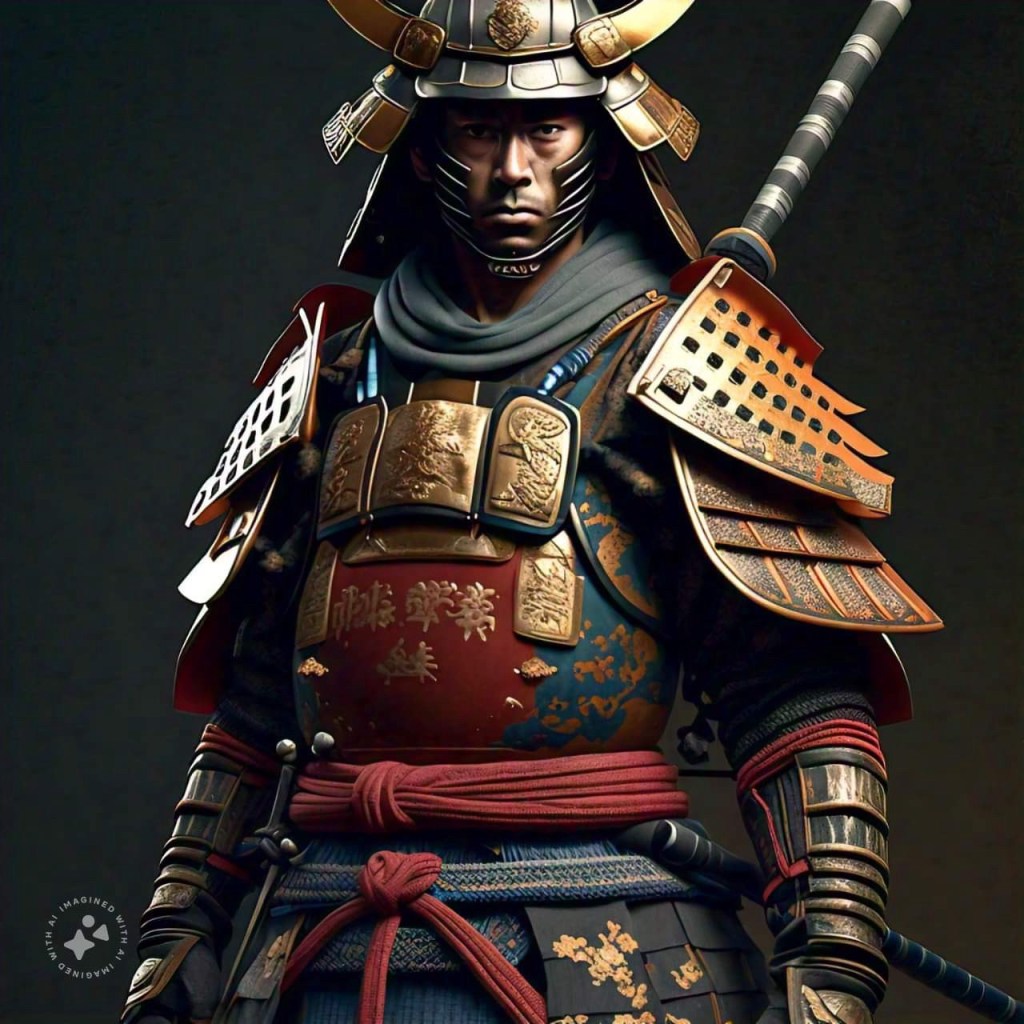
In Bushido, self-control is sometimes included as an eighth virtue and sometimes the lists end with 7 and it is considered as an unwritten eighth virtue. These lists are somewhat artificial as they varied from region to region and from century to century. Whether listed or not though, the concept of self-control is central to the code of Bushido. The Bible also emphasizes self-control but in a different way than Bushido. In Christianity, self-control is a fruit of the Spirit, meant to guide a believer’s life. While both traditions value this virtue, the Bible presents a more complete and disciplined view of self-control.
Self-Control in Bushido
According to Inazo Nitobe in Bushido: The Soul of Japan, a warrior’s honor depends on his ability to control his emotions and desires. Nitobe describes this form of control as a cultural expectation:
“The discipline of fortitude on the one hand, inculcating endurance without a groan, and the teaching of politeness on the other, requiring us not to mar the pleasure or serenity of another by manifestations of our own sorrow or pain, combined to engender a stoical turn of mind, and eventually to confirm it into a national trait of apparent stoicism.”
For the Samurai, to show emotion was seen as weakness. Nitobe further elaborates:
“It was considered unmanly for a samurai to betray his emotions on his face. ‘He shows no sign of joy or anger,’ was a phrase used in describing a strong character. The most natural affections were kept under control.”
This disciplined stoicism aimed at maintaining composure in all circumstances. Self-control, therefore, was not just an internal virtue but a public expectation of dignity and strength. However, this same discipline could be overextended. Nitobe warned that:
“Discipline in self-control can easily go too far. It can well repress the genial current of the soul. It can force pliant natures into distortions and monstrosities.”
While Bushido exalts self-control, its rigid application sometimes stifled genuine emotional expression, which Nitobe himself acknowledges. This form of control could be misused, distorting human relationships and affections. It also contributed to the practice of ritual suicide to maintain honor and show self-control. Even without the problems of ritual suicide, the self-control of Bushido resulted only in an appearance of self-control.
Self-Control in the Bible
In the Bible, the roots of self-control are grounded in a relationship with God, making it both more compassionate and more purposeful. In 2 Peter 1:5-11, Peter encourages believers to “make every effort to add to your faith goodness; and to goodness, knowledge; and to knowledge, self-control.” Here, self-control is not an isolated virtue but part of a greater framework leading to a fruitful life in Christ.
Self-control means rising above the behavior of brute beasts and taking control of ourselves rather than giving in to every desire and being led by our emotions (cf. 2 Peter 2:12). God’s word tells us to control our lusts (1 Thessalonians 4:3-6, 1 Peter 4:1-4), our tongues (James 3:2-12), our bodies (1 Corinthians 6:12-20), and our minds (Colossians 2:8, Philippians 4:8, 2 Corinthians 10:5). The ultimate goal is to exercise self-control in all things (cf. 1 Corinthians 9:25).
To gain self-control, we need to realize it is possible not to give in to temptation. 1 Corinthians 10:13 tells us God will not allow us to be tempted beyond what we can handle. This means we can endure any temptation put before us. God provides a way of escape so that we can endure temptations. Notice, that the way of escape is not always a removal from the temptation; sometimes we have to stand firm against temptations.
Consider Abraham’s nephew Lot as an example. He lived in Sodom and Gomorrah—two cities that engaged in such perverseness and wickedness that God destroyed them with brimstone. Lot, however, didn’t let his surroundings affect his behavior; he lived righteously (2 Peter 2:6-9). It wasn’t easy for him; these verses describe his oppression by the filthy conduct of others and the daily torment of his soul as he saw and heard what they were doing. God, however, delivered him from all of this and Lot stands as an assurance that “the Lord knows how to deliver the godly out of temptations” (2 Peter 2:9). We need to exercise self-control so that we can be like Lot and live righteously no matter what our surroundings may be.
There are several tools God has given us to help in this task. The first is prayer (cf. James 5:13-18). It is much easier to resist temptations when you are in the very act of talking with God. Another tool is the Scriptures. In Matthew 4, Jesus quotes Scripture to resist the Devil’s temptations. Memorizing verses that relate to the temptations we struggle with keeps our minds in the right place. There is a thinking process that goes along with most sins. If we stop it in the mind, we can stop the body from acting (cf. James 1:13-15). Also, it is helpful to find something good to occupy ourselves rather than dwelling on the temptation (cf. Matthew 12:43-45, Ephesians 4:28-32). If we diligently use these tools, we can supply self-control to our lives.
Contrasting the Views
Where Bushido emphasizes outward appearances and behavior, biblical self-control starts in the heart. In 1 John 2:15-17, believers are reminded not to love the world or its desires. Biblical self-control is about reigning in the sinful tendencies of the heart, such as lust and pride. This isn’t merely about personal discipline—it’s about transforming one’s desires to align with God’s will.
In contrast to Bushido’s stoicism, which can sometimes mask true emotions, the Bible calls for self-control not to suppress emotion but to guide it. The Bible encourages a balanced view offers: control your impulses but display emotions in line with love, peace, and kindness.
The key difference between Bushido’s version of self-control and the Bible’s teaching is the motivation behind it. In Bushido, self-control is often pursued for the sake of honor or outward dignity. It’s about maintaining appearances and conforming to societal standards. But as Nitobe points out, this rigid self-discipline can go too far, leading to repression and even emotional detachment.
Christian self-control, however, is a means of becoming more Christlike. It’s rooted in love for God and others, not just personal honor or discipline. Instead of masking emotions, biblical self-control teaches us to submit our emotions to God, transforming them rather than repressing them.
Where Bushido emphasizes the “apparent stoicism” of the Samurai, the Bible speaks of true transformation—changing not just how we act, but who we are. As Christians, we do not simply strive to control our desires; we are invited into a relationship with God, where His guidance helps us to live in true freedom, a life not bound by our sinful impulses.
Questions to Consider:
- Do you struggle with keeping your emotions under control?
- How can we keep our emotions from controlling us?
- What places or what times do you find yourself the most tempted?
- How have you tried to resist temptations?
- What Scriptures could you memorize to help you?
Family Activities:
- Self-Control Jar—Keep a “self-control jar,” where your family members can place a marble every time they successfully practice control over their words. At the end of the day or week, reflect on how controlling the tongue changed interactions and brought more peace. Plan a reward for when the jar is full.
- Take Control—Grab a remote-controlled car and set up an obstacle course. Take turns running the car through the course and explaining how the remote controls the car and helps it avoid obstacles. Similarly, we need to exercise control over our bodies and emotions so that we will avoid temptations and obstacles to our spiritual lives.
- Guarding the mind—Read and discuss Philippians 4:8, which encourages thinking about what is true, noble, and pure. Write down situations where it’s easy to think negatively or impulsively. Then, discuss how focusing on the positive aspects of Philippians 4:8 can help us make better decisions and control our emotions. Commit to practicing this when difficult thoughts arise during the week.
By Jeremy Sprouse
Jeremy has been married to Erynn since August 1999. They are blessed with six children: Jaden, Isaiah, Isaac, Ean, Joseph, and Evelyn. Jeremy preaches for the Patrick St. church of Christ in Dublin, TX and is the author of To Train Up a Knight.
Other lessons in this series:

 Knights of The Father