(Note: This is a lesson I first gave to my son, Jaden, on his 16th birthday. I have since given it to my sons, Isaiah and Isaac, on their 16th birthday as well.)

Edwaert Collier Vanitas “Still Life with Books and Manuscripts and a Skull” 1663
The phrase memento mori is a Latin expression that translates to “remember that you will die.” It originated in the context of ancient Roman culture and early Christianity as a reminder of human mortality and the fleeting nature of life.
In ancient Rome, memento mori was associated with a practice emphasizing death’s inevitability, particularly during triumphal processions. It is said that as victorious generals paraded through the streets, a servant would whisper to them: “Respice post te! Hominem te esse memento! Memento mori!” According to Google Translate, it means something like: “Look behind you! Remember that you are human! Remember you will die!” It reminded them that despite their success, they were mortal and should not become arrogant or deluded by their achievements.
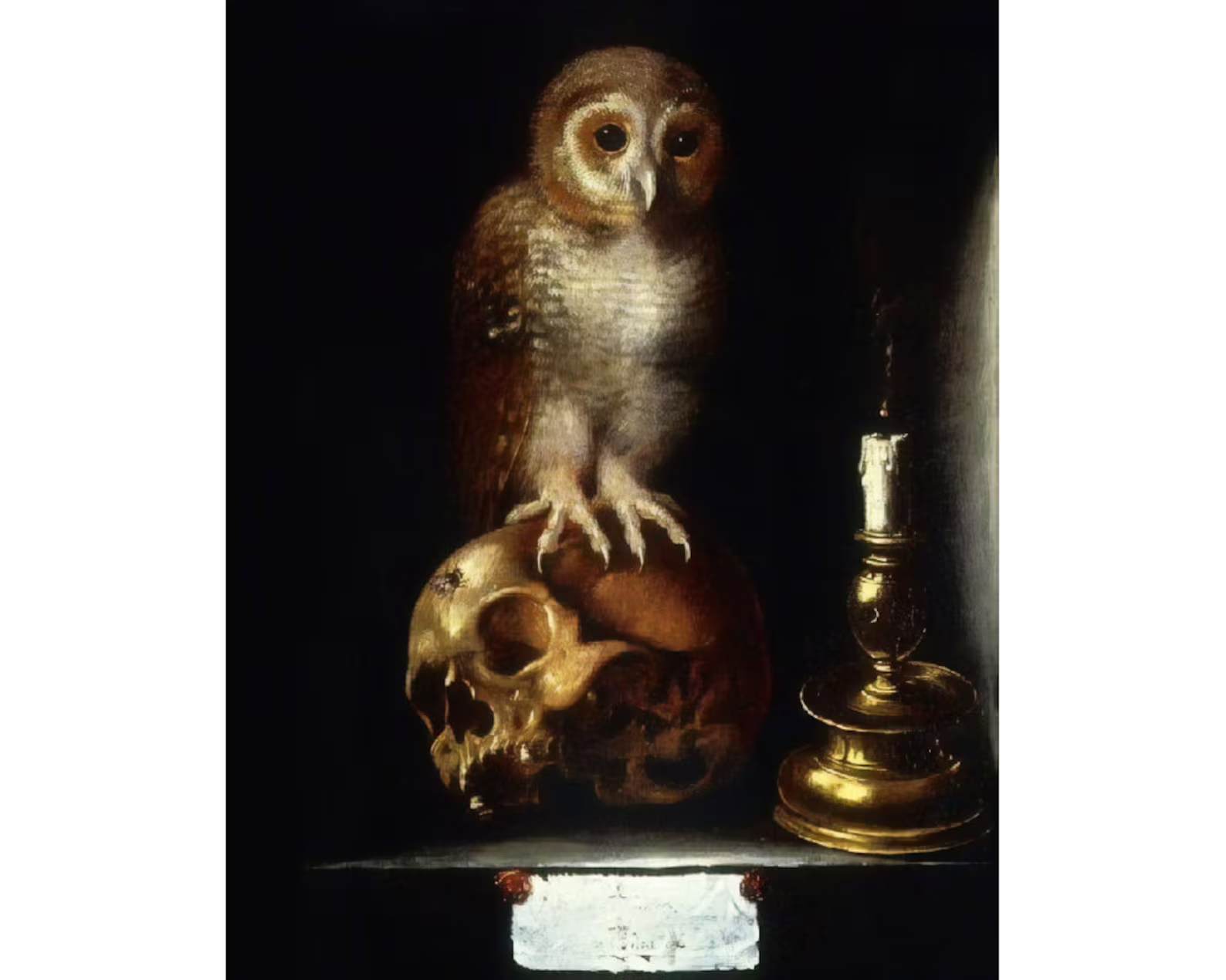
This phrase gained further significance in the Christian tradition, especially during the Middle Ages and the Renaissance. In this context, it was used as a moral reminder to live a virtuous life in preparation for the afterlife. It also appeared in art and literature, often depicted in vanitas paintings, where skulls, clocks, and decaying objects symbolized the transience of earthly pleasures and the certainty of death.
The concept of memento mori—remembering that we will die—is a clear Biblical truth. Scripture reminds us not only that we will die but that we will face judgment upon death.
- “And inasmuch as it is appointed for men to die once and after this comes judgment.”
(Hebrews 9:27, NASB95) - “For we must all appear before the judgment seat of Christ, so that each one may be recompensed for his deeds in the body, according to what he has done, whether good or bad.”
(2 Corinthians 5:10, NASB95)
Today, we tend to avoid thinking about death, often seeing it as morbid or depressing. Many of us live as if we could remain young forever, clinging to the illusion that life will continue indefinitely. In times past, however, death was a much more present part of everyday life, lifespans weren’t typically as long as today’s; they had loved ones die suddenly with no medical care or explanation. Even when preparing food, they were often more personally involved in the death of the animal. Death was accepted as a part of life. Instead of it being a bleak subject though, it became a source of motivation. The awareness of mortality inspired them to make more of the time they did have.
To us, thinking about death may seem counterproductive to goals of positive thinking, but it can be an encouragement like carpe diem, a reminder to seize the day. Marcus Aurelius, the Roman emperor, famously wrote, “You could leave life right now. Let that determine what you do and say and think.” Socrates claimed that the true practice of philosophy is “about nothing else but dying and being dead.” The Stoic philosopher Seneca advised, “Let us prepare our minds as if we’d come to the very end of life. Let us postpone nothing. Let us balance life’s books each day. … The one who puts the finishing touches on their life each day is never short of time.”
The Bible encourages us not only to make the most of our present lives but to make the most of our spiritual lives.
Dying Daily: The Christian Way of Life
As Christians, we live in a constant awareness of death—not just physical death, but the daily “death” of denying ourselves to follow Christ. Luke 9:23-26 recounts Jesus teaching this concept right after announcing His coming suffering, death, and resurrection. He said: “If anyone wishes to come after Me, he must deny himself, and take up his cross daily and follow Me.”
Jesus gives four critical steps for discipleship:
- Desire to Follow: Jesus doesn’t force anyone to follow Him. You must genuinely want to be His disciple.
- Deny Yourself: There is a need to prioritize and seek first the kingdom of God and His righteousness (cf. Matthew 6:33). You have to learn to say no to the strongest cravings of out earthly nature.
- Take Up Your Cross Daily: The cross was an instrument of death. You have to kill yourself (cf. Galatians 2:20). This is intentional, a choice. Notice the word daily; this is not just a choice we make once, but every day.
- Follow Jesus: There are those who want to follow their own standard of righteousness (cf. Romans 10:1-3). Jesus is saying do it my way.
- Jesus goes on to explain: “If you are willing to follow to the point of death, you are going to find out what life really is. If, however, you are going to selfishly serve yourself, you will lose life–eternal life and what this life is truly about.” Then, He asks a question we must all ponder: “What does it profit?” What is the value of what we are doing with our lives? Even if we could own the entire world, it would not be worth the cost of a single soul.
If we follow Christ to the point of death—both spiritually and literally—we will discover the true meaning of life. Conversely, living selfishly leads to the loss of eternal life and the true purpose of this life.
Living as a Sacrifice
The apostle Paul echoes this idea of daily sacrifice in Romans 12:1-2. He urges believers to present their bodies as “a living sacrifice.” Unlike the Old Testament dead sacrifices, God desires a continual offering of our lives. Paul reminds us that our sacrifice must be living and holy.
In contrast to the Old Law, God doesn’t want there to be a literal death or an animal. The animal had to give all, and God wants us to give all. Sacrifice should hurt, should cost us something. It should change our lives. If it isn’t costing us anything, it is not a sacrifice.
The physical requirements of an animal were 1 to 2 years old and perfect. The animals were young, in the prime of life. God didn’t want a 15-year-old crippled goat; He wanted the best. Just as a fresh, perfect animal was required for the Old Testament offerings, we should give our best to God while we are young and capable. Many times, the most committed people are those who physically can do very little. If they were once able, often they regret not serving God in their youth (cf. Ecclesiastes 12:1ff).
The animal was offered once, but every day we are supposed to give ourselves to God. There should be something each day we give up for God. Unfortunately, many only “sacrifice” a couple of hours once a week. We ought to be able to examine our lives and be able to say what we sacrificed to God. We want to be a tool in God’s hands (cf. Romans 6:12-13).
Just as the animal had to be without spot and blemish, we must be free from moral filth. The more we are set apart for service, the more holy we are, the more acceptable our sacrifice will be.
In Malachi 1:6-14, the people were only giving blind and lame sacrifices and thought they were acceptable to God. Malachi says they are kidding themselves. God is not going to accept them. We need to strive to be more holy sacrifices.
Holy means “set apart.” Just as the lamb was set apart from the others to be sacrificed, God has set us apart for service. We need to be devoted to service constantly asking ourselves: “What can I do to serve God?”
Conclusion:
In the end, the memento mori concept aligns with the biblical call to live with purpose and focus. It should be a reminder to examine what we are doing with our lives and make sure we are living with meaning and living for God.
This is often difficult for us, the daily grind and monotony of life often distract us. We end up going on auto-pilot following the same routines that may or may not be bad, but they aren’t living purposefully. Theoretically, we know our death or Jesus’ return could happen at any time, but it often feels distant and lacks urgency in our lives.
Even without the finality of death and judgment, however, there are smaller “deaths” surround us all the time—imminent endings that we can grasp and feel:
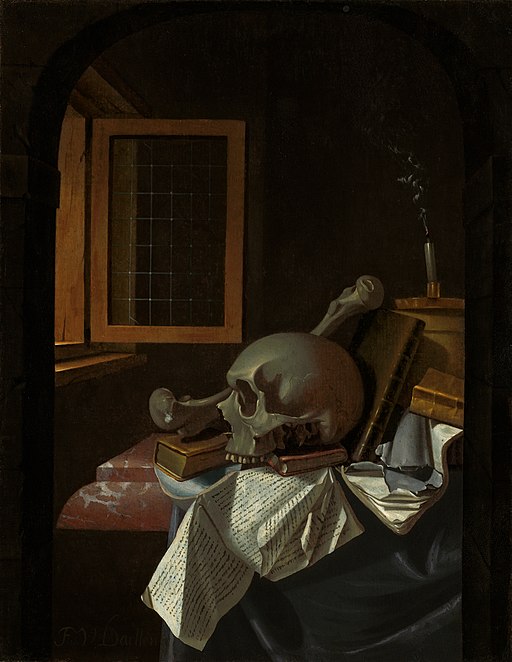
Francois van Daellen “Vanitas Still Life” c. 1650
- The last time you’ll pick up your son or daughter.
- The last time you’ll hang out with a friend who’s moving away.
- The last time all your family will be under the same roof.
- The last time you’ll hug a loved one.
- The last time you will bend down without pain.
- The last time you will have a chance to encourage someone to obey God.
Deaths, small and large, literal and figurative, surround us all the time. This doesn’t need to discourage us, but we do need to accept reality. Our lives are constantly changing and they will end. We need to use this reality to motivate us to live better lives.
The Book of Ecclesiastes concludes with this advice: “The conclusion, when all has been heard, is: fear God and keep His commandments, because this applies to every person. For God will bring every act to judgment, everything which is hidden, whether it is good or evil” (Ecclesiastes 12:13-14).
By Jeremy Sprouse
Jeremy has been married to Erynn since August 1999. They are blessed with six children: Jaden, Isaiah, Isaac, Ean, Joseph, and Evelyn. Jeremy preaches for the Patrick St. church of Christ in Dublin, TX and is the author of To Train Up a Knight.

 Knights of The Father