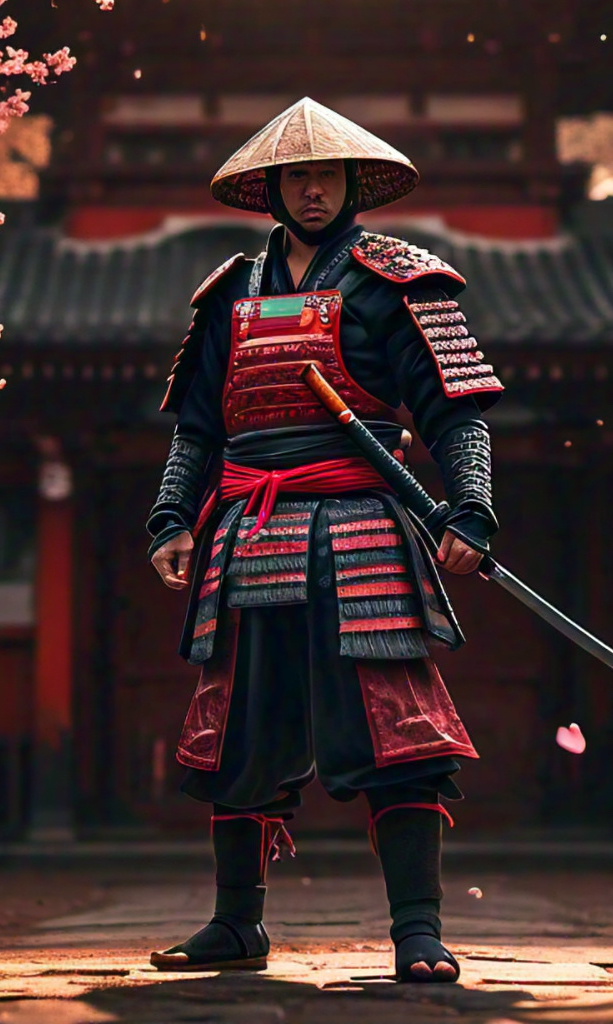
At the heart of Bushido lies the virtue of honor, known as “meiyo.” This profound sense of honor encompasses a vivid awareness of personal dignity and worth, defining the samurai’s identity. Born and bred to value the duties and privileges of their profession, the samurai lived under the constant vigilance of honor. As Sean Michael Wilson explains in his book “Bushido,” the fear of disgrace loomed like a sword over every samurai’s head. It was essential for them to bear even the unbearable with patience, as short-temperedness was ridiculed. This deep-rooted honor guided their every action and decision, reflecting a moral code that esteemed integrity and dignity above all.
Similarly, honor holds a central place in the Bible, where it is emphasized as a virtue to be upheld in various aspects of life. The Ten Commandments instruct individuals to honor their parents, not to bear false witness, and not to steal, underscoring respect, truthfulness, and integrity. The word “honor” appears 181 times in the New American Standard Bible, translated from about 18 different Hebrew words and 10 different Greek words, each highlighting different facets of this virtue.
In the Bible, honor transcends mere outward esteem. As noted in Theological Dictionary of the New Testament: “timḗ as honor increasingly becomes inner worth as distinct from outward esteem.” The Bible teaches that true honor does not come from severe treatment or the abuse of the body (Colossians 2:20-23). Rather, it embodies respect, integrity, and reverence, reflecting God’s nature and commandments.
Let’s explore three aspects of this idea of honor needed in our Christian lives.
Honor in Our Character
Honor is rooted in a person’s individual values, guided by a strong moral code. Personal integrity and righteous living are forms of honoring oneself and God. The Bible encourages believers to live honorably before others, maintaining a good reputation and demonstrating Christ-like virtues. Proverbs 21:21 and 1 Thessalonians 4:4 emphasize the pursuit of righteousness and honor.
Job’s life provides a fourfold description of honor in character, repeated in Job 1:8 and 2:3:
- Blameless: This doesn’t mean sinless but refers to one who deals with sin in a God-approved way, living a life defined by God’s commandments.
- Upright: This involves moral and ethical conduct, being fair and honest, avoiding gossip and deceit.
- Fears God: Recognizing and appreciating God’s awesome power in comparison to man’s weakness.
- Turns away from evil: Choosing to follow God and reject evil, demonstrating understanding and wisdom.
Hebrews 13:18 further reinforces this, urging believers to conduct themselves honorably in all things. The Ten Commandments instruct against bearing false witness and stealing, emphasizing respect, truthfulness, and integrity (Exodus 20:16, 20:15). A person with honor understands their worth and has the dignity and integrity to keep themselves above dishonorable behavior like lying, cheating, or stealing. They do what is right without needing to be watched by others (Proverbs 10:9, 11:3, 28:6).
Honor in Fulfilling Our Responsibilities
As men, fathers, and leaders, we have responsibilities to God, to others in authority, and to those under our care. Honor demands that we uphold our responsibilities.
- To God: The Bible frequently underscores the necessity of honoring God through worship, obedience, and reverence. This involves recognizing God’s sovereignty, keeping His commandments, and living a life that reflects His holiness (1 Samuel 2:30, Proverbs 3:9).
- To our family: We are told: “if anyone does not provide for his own, and especially for those of his household, he has denied the faith and is worse than an unbeliever” (1 Timothy 5:8). In context, this verse is talking about providing for the physical needs of our families including our parents in their later years. We also have responsibilities to attend to the emotional and spiritual needs of our family.
- To our wives: Husbands are called to honor their wives. To live with them in an understanding manner and respect them as equal heirs of Christ (1 Peter 3:7). To love them as we love our bodies, as Christ loves the Church (Ephesians 5:23-33).
- To our parents: The command to honor one’s father and mother is one of the Ten Commandments (Exodus 20:12). It is reiterated in the New Testament, emphasizing respect, obedience, and care for one’s parents as foundational to a healthy family and society (Ephesians 6:1-3).
- To our children: In Ephesians 6:4 and Colossians 3:21, fathers are commanded to bring their children up in the training and admonition of the Lord. At the same time, we are not to provoke or exasperate them. We must instruct them in an honorable and loving way that does not discourage them.
- To authority: Believers are instructed to honor governing authorities and leaders, respecting and submitting to their lawful directives (including taxes) as instituted by God for order and justice (Romans 13:1-7, 1 Peter 2:17).
- To all: 1 Peter 2:17 tells us to: “Honor all people.” Mutual respect and honor are essential in all human relationships. Believers are encouraged to honor each other within the community of faith, acknowledging each person’s value and contribution (Romans 12:10).
Honor in Sacrifice
The idea of sacrifice is central to both the concept of honor in Bushido and the teachings of the Bible. In the Bushido code, the samurai’s willingness to give their lives for their lord exemplifies the highest form of loyalty and dedication. Similarly, in the Christian faith, the ultimate act of sacrifice is found in Jesus Christ, whose death on the cross demonstrates profound selflessness, love, and redemption.
Paul’s exhortation in Romans 12:1-2 brings the concept of sacrifice into sharp focus for believers. He urges Christians to present their bodies as a “living sacrifice,” which contrasts with the dead sacrifices of the Old Testament. Unlike the one-time offering of animals, which required total giving, a living sacrifice demands an ongoing, daily commitment to God. It is a call to a continual offering, where every day something is given up in service to God. If nothing is given up, there is no sacrifice. True sacrifice, as Paul suggests, is one that costs us something significant, leading to a transformation in our lives.
Paul emphasizes that this sacrifice should be “holy,” meaning it must be free from moral impurity. Just as the animals offered in the Old Testament were required to be without blemish, our lives must be set apart, devoted to God’s service. This commitment reflects an understanding that our lives are to be instruments of righteousness, wholly dedicated to serving God.
Paul’s reference to “spiritual service of worship” (which can be translated as “reasonable service”) underscores the distinction between worship and service. Worship is an intentional act directed towards God, a conscious offering of ourselves. It is not simply every action we take, but those specific acts that are devoted to honoring God. Service, on the other hand, refers to the broader scope of our actions and work, done in the spirit of obedience and dedication to God.
Paul continues in Romans 12:2 by urging believers not to conform to the patterns of this world but to be transformed by the renewing of their minds. This transformation is about being different—intellectually, emotionally, and in our willpower. We are called to renew our thinking continuously through the study of God’s Word, allowing it to shape our conscience, our desires, and our determination to do what is right.
This renewal proves what the will of God is—good, acceptable, and perfect. By living lives that are transformed and not conformed, Christians demonstrate that God’s way is the best way, both in this life and in the life to come.
Conclusion
Honor is not just a concept, but a way of life that shapes character, guides responsibilities, and demands sacrifice. For a samurai, adherence to honor underpinned their every action, reflecting a deep-seated respect for duty and personal dignity. Similarly, the Bible calls believers to live honorably, emphasizing virtues like integrity, respect, and obedience to God.
Honor in a Christian’s life begins with personal character, extends to fulfilling our responsibilities to God and others, and culminates in sacrifice. As Romans 12:1-2 teaches, we are called to present ourselves as living sacrifices, holy and pleasing to God, transforming our lives by renewing our minds. This transformation, marked by a commitment to honor in every aspect of life, proves the goodness and perfection of God’s will.
In a world where the true meaning of honor is often diluted, both the Bible’s teachings remind us of the enduring value of living with integrity, fulfilling our duties with reverence, and embracing the sacrifices necessary to honor God and others. By embodying these principles, we not only honor ourselves but also reflect the nature and commandments of God, leading lives that are truly worthy of the calling with which we have been called (cf. Ephesians 4:1).
Questions to Consider:
- How do you define honor in your own life, and how does that align with the biblical understanding of honor?
- What are some specific ways we can honor God in our daily lives, beyond just attending church services?
- What does it mean to be a “living sacrifice” in today’s world? How can we practice this daily?
- How do we ensure that our sacrifices are “holy and pleasing to God”? What might be some practical examples?
- In what areas of your life do you find it most challenging to offer a sacrifice that truly costs you something?
- What practical steps can you take this week to honor God more fully in your work, family, or personal life?
Consider teaching some of the principles in this lesson to your family as a devotional (or a series of devotionals) and doing the following activity with your children to help teach them the concept of honor:
The Honor Race
Set up an obstacle course. Include opportunities to “cheat” by cutting through, but explain that they must complete the course with integrity (e.g., staying within boundaries, not skipping challenges). Time each child and reward those who completed the course with integrity.
Teach children that honor involves not taking shortcuts and following the right path, even when it’s difficult. In life, we may have opportunities to take shortcuts, but God calls us to follow His path with honesty.
Honesty Box
Place a small treat in a box with a sign that says, “Take only one, be honest.” Give time and opportunity for temptation and see if anyone takes more when no one is watching (make sure you know how many are there or set up a hidden camera). Talk about how integrity is doing the right thing even when no one else may ever know.
Candlelight Honor Pledge
This is a small ceremony to A meaningful and symbolic activity to affirm the value of honor and integrity. Gather your family in a circle. Light a candle and have them pass the light around as they each make a personal commitment to living with honor and integrity. Have them say a simple pledge like: “I pledge to honor God by being truthful and honorable in everything I do.”). Talk about light and how honor brings light into the world.
By Jeremy Sprouse
Jeremy has been married to Erynn since August 1999. They are blessed with six children: Jaden, Isaiah, Isaac, Ean, Joseph, and Evelyn. Jeremy preaches for the Patrick St. church of Christ in Dublin, TX and is the author of To Train Up a Knight.
Other lessons in this series:
- Spiritual Bushido
- The Way of Righteousness
- Heroic Courage
- Benevolence
- Respect
- Honesty
- Honor
- Duty/Loyalty (coming soon)
- Self-Control (coming soon)

 Knights of The Father