
“But let your statement be, ‘Yes, yes’ or ‘No, no’; anything beyond these is of evil” (Matthew 5:37). With this one simple, but powerful statement from the Sermon on the Mount, Jesus describes the concept of honesty in Bushido.
Honesty is often difficult for people. We want to think of ourselves as honest, but we tend to justify deceptions. We consider some lies to be harmless and have deemed them “white lies. These are lies so trivial they are considered acceptable by society. Such as lies told on the spur of the moment, lies told to boast or exaggerate self or to depreciate and understate others, lies told or repeated in gossip, lies told to simply say something and pass the time, or the substitution of a quick lie in place of a lengthy explanation. The fact is, many are in the habit of lying.
We twist words and truth to make someone say something they did not say. In doing so, we make lies out of the facts. Lies of this sort were told of Christ before and after His death (Matthew 26:21, 28:13-15). In addition, people have given the Bible this treatment as well.
There are also what we call half-truths. This is where we only tell part of the truth and pretend we have told the whole truth. Abraham did this when he told a half-truth about Sarah being his sister—she was—but it was a whole lie because they did not live as brother and sister (Gen. 12:13, 20:2). This is often very similar to the fallacy of selective arrangement where we have cherry-picked facts and emphasized what agrees with us instead of looking at the whole of the truth.
People can even be dishonest with their body language. Proverbs 6:12-15 warns us of the end of such dishonesty:
A worthless person, a wicked man, Is the one who walks with a perverse mouth, Who winks with his eyes, who signals with his feet, Who points with his fingers; Who with perversity in his heart continually devises evil, Who spreads strife. Therefore his calamity will come suddenly; Instantly he will be broken and there will be no healing.
There is a relationship between mannerisms and a person’s character. Suspicious actions and mannerisms often indicate a person who is not being forthright. A wink can be used to deceive some while letting those in your inner circle know you are being less than truthful. Compressing the lips or tightening the mouth is sometimes used to signal another person to be quiet or say nothing to avoid incrimination or embarrassment. Lies and deceptions whether done with your mouth or your body amount to the same thing: sin.
Like the Bible, Bushido links dishonesty with a dishonorable and despicable character:
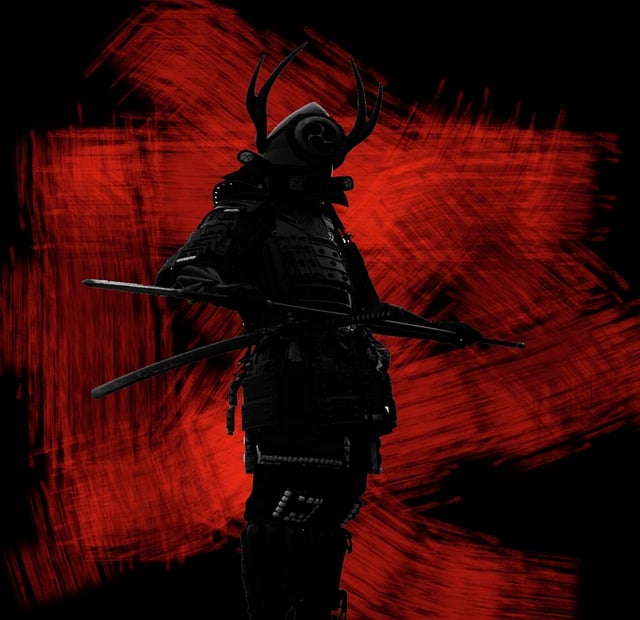
“Lying or the use of ambiguous terms in order to mislead were deemed equally cowardly. The bushi held that his high social position demanded a loftier standard of truthfulness than that of the tradesman and peasant. Bushi no ichi-gon—the word of a samurai was a sufficient guarantee of the truthfulness of a statement. His word carried such weight that promises were generally made and fulfilled without a written pledge, which would have been deemed quite beneath his dignity.” Excerpt From: Sean Michael Wilson. “Bushido.” Apple Books.
In other words, let your “yes” be “yes” and your “no” be “no.” In context, Jesus was rebuking those who were trying to slip out of agreements by the different oaths and considering some to be binding and others to be insignificant. Jesus encourages us to speak plainly, openly, and to keep our word. Beyond this, we enter the realm of evil.
Truth is something we are commanded to gird about ourselves as warriors for the Lord. It is the first piece of the armor of God—the belt of truth (Ephesians 6:14). A belt may not seem like an exciting piece of equipment, but it is an important one. After all, the belt was where a warrior’s sword would hang, and all of the plates of his armor were held together by a series of small belts and buckles. A warrior could not arm himself without these belts. Likewise, we have an important belt we must put on if we are going to arm ourselves. The enemy will try to deceive us with trickery and lies (cf. Ephesians 4:14-15, 6:11). We need truth to stand against our foe. Nothing else will do—not mere sincerity or desire. You may sincerely believe a lie and want it to be true, but that will not change the fact that it is a lie. Truth is important. Without truth, we will be defenseless before our enemy and his deceptions. We must put on the belt of truth to stand firm in the Lord.
The Belt of Truth isn’t a belt that is merely worn, however, this is a belt we are “to gird.” Girding refers to a practice in the first century by which a person would prepare themselves for action. This truth we are to gird ourselves with comes from Jesus (Ephesians 4:17-21). It cannot be found in the world or its ways; they have only darkness and ignorance. The truth is only found through learning about Jesus and His ways that are recorded for us in the Bible. Reading, studying, memorizing, and knowing the Word of God will protect you from the lies the enemy seeks to implant in your mind. Even these are not enough, however, truth must be put into practice. It must be lived (Ephesians 4:21-24, 5:9-10) and spoken (Ephesians 4:15, 25, 29). Only through studying, living, and speaking the truth can we gird ourselves with the belt of truth and equip ourselves to fight.
Honesty is a place where many of our Bible heroes slipped—Abraham, Isaac, Jacob, Moses, David, and others were all caught lying and/or being deceptive. This should impress upon us the challenge of honesty. It won’t be easy, but it can be done. Many of the prophets were known for unflinching honesty. Consider one of these, Micaiah:
In 1 Kings 22, Ahab, the king of Israel, and Jehoshaphat, the king of Judah, are trying to determine what God thinks about them going up to fight against the king of Aram. Ahab gathers 400 prophets who say: “Sure go to war, God will give you victory” (22:6). These prophets, however, are not from the Lord and Jehoshaphat isn’t satisfied (22:7). Here is where our champion enters. Ahab knows about Micaiah but doesn’t like him because he never tells Ahab what he wants to hear—Ahab doesn’t like hearing the truth (22:8). In verse 13, a messenger is sent to summon Micaiah and instructs him to say what all the other prophets have agreed to speak. Micaiah, however, says: “As the Lord lives, whatever the Lord says to me, that I will speak” (1 Kings 22:14). Micaiah is true to his word and reveals that Ahab will die if they go up to the battle, and all the other prophets have a deceiving spirit in them (1 Kings 22:17, 22-23). The chief of the lying prophets then strikes Micaiah on the cheek (22:24) and Ahab has Micaiah tossed into prison and instructs him to be fed sparingly (22:26-27). Although things seem bad for Micaiah, truth does win out. Ahab dies just as Micaiah predicted (22:34-35). Micaiah spoke the truth when everyone around him was lying and pressuring him to lie. He spoke the truth even when it would cause him to suffer. We need to have his dedication to the truth.
Fathers, we must teach our children to be truthful and honest. To do this, we must be honest ourselves. Take the time to explain what is right, rather than shortcutting for a convenient lie. Don’t encourage them to hide things from their mother or others.
Consider teaching some of the principles in this lesson to your family as a devotional (or a series of devotionals) and doing the following activity with your children to help teach them the concept of honesty:
Discussion Questions:
- How does truth protect us?
- Why should we tell the truth?
- What is the difference between truth and opinion?
- What does lying do to our hearts?
- Are there lies you have told you need to confess?
Listening to the Voice of Truth
Set up an obstacle course and blindfold your children one at a time (I think it’s best if you can make it look dangerous, but not actually be dangerous). Guide them through the obstacle course by giving them only vocal instructions. The point: Just as they could only avoid the obstacles by listening to your voice, only by living according to the truth of God’s Word can we avoid the pitfalls of this life. God’s Word will even help us to avoid dangers we cannot see.
Now, blindfold yourself and give your children the chance to guide you through the course. The point: Only by telling the truth can you help others; lying will only end up harming others and keeping them from the goal.
By Jeremy Sprouse
Jeremy has been married to Erynn since August 1999. They are blessed with six children: Jaden, Isaiah, Isaac, Ean, Joseph, and Evelyn. Jeremy preaches for the Patrick St. church of Christ in Dublin, TX and is the author of To Train Up a Knight.
Other lessons in this series:
- Spiritual Bushido
- The Way of Righteousness
- Heroic Courage
- Benevolence
- Respect
- Honesty
- Honor (coming soon)
- Duty/Loyalty (coming soon)
- Self-Control (coming soon)

 Knights of The Father