
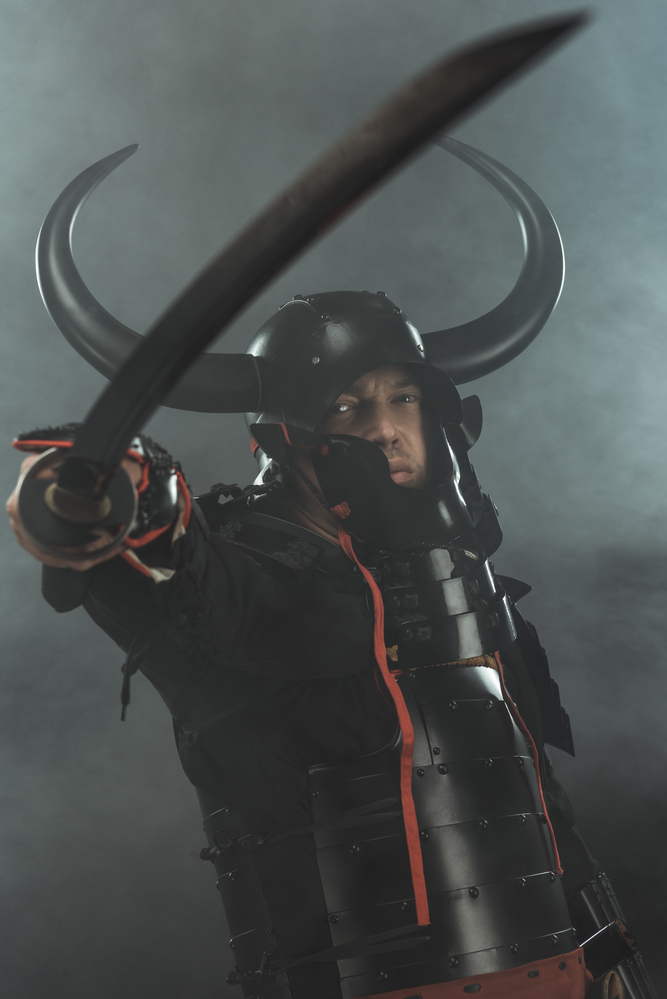
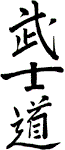
The Noble Samurai has captured the hearts and minds of many. We love their courage and ability to fight. Their willingness to die for their beliefs. The word samurai originally meant “one who serves” (same as the original word for knight). Originally, they were men of noble birth, later they became government officials and basically professional soldiers. At some points in Japan’s history just about anyone with a sword was considered a samurai. The ones that appeal to us, however, followed a code known as Bushido or the “Way of the Warrior.” These warriors, of course, have been romanticized and the stories don’t often match the history.
The fact that these warriors are lifted up as ideals, however, tells us something about what we want in our own lives. Why is that the samurai, knights, and heroes with a code appeal to us? We admire and respect those who hold to their ideals regardless of the cost. The very idea of a code appeals to us because it gives us an answer. In a difficult situation, we don’t have to wonder what to do. There is no decision to make. We just follow the code. The decision has already been made. It sounds simple, and it is often appealing, but it is often difficult to do. This is why we admire characters like the romanticized depictions of samurai.
Most of our understanding of Bushido comes from a book written by Inazo Nitobe titled The Soul of Japan (1900). Before writing this book, Nitobe had converted to Christianity. He observed that while morality was not taught in Japan, there was a desire for morality that was built into man. In his preface he states:
I believe in the religion taught by Him and handed down to us in the New Testament, as well as in the law written in the heart. Further, I believe that God hath made a testament which maybe called “old” with every people and nation,—Gentile or Jew, Christian or Heathen.
This is what we sometimes call the law of morality or the law of conscience (cf. Romans 2:13-16). His description of moral aspects of bushido (which in many ways has become the standard description) align very closely with the character and behavior required of one professing faith in Jesus.
By studying these concepts, we learn how to better engage in our own spiritual battle. In this book, Nitobe lists eight character qualities that comprise Bushido:
- Righteousness—Honesty in dealings with others and a firm belief in justice. Righteousness is perhaps the key concept in Jesus’ sermon on the mount (cf. Matthew 5:6, 5:20, 6:1, and 6:33) as well as many other scriptures.
- Heroic Courage—Not the absence of fear, but the willingness to take risks and face your fears for what you believe in. Revelation 2:10 tells us to be faithful unto death. We are called to courageously confess Jesus in our day to day lives regardless of the cost (Matthew 10:32-39).
- Benevolence/Compassion—The greater power and position the warrior held was to be used for the good of others; to help their fellow man. This aligns with second greatest command to love your neighbor as yourself and to be gentle or meek (cf. Matthew 5:5).(Mark 12:31).
- Respect—A truly great warrior doesn’t need to put others down or consider themselves better than others. They can honor others without feeling less themselves. We are to treat others as we want to be treated (Matthew 7:12) and humble ourselves (cf. Romans 12:3, Philippians 2:3-4)
- Honesty—Letting your “yes” be “yes” and your “no” be “no” (Matthew 5:37). A warrior keeps his commitments and promises.
- Honor—The warrior is concerned with the decisions he makes and how he makes them as they are a reflection of their character. They hold themselves to what is right, not needing to be watched by others. Biblically, this matches us with the concept of integrity (cf. Proverbs 10:9, 11:3, 28:6).
- Duty/Loyalty—The idea of faithfulness and loyalty to those in your care (cf. 1 Timothy 5:8). We must also show ultimate loyalty to God placing him first in our lives (Luke 14:25-35).
- Self-Control—The warrior does not let his emotions and desires control him. Instead, he is disciplined. As Christians, we also must be disciplined and control our lusts (cf. 2 Peter 1:5-11, 1 John 2:15-17).
When it comes down to it, as Christians we have a code we should be following. As we study and learn God’s word, we learn how we are to respond to difficult situations in life and how we are to behave. It is a difficult battle, but an all-important battle.
Our study of Spiritual Bushido doesn’t end here. We are going to study each of these 8 character qualities individually. It is my hope that through this study we can become better Christians. As we become better Christians, we will also become better fathers in exemplifying and teaching godly behavior to our families.
By Jeremy Sprouse
Jeremy has been married to Erynn since August 1999. They are blessed with six children: Jaden, Isaiah, Isaac, Ean, Joseph, and Evelyn. Jeremy preaches for the Patrick St. church of Christ in Dublin, TX and is the author of To Train Up a Knight.
Works referenced:
https://www.artofmanliness.com/character/knowledge-of-men/the-bushido-code-the-eight-virtues-of-the-samurai/ Guest post by Tim ClarK
https://www.gutenberg.org/cache/epub/12096/pg12096-images.html
Just for fun a silly personality test: Bushido—Do you follow the way of the warrior? (https://www.apost.com/en/quiz/question/what-is-the-meaning-of-martial-arts/4205/)
Other lessons in this series:
- Spiritual Bushido
- The Way of Righteousness
- Heroic Courage
- Benevolence
- Respect
- Honesty
- Honor (coming soon)
- Duty/Loyalty (coming soon)
- Self-Control (coming soon)

 Knights of The Father